WordPress database error: [You have an error in your SQL syntax; check the manual that corresponds to your MariaDB server version for the right syntax to use near '' at line 1]SELECT * FROM wp_mica_ecta WHERE cta_id =
WordPress database error: [You have an error in your SQL syntax; check the manual that corresponds to your MariaDB server version for the right syntax to use near '' at line 1]SELECT * FROM wp_mica_ecta WHERE cta_id =
WordPress database error: [You have an error in your SQL syntax; check the manual that corresponds to your MariaDB server version for the right syntax to use near '' at line 1]SELECT * FROM wp_mica_ecta WHERE cta_id =
A social trading network is an online platform that lets users follow experienced traders, view their strategies, and automatically copy their trades instead of making every decision independently.
The industry has grown rapidly, with platforms like eToro reporting 40 million registered users and the global social trading market valued at about $10.16 billion in 2026. However, social trading does not eliminate risk, as most retail CFD traders still lose money. Success depends on choosing skilled traders and managing risk effectively.
This guide explains how social trading networks work, how they differ from copy and mirror trading, the best platforms to use in 2026, and strategies for navigating volatile markets.
There's no Call To Action with the ID #0.Key Takeaways
- Social trading can improve your odds, but it does not guarantee profit. Plenty of copiers still lose money.
- Spreading your capital across several traders matters more than picking one “best” trader.
- Take time to check a trader’s track record. Traders who get real results tend to have a longer history and steadier returns, not one lucky month.
- Stick to platforms licensed by regulators like the FCA, CySEC, or ASIC. Skip unregulated offshore sites.
- Start small; learn how the platform behaves with $200 to $500 before you move real money into it.
What Is a Social Trading Network?
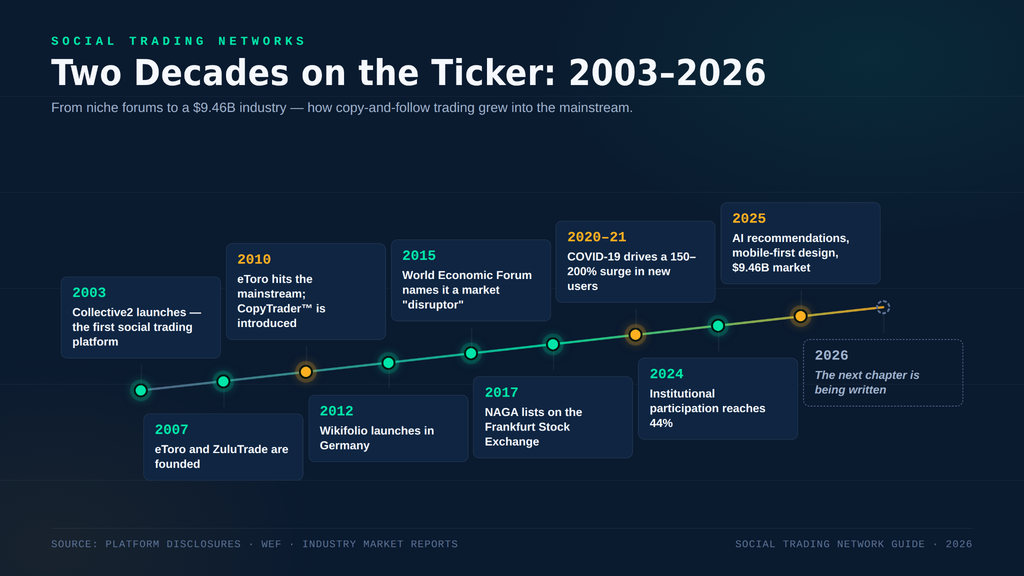
A social trading network is an online platform that combines social networking with financial trading, allowing users to watch, discuss, and copy other traders’ strategies in real time. Users can view traders’ profiles, performance, open positions, and trading rationale before deciding whether to automatically replicate their trades.
Unlike traditional brokerage accounts, social trading platforms emphasize transparency by showing exactly what assets traders buy or sell, when they execute trades, and at what price.
This enables beginners to learn from experienced investors while giving all users access to shared market insights, performance data, and collaborative trading opportunities.
Why This Model Took Off
Many new traders struggle with complex charts, technical indicators, and emotion-driven decisions. Social trading addresses this by letting beginners learn from and copy experienced traders while developing their own skills, making investing more accessible.
However, copy trading does not guarantee profits. Long-term success still depends on sound risk management, discipline, and a well-defined strategy. The best results come from combining copy trading with informed decision-making and realistic expectations rather than relying solely on another trader’s performance.
How the Model Actually Works
Every social trading platform runs on three layers stacked on top of each other.
The social layer
This is where the community lives. Traders build profiles, post updates, explain why they made a trade, and answer questions from followers. Some platforms, such as eToro and NAGA, run live sessions or webinars with their most-followed traders.
In addition, these platforms reward “Popular Investors” or “Master Traders” with direct payouts or a percentage of the assets under management (AUM) copied.
The data layer
Every trade a trader makes becomes visible history. Followers can check win rate, average return, the size of their biggest loss, and how much risk they typically take. For instance, platforms such as eToro and ZuluTrade score each trader on a risk scale, so you’re not left guessing.
The execution layer
This is the part that makes social trading different from just reading someone’s tips. Using automated APIs, when a selected trader opens or closes a position, the platform mirrors the exact move in the follower’s account in real-time. The trade size is automatically scaled proportionally to the follower’s allocated budget.
Overall, social trading platforms combine the transparency of a public track record with the speed of automated execution, which is exactly what makes copying appealing to someone who doesn’t have hours a day to watch charts.
How Does Social Trading Work? Step-By-Step
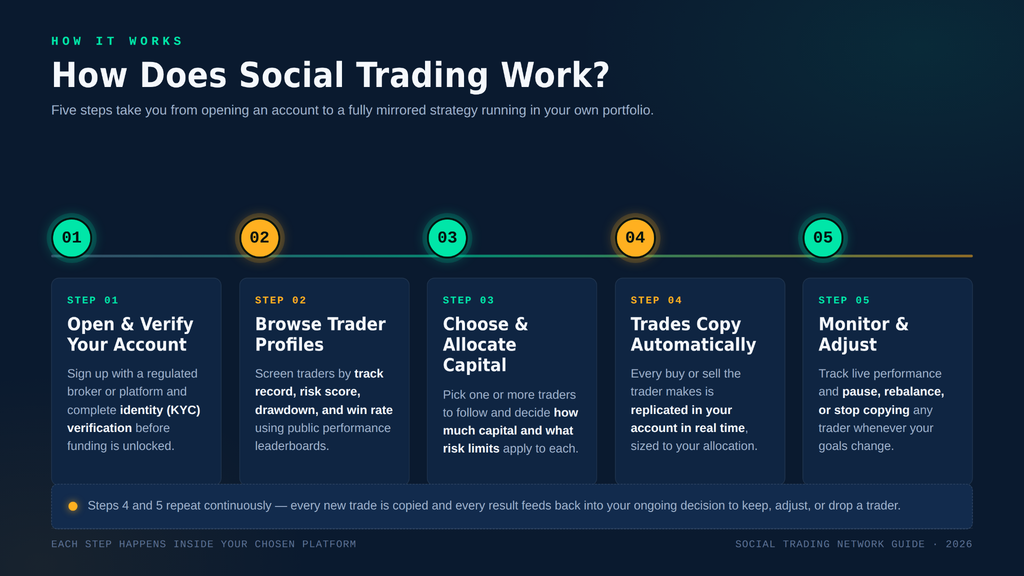
Here’s what the actual process looks like from account creation to your first copied trade.
- Step 1: Pick a platform – Compare fee structures, supported assets, and regulatory compliance before signing up.
- Step 2: Open and verify your account – Complete standard KYC checks by submitting your ID and proof of address.
- Step 3: Browse trader profiles – Analyze historical win rates, risk scores, and trading styles.
- Step 4: Pick who to copy – Match traders to your own risk tolerance, not just their highest return numbers.
- Step 5: Allocate capital – Start with a realistic range of $500 to $2,000 to ensure proper trade scaling.
- Step 6: Let the platform copy trades – Positions will open and close in your account automatically in real-time.
- Step 7: Check in and adjust – Review your dashboard regularly and swap traders if their performance shifts.
Real-World Example
Here is what the execution layer looks like in action using real numbers:
- The Setup: You allocate $1,000 to copy a Master Trader who manages a $100,000 portfolio. Your account is now scaled to exactly 1% of theirs.
- The Action: If the trader buys $5,000 worth of a stock, the engine automatically mirrors the move.
- The Result: Your account instantly buys $50 of that same stock (1% of the trader’s position size).
When they sell, your position closes automatically. You never have to log in or place a manual order.
How to Read a Trader’s Profile
Before you copy anyone, their profile page will usually show you five things worth checking:
- Performance chart: monthly and yearly returns, ideally covering a full market cycle, not just a hot streak.
- Trade history: every entry and exit price, so you can see whether their wins are consistent or a single lucky call.
- Risk score: most platforms rate traders from 1 (very cautious) to 10 (very aggressive).
- Portfolio breakdown: what they actually hold right now, not just what they’ve traded in the past.
- Follower count and copied capital: a rough measure of how much trust other people have already placed in them.
A trader with a 90% win rate might sound impressive, but it’s often a red flag rather than a good sign. It usually means they’re taking on outsized risk on each trade to keep the win rate high, and one bad trade can wipe out months of small gains. A trader with a 60% to 70% win rate and controlled losses is often the safer long-term bet.
Read Also: Bear Market Crypto Trading Strategies
Social Trading vs. Copy Trading vs. Mirror Trading
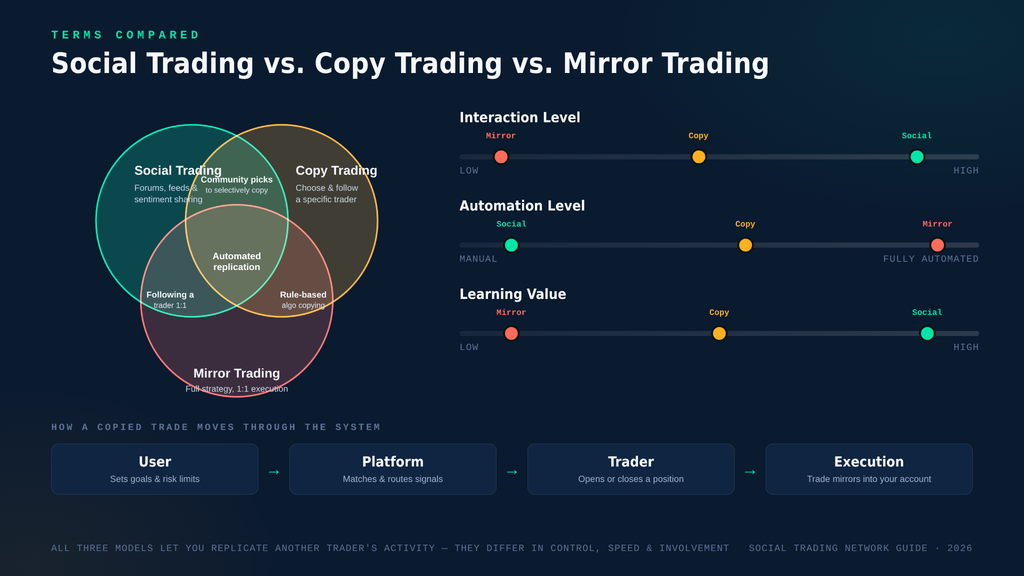
These three terms get mixed up constantly, and the confusion causes real mistakes. Here’s the actual difference.
Social trading is the umbrella term. It covers everything from reading a trader’s market commentary to fully automating a copy of their portfolio. You might use social trading without ever copying a single trade, just by reading what other traders are watching.
Copy trading is one specific piece of social trading. It means the platform automatically replicates a chosen trader’s positions in your account. There’s no interpretation involved. If they buy, you buy.
Mirror trading copies a predefined algorithm or strategy rather than a human being. You’re not following a person’s judgment. You’re following a set of rules that execute the same way every time, market mood aside.
Detailed Comparison Table
| Feature | Social Trading | Copy Trading | Mirror Trading |
| Definition | A broad approach combining community interaction with the option to copy trades | Automatic replication of a selected trader’s positions | Automatic execution of predefined algorithmic trading strategies |
| Interaction Level | High: Forums, chats, social feeds, and Q&A | Medium: View trader profiles, performance, and sometimes communicate with them | Low: Algorithm-driven with little or no human interaction |
| Execution | Manual or automated | Fully automated | Fully automated |
| What You Copy | Trading ideas, market insights, and optional trades | The exact trades of a chosen trader | Predefined trading strategy rules and parameters |
| Customization | High: Choose which insights or trades to follow | Medium: Adjust copy settings such as stop-loss, allocation, and risk limits | Low: Strategy follows its programmed rules |
| Learning Value | High: Learn through discussions, shared analysis, and community feedback | Medium: Gain insights by observing experienced traders over time | Low: Limited visibility into the strategy’s decision-making process |
| Success Dependency | Your ability to evaluate and apply community insights | The performance and consistency of the trader you follow | The effectiveness of the underlying algorithmic strategy |
| Popular Platforms | TradingView (Ideas), Reddit (r/WallStreetBets) | eToro CopyTrader™, NAGA AutoCopy, ZuluTrade | MetaTrader 5 Signals (Expert Advisors), algorithmic strategy marketplaces, ZuluTrade |
| User Control | High: Decide when and how to execute trades | Medium: Set copy parameters while trades execute automatically | Low: Strategy executes trades without manual intervention |
| Skill Required | High: Requires interpreting market sentiment and shared analysis | Low: Platform automates trade execution | Medium: Requires evaluating and selecting suitable strategies |
| Typical Users | Experienced traders looking for crowdsourced market insights | Beginners and passive investors seeking to follow successful traders | Traders interested in systematic and algorithmic investing |
When Should You Use Social, Copy, or Mirror Trading?
The right approach depends on your experience, goals, and how much control you want over your trades.
- Choose social trading: If you want market insights, enjoy discussing strategies, and prefer making your own trading decisions.
- Choose copy trading: If you are a beginner, want a more hands-off approach, and can diversify your capital across several traders with at least 12 months of verified performance.
- Choose mirror trading: If you prefer rule-based, algorithmic execution, understand backtesting, and are comfortable evaluating quantitative strategies.
Best Approach for Most Traders
A hybrid strategy offers the best balance of learning, diversification, and risk management:
- 50–70%: Copy experienced, verified traders.
- 20–30%: Allocate to algorithmic or mirror trading strategies.
- 10–20%: Place your own trades using insights gained from social trading communities.
This diversified approach reduces reliance on a single strategy while helping you develop your own trading skills over time. Our How to automate crypto trading easily and boost profits guide is a good place to build your foundation.
5 Social Trading Platforms to Consider in 2026
We looked at regulation, fees, asset variety, and how each platform treats copy trading. Here’s how the major names stack up.
1. eToro – Best Overall Social Trading Platform
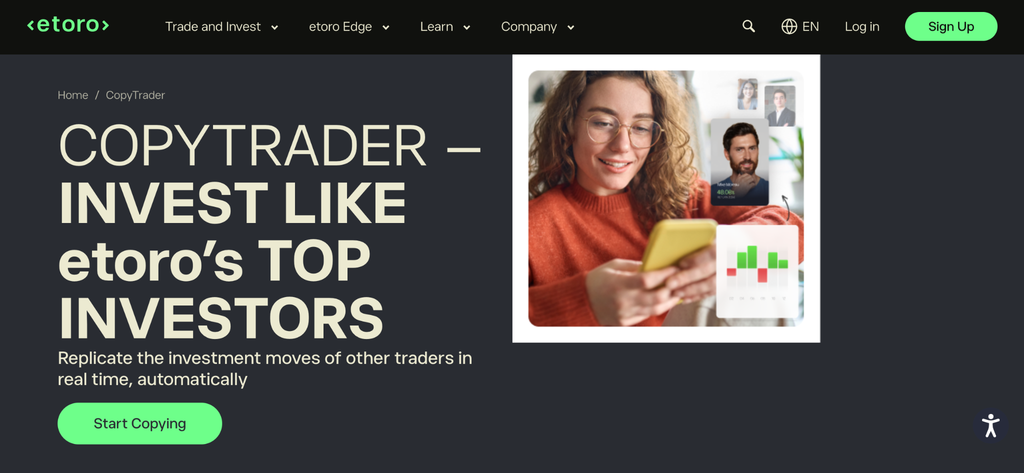
Source: etoro.com/copytrader
eToro remains the benchmark for social trading in 2026, with more than 40 million registered users from 75 countries. Its CopyTrader™ feature lets users automatically mirror experienced investors across stocks, ETFs, crypto, commodities, forex, and indices from a single account.
Pros
- Largest social trading community
- CopyTrader automatically replicates the positions of selected investors.
- 5,500+ tradable assets
- Thematic, fully managed long-term smart portfolio
- Regulated by the FCA, CySEC, ASIC, and U.S. regulators
- Popular Investor program rewards successful traders
- Excellent mobile app and educational resources
Cons
- Wider spreads than some competitors
- Limited copy-trading customization
- Limited crypto, no CFDs for U.S. users
Fees
- $0 commission on stocks and ETFs (spread applies)
- Spreads are defined on a per-asset basis
- $5 withdrawal fee
- $200 minimum amount to start copy trading and $500 for smart portfolio
Best for: Beginners, long-term investors, and anyone looking for the broadest multi-asset copy trading experience.
2. NAGA – Best Community Experience
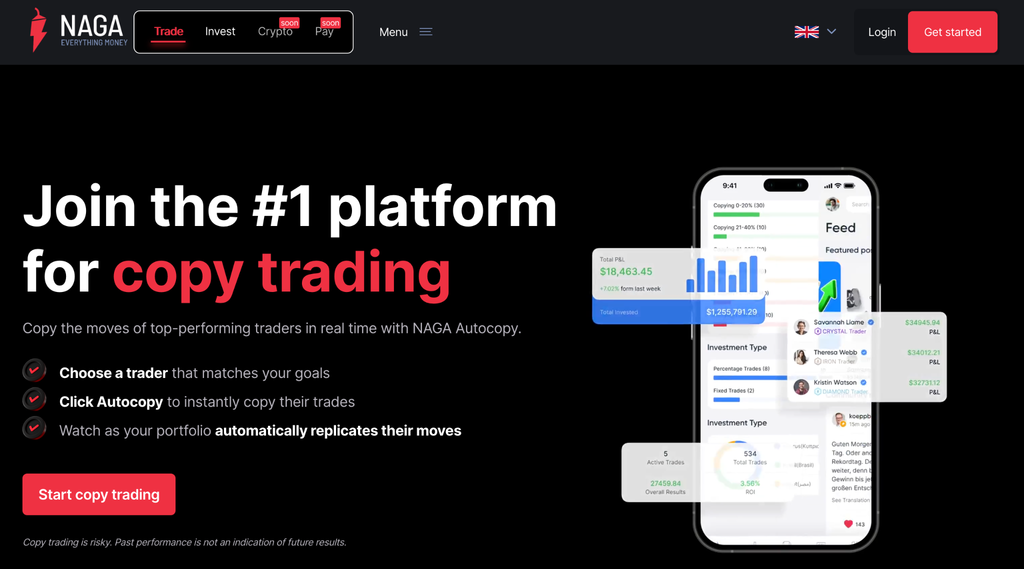
Source: naga.com/en/copy-trading
NAGA blends copy trading with a social network, allowing traders to share ideas, comment on markets, and copy complete portfolios. The company is publicly listed in Germany, adding an extra layer of corporate transparency. In the first quarter of 2026 alone, NAGA processed $80.7 billion in trading volume, roughly $27 billion a month, across a global community of over 2.5 million registered users.
Pros
- Strong community features and social feed
- Frankfurt Stock Exchange listed (ticker: N4G), regulatory transparency
- Autocopy feature that lets you automatically replicate the strategies of top traders on the NAGA platform
- Copy an unlimited number of traders simultaneously
- Supports crypto, stocks, ETFs, forex, CFDs, and futures
- Mobile-first experience
Cons
- Smaller trader pool than eToro
- Not available in the U.S.
- Some users report fee transparency issues
Fees
- Commission fees expend on region
- Variable market spreads
- The copy trading fee is based on performance
- €0 withdrawal fees
- €50 minimum deposit to start copy trading
Best for: European traders and investors who value an active trading community.
3. ZuluTrade – Forex Copy Trading Specialist

Source: zulutrade.com
ZuluTrade specializes in forex copy trading and supports over 30 million accounts across 150+ countries. The platform stands out because it connects traders with over 2 million copy trading leaders and multiple partner brokers instead of requiring users to trade through its own brokerage.
Pros
- Track record claim: 73% of followers profit when copying top traders
- Connects to 50+ brokerages (Interactive Brokers, FXCM, OANDA, etc.)
- Advanced trader analytics and performance metrics
- Large marketplace of signal providers
- No platform fee
Cons
- Steeper learning curve
- Requires a separate brokerage account
- Primarily focused on forex
- Limited stock/crypto traders (90%+ forex focus)
Fees
- ZuluTrade platform is free
- Users pay their broker’s spreads and commissions
- Some strategy providers charge subscription fees
Best for: Intermediate and experienced forex traders.
4. Binance Copy Trading – Crypto Social Trading Powerhouse

Source: binance.com/en-NG/copy-trading
Binance brings copy trading to the world’s largest crypto exchange, allowing users to automatically follow experienced crypto traders while benefiting from deep liquidity and around-the-clock markets.
Pros
- Vast cryptocurrencies support
- Real-time trade sharing on charts, influencer portfolios
- High liquidity ensure minimal slippage
- $1B+ SAFU insurance fund for security breaches
Cons
- Crypto only
- High leverage increases risk
- Regulatory restrictions vary by country
- Steep learning for beginners
Fees
- Standard platform trading: Normal spot or futures trading fees apply to every executed trade based on your standard Binance VIP level or BNB fee discount.
- Profit share (10% for Spot and 30% for Futures) and a 10% trading fee commission for lead traders
- $10 minimum deposit
Best for: Crypto investors who want automated trading in digital assets.
5. TradingView – Social Following (Not Copy Trading)
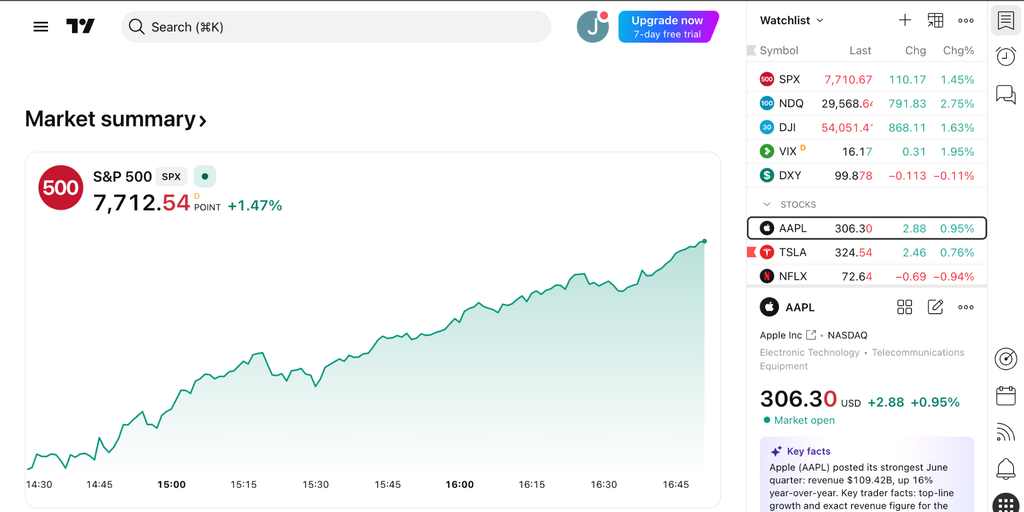
Source: tradingview.com
TradingView isn’t a copy trading platform, but it remains the world’s largest social network for traders. Millions of users publish charts, strategies, and market analysis daily, making it an excellent place to discover new ideas before placing trades manually.
Pros
- Massive trading community
- Industry-leading charting tools
- Free plan available
- Connects with numerous brokers
Cons
- No automatic trade copying
- Trade quality varies
- Requires manual execution
Best for: Technical analysts and traders who prefer making their own trading decisions rather than automatically copying others.
If you’re weighing crypto against traditional markets, our Forex vs Crypto: Which One to Trade guide breaks down the tradeoffs.
Copy Trading Platform Comparison Table
| Platform | Primary focus | Regulation | Minimum | Fees |
| eToro | Multi-asset copy trading | FCA, CySEC, ASIC, and regional regulators | $200 to copy a trader; $500 for Smart Portfolios | $0 stock/ETF commission on eligible assets; spreads apply; $5 USD withdrawal fee |
| NAGA | Social + copy trading | CySEC and other regional regulators | $50 for fixed-amount copying | Copy fees: 20% Iron, 17.5% Bronze, 0% Silver+; spreads/commissions apply |
| ZuluTrade | Forex-focused copy trading | HCMC Greece and other regional regulators | Depends on connected broker | No ZuluTrade platform fee; broker spreads/commissions apply |
| Binance | Crypto Spot & Futures copy trading | Varies by jurisdiction | From 10 USDT, depending on portfolio | Standard Spot/Futures trading fees; lead traders set profit-share rates |
| TradingView | Social trading, charts & analysis | Not a broker | Free to use | Basic: $0; paid plans from $12.95/month annually; broker fees apply separately |
Social Trading Strategies That Actually Hold Up
These strategies can improve your trading and boost your profits
Strategy 1: Diversify Across 3 to 5 Traders
Putting all your capital behind one trader is the single most common mistake beginners make. A simple, balanced approach looks like this:
- 40% in conservative traders with steady, low-volatility returns
- 40% in moderate traders who take measured swings
- 20% in higher-risk traders, kept small on purpose
If one trader has a rough month, the rest of your portfolio absorbs the hit instead of your whole account taking the fall.
Strategy 2: Judge Traders on Consistency, Not Peaks
A trader who returns 8% a month for two years is a safer bet than one who spiked 60% once and then went quiet. Look for at least 12 months of history, ideally longer. Watch the maximum drawdown figure closely. A trader who lost 60% at some point can lose 60% again.
Strategy 3: Set Hard Stop Rules Before You Start
Decide in advance what would make you stop copying a trader, such as a 15% to 20% drop in your allocated capital. Write it down before you invest, not after you’re already emotionally attached to the position.
Strategy 4: Rebalance Monthly, Not Daily
Checking your dashboard every day tends to trigger panic decisions. A monthly review is usually enough to catch a real problem without reacting to normal short-term noise.
For a deeper look at managing downside risk across any trading style, our risk management guide covers position sizing and stop-loss logic in more detail.
Benefits of Social Trading Networks
Here are the benefits you can get through social trading networks
Learn From Experienced Traders
One of the biggest benefits is access to other traders’ strategies. Instead of learning everything alone, beginners can study portfolios, trading histories, risk levels, and market ideas shared by experienced investors. eToro, for example, lets users review investor profiles and track their strategies before deciding whether to copy them.
NAGA takes a similar approach through its social network, where users can follow traders, discuss market conditions, and use Autocopy to replicate their trades.
Save Time With Copy Trading
Social trading can reduce the time needed to research and execute every trade manually. With copy trading, an investor selects a trader and automatically mirrors their positions.
eToro’s CopyTrader replicates selected traders’ moves in real time, while ZuluTrade allows users to choose from trading leaders based on performance, stability, risk, and other filters. This can be useful for people who cannot constantly monitor financial markets.
There's no Call To Action with the ID #0.Access More Strategies and Markets
Social networks expose investors to different trading styles and asset classes. ZuluTrade, for instance, supports markets including forex, commodities, cryptocurrencies, indices, and stocks.
Following several traders can also help investors spread their exposure across different strategies rather than relying on a single approach.
Build a Trading Community
Social trading creates a community where investors can share ideas, discuss market movements, and learn from one another. NAGA allows traders to interact with other users, while ZuluTrade provides tools for communication and strategy sharing.
Risks of Copy Trading (and How to Protect Yourself)
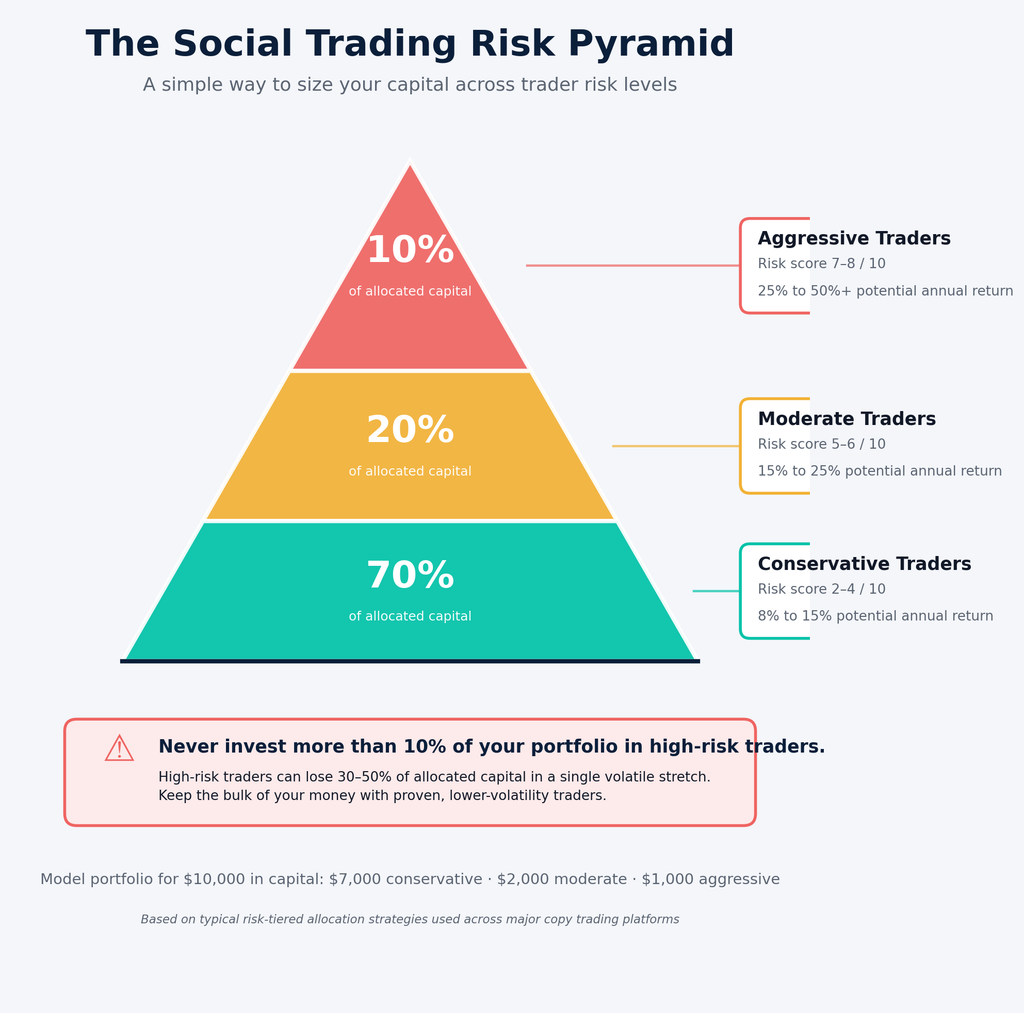
Copy trading can simplify investing, but it doesn’t eliminate risk. Your results depend on market conditions, the traders you follow, and the platform you use. Here’s how to manage the biggest risks.
1. Market Risk: You Can’t Avoid It
Market-wide downturns affect almost every investor. If the broader market falls, even top-performing traders are likely to post losses. For example, the 2020 COVID-19 crash, 2022 crypto winter, and 2022 stock market correction all caused significant portfolio declines across copy trading platforms.
How to reduce market risk:
- Diversify across stocks, crypto, forex, and commodities.
- Copy traders with defensive strategies (e.g., dividend stocks, bonds, or gold).
- Keep 10–20% of your portfolio in cash or stablecoins to buy during market dips.
- Set a portfolio stop-loss and review your strategy if losses exceed your comfort level.
2. Trader Risk: Choose Carefully
Your performance is only as good as the trader you copy. Some traders change strategies, increase leverage, or take unnecessary risks after a winning streak. Historical returns are not a guarantee of future performance.
Protect yourself by:
- Copying 3–5 traders instead of relying on one.
- Reviewing performance every month.
- Avoiding traders who frequently change strategies or use excessive leverage.
- Following traders who regularly explain their decisions and communicate openly.
3. Platform Risk: Use Regulated Providers
Technical outages, cyberattacks, and regulatory actions can disrupt trading. Regulators such as the FCA continue to tighten oversight of crypto and copy trading platforms in 2026.
Best practices:
- Choose platforms regulated by the FCA, CySEC, or ASIC.
- Enable two-factor authentication (2FA).
- Review the platform’s security measures and insurance policies where available.
4. Leverage Risk: Bigger Gains, Bigger Losses
High leverage can magnify profits, but it also accelerates losses.
- Prefer traders using 5× leverage or less.
- Avoid copying traders who consistently use extreme leverage unless you fully understand the risks.
5. Psychological Risk: Stay Disciplined
Many investors fail because they react emotionally rather than following a plan.
Stay on track by:
- Learning the basics before investing.
- Avoiding decisions based on short-term performance.
- Investing only money you can leave untouched for 6–12 months.
- Reviewing your strategy regularly instead of chasing recent winners.
Our Psychology Level in Cryptocurrency Trading guide goes deeper into why these patterns happen and how to build habits that keep you from sabotaging your own strategy.
Realistic Returns: What Can You Actually Expect?
Numbers vary a lot depending on how much risk your chosen traders take on.
- Conservative portfolios (low-risk traders, blue-chip stocks, major forex pairs): roughly 8% to 15% annual return, with drawdowns usually under 12%.
- Moderate portfolios (a mix of swing trading and balanced asset exposure): roughly 15% to 25% annual return, with drawdowns in the 15% to 25% range during rough patches.
- Aggressive portfolios (crypto-heavy, high-frequency trading): highly variable, sometimes 30%+ in a good year, but drawdowns of 30% to 50% are common too.
None of these numbers are promises. They’re ranges based on how different risk levels typically behave, and any of them can turn negative in a bad year.
In addition, fees eat into these returns more than most beginners expect. A platform charging 1% in spreads plus overnight fees on leveraged positions can quietly shave several percentage points off your annual return before you even account for a losing trade.
Step-by-Step Guide to Getting Started With Social Trading
Here are the steps to getting started with social trading:
1. Build Your Knowledge First
Spend two to three weeks learning social trading through free resources like eToro Academy, YouTube, Reddit, and TradingView Ideas. Understand key metrics such as leverage, drawdown, Sharpe ratio, win rate, ROI, and spreads. Before investing real money, practice on a demo account like eToro’s $100,000 virtual portfolio to gain experience without financial risk.
2. Choose the Right Platform
Not every social trading platform suits every investor. Compare leading options based on:
- Available assets (stocks, crypto, forex, ETFs, or multi-asset)
- Fees and spreads
- Regulatory oversight
- Copy trading features
- Minimum deposit requirements
- Your country of residence, as some platforms have regional restrictions
Read independent reviews and verify regulatory licenses before opening an account.
3. Set a Risk Plan
Only invest money you can afford to lose. Start with $500–$2,000, set a maximum loss limit (such as 20–30%), and treat your first few months as a learning period rather than a profit-making exercise.
4. Open and Verify Your Account
Create an account, complete identity verification (KYC), answer the platform’s risk questionnaire honestly, and fund your account using a low-cost payment method like a bank transfer.
5. Research Traders Carefully
This is the most important step. Before copying anyone, look for:
- At least 12 months of verified trading history
- Consistent returns instead of short-term spikes
- Maximum drawdown below 20%
- Moderate risk scores
- A transparent trading strategy with regular updates
Avoid choosing traders solely because they have exceptionally high returns.
6. Start Small and Diversify Gradually
Begin by copying one experienced trader with a small allocation and enable copy stop-loss protection. Monitor performance for several weeks before adding more traders. Over time, diversify across three to five traders with different strategies to reduce concentration risk.
7. Review Performance Regularly
Spend 10–15 minutes each day reviewing your portfolio and reading updates from copied traders. Once a month, compare your returns against market benchmarks, rebalance underperforming positions, and adjust allocations only after evaluating long-term performance, not short-term market swings.
2026 Social Trading Trends & Future Outlook
Social trading is evolving rapidly as AI, decentralized finance (DeFi), and tighter regulations reshape how investors discover, copy, and manage trades. Here are the biggest trends driving the industry in 2026.
1. AI-Powered Trade Recommendations
Artificial intelligence is making trader selection faster and more data-driven. Instead of manually reviewing hundreds of profiles, investors can now receive personalized recommendations based on their risk tolerance, portfolio size, and preferred markets.
Leading platforms such as eToro now integrate AI into portfolio discovery, while newer tools like Tori and AI Agent Portfolios provide real-time insights and automated portfolio suggestions.
Key benefits include:
- Personalized trader matching
- Faster portfolio research
- Continuous strategy monitoring
- AI-powered risk alerts and rebalancing suggestions
2. DeFi Social Trading Gains Momentum
Blockchain-native copy trading continues to expand through protocols like dHEDGE and Enzyme Finance. Smart contracts automate trades without relying on centralized intermediaries, giving users greater transparency and control.
Advantages:
- Lower fees
- Fully verifiable on-chain performance
- Global accessibility
- Token-based community incentives
However, smart contract vulnerabilities and evolving regulations remain important risks.
3. Mobile-First Trading Experience
Social trading has become increasingly mobile. Platforms now prioritize smartphone users with intuitive interfaces and instant execution.
Popular features include:
- One-tap copy trading
- Real-time push notifications
- Short-form educational videos
- Apple Pay and Google Pay deposits
The goal is simple: make investing as smooth as using any modern social media app.
4. Gamification and the Creator Economy
Top traders are becoming financial content creators. Platforms reward successful investors through copy-trading commissions, subscription content, and incentive programs.
Common engagement features include:
- Performance leaderboards
- Achievement badges
- Trading competitions
- Premium educational communities
These features improve user retention while encouraging consistent trading performance.
5. Stronger Global Regulation
Regulators are increasing oversight to improve investor protection. Europe’s Markets in Crypto-Assets (MiCA) framework continues shaping crypto platform compliance, while regulators such as the UK Financial Conduct Authority (FCA) require clearer disclosures for copy trading services.
Expect greater emphasis on:
- Transparent performance reporting
- Standardized fee disclosure
- Clear risk warnings
- Enhanced investor protections
6. Rise of Specialized Communities
Rather than serving every investor, many platforms now focus on niche markets such as crypto, forex, ESG investing, or algorithmic trading. This specialization allows users to follow traders with expertise in their preferred asset class instead of relying on generalist platforms.
As AI becomes more capable, DeFi infrastructure matures, and regulation provides greater certainty, social trading is expected to become more transparent, accessible, and personalized throughout 2026 and beyond.
There's no Call To Action with the ID #0.Conclusion
Social trading has made professional-style investment strategies more accessible to everyday investors.
Platforms such as eToro and ZuluTrade now combine community insights, automated copy trading, and AI-powered tools, bringing social investing firmly into the mainstream. ZuluTrade reports that 73% of investors using uninterrupted copy trading were profitable over its 12-month measurement period, compared with 49% of manual traders.
Still, copy trading is not a shortcut to guaranteed returns. Poor trader selection, concentration, excessive risk, and emotional decisions can quickly turn losses into larger ones.
In 2026, AI is making trader discovery and portfolio management easier, while regulators are tightening oversight. The FCA updated its copy-trading guidance in July 2026, while EU regulators continue clarifying how crypto copy trading fits within MiCA.
The opportunity is real, but successful social trading still depends on research, diversification, and disciplined risk management.
Frequently Asked Questions
What is the difference between social trading and copy trading?
Social trading is the broad category that includes forums, chat, and shared insights, with copying as an optional part of it. Copy trading is one specific feature within that category: automatically replicating another trader’s exact positions in your own account.
Is social trading legal and regulated?
Yes, when you use a platform licensed by a real regulator such as the FCA, CySEC, or ASIC. These bodies require standardized risk disclosures and impose rules on leverage and fund protection. Unregulated offshore platforms carry far more risk and little recourse if something goes wrong.
How much money do I need to start social trading?
Most regulated platforms let you open an account with $50 to $500. A more practical starting point is $500 to $2,000, spread across two or three traders, so you can test the process without risking money you need.
Can I really make money by copying other traders?
It’s possible, but not guaranteed. Copying can improve your odds compared to trading blind, especially if you diversify and pick traders with a long, steady track record. Even so, a meaningful share of copiers still lose money, so treat it as a way to manage risk better, not a way to eliminate it.
Disclaimer: This content is for educational purposes only and isn’t financial advice. Social trading carries a real risk of losing part or all of your capital, and