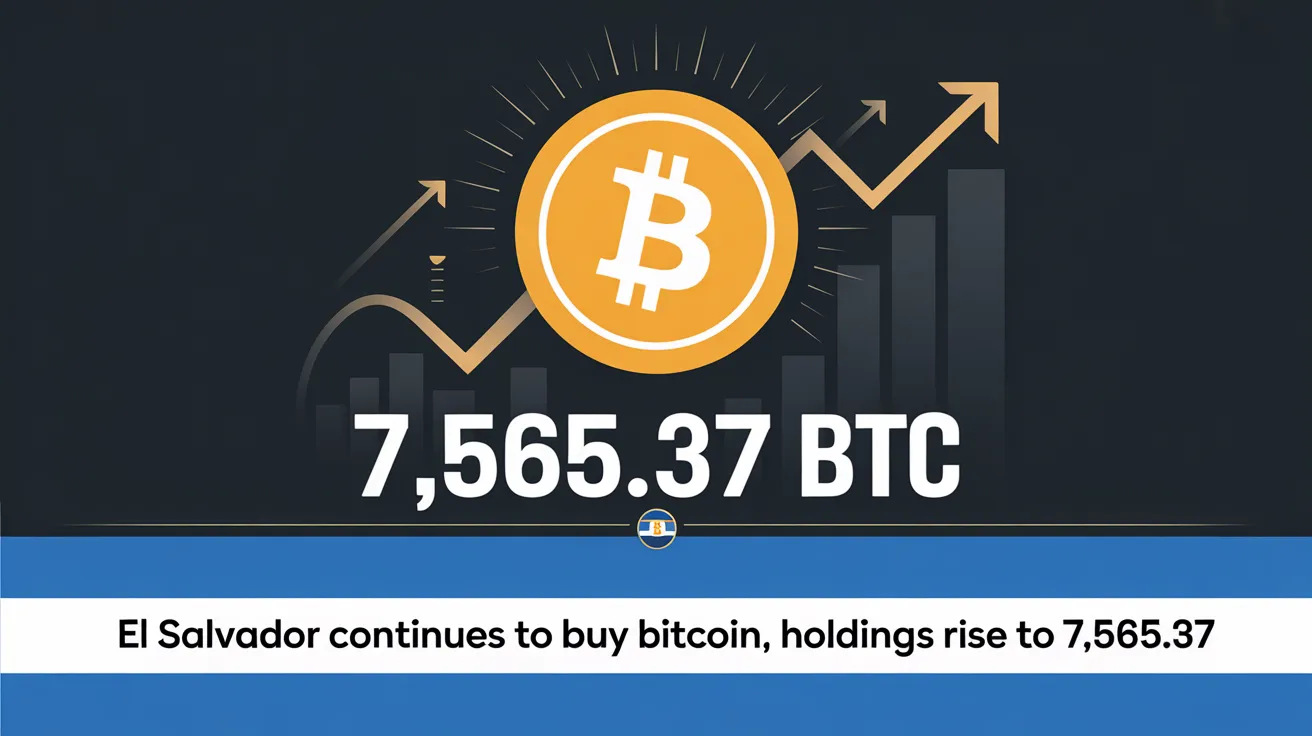
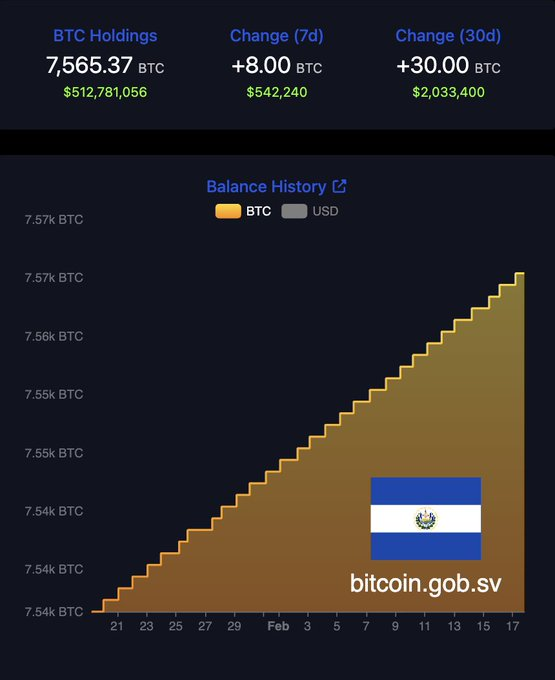
El Salvador has added more Bitcoin to its national reserves, bringing its total holdings to 7,565.37 BTC, reinforcing its long-standing commitment to the digital asset.
The latest accumulation confirms that the Central American nation remains firmly aligned with its Bitcoin-first policy, even as global markets continue to experience volatility.
Since becoming the first country to adopt Bitcoin as legal tender in 2021, El Salvador has steadily expanded its position. Rather than executing massive single-day purchases, the government has maintained a measured buying strategy, gradually increasing its reserves over time. The updated total reflects this disciplined approach.
Key Takeaways
El Salvador’s Bitcoin holdings have reached 7,565.37 BTC, reflecting a steady accumulation strategy.
The government views Bitcoin as a long-term financial hedge and a tool for economic independence.
Bitcoin adoption is integrated into broader national goals, including tourism, investment, and financial inclusion.
Global observers remain divided, with supporters highlighting potential gains and critics warning of volatility risks.
A Long-Term Bet on Bitcoin
Under President Nayib Bukele, El Salvador has positioned Bitcoin as a strategic reserve asset. The administration has consistently framed its holdings not as short-term speculation, but as a long-term financial hedge and a pillar of economic sovereignty.
Bitcoin’s price has moved through sharp rallies and corrections over the past few years. Despite these swings, the government has not signaled any retreat from its strategy. Instead, the continued accumulation suggests confidence in Bitcoin’s long-term valuation and its potential role in reshaping sovereign finance.
El Salvador remains one of the largest known sovereign holders of Bitcoin globally. While exact rankings fluctuate depending on disclosures from other governments, the country’s public and transparent accumulation policy sets it apart from more discreet state-level holdings elsewhere.
Beyond Reserves: A Broader Economic Vision
The country’s Bitcoin policy extends beyond treasury reserves. Since granting legal tender status to Bitcoin, El Salvador has sought to attract foreign investment, boost tourism, and promote financial inclusion for citizens without access to traditional banking services.
Government-backed Bitcoin initiatives have included infrastructure development, regulatory frameworks, and incentives aimed at encouraging crypto-based businesses to establish operations locally. The steady rise in national holdings signals that authorities still view Bitcoin as central to this broader economic plan.
Global Attention Remains Fixed
El Salvador’s approach continues to divide opinion internationally. Supporters argue that early sovereign adoption could yield substantial upside if Bitcoin’s value appreciates significantly over time. Critics, however, caution against the risks tied to price volatility and fiscal exposure.
With holdings now at 7,565.37 BTC, the country is making a clear statement: it is not abandoning its digital asset experiment. Whether this strategy ultimately delivers sustained financial returns will depend largely on Bitcoin’s long-term performance and broader global adoption trends.
For now, El Salvador’s message is straightforward — the buying continues, and the national Bitcoin reserve keeps growing.
Akindele T. Francis is a versatile content writer with extensive experience spanning various sectors. Specializing in blog posts, website content, service pages, compelling sales copy, etc., Akindele has collaborated with numerous agencies to deliver engaging and effective written material. With a keen eye for detail and a passion for crafting impactful narratives, Akindele consistently exceeds client expectations, driving results and enhancing brand messaging across diverse platforms.
Disclaimer: This article is intended solely for informational purposes and should not be considered trading or investment advice. Nothing herein should be construed as financial, legal, or tax advice. Trading or investing in cryptocurrencies carries a considerable risk of financial loss. Always conduct due diligence before making any trading or investment decisions.
Trade with proof of Reserves
UEEx publish monthly audits and third party verification on every listed market.