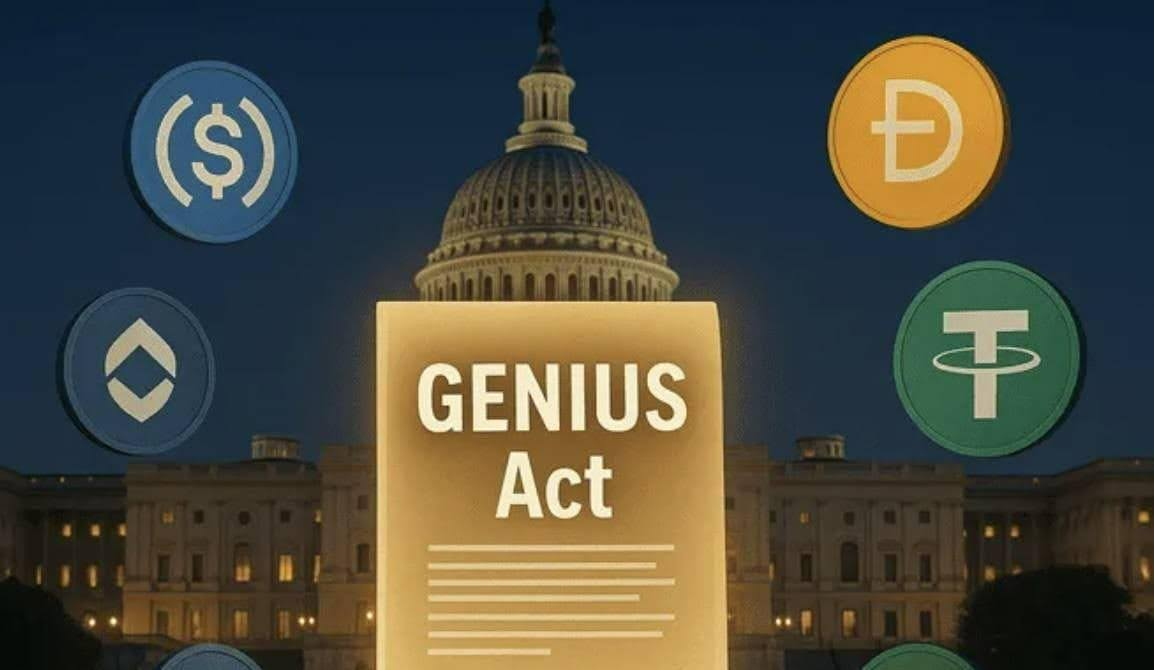
The US Treasury Department has started formal rulemaking for the GENIUS Act, moving the country’s new stablecoin framework closer to implementation after federal agencies reportedly missed a July deadline tied to completing regulations. Treasury issued a Notice of Proposed Rulemaking on August 17 covering parts of the Guiding and Establishing National Innovation for US Stablecoins Act. The proposal is open for public comment and focuses on when the issuance, offering and sale of payment stablecoins fall within US jurisdiction.
The process comes as regulators work toward the GENIUS Act’s scheduled January 2027 implementation. Once the law takes effect, companies will generally be prohibited from issuing payment stablecoins in the United States without an appropriate federal or state license.
Key Takeaways
- Treasury has opened a 60 day public comment process on proposed GENIUS Act regulations.
- The GENIUS Act is scheduled to take effect on January 18, 2027, unless final regulations trigger an earlier effective date under the law.
- Treasury’s proposal addresses when a payment stablecoin is considered issued, offered or sold in the United States.
- Federal regulators reportedly missed a July deadline that would have provided enough time to finalize regulations before the January milestone.
- Once the law applies, payment stablecoin issuers operating in the US will generally need federal or state authorization.
Treasury Begins Turning GENIUS Into Operating Rules
The GENIUS Act was signed into law in July 2025 to establish a dedicated regulatory framework for payment stablecoins. Treasury’s latest proposal begins defining how some of those statutory requirements will work in practice.
One important question concerns what constitutes issuing a payment stablecoin “in the United States.” Treasury is also proposing rules around when a stablecoin is considered “offered or sold” to a person in the country.
Those definitions could determine which issuers and transactions are subject to GENIUS licensing requirements, particularly where stablecoin businesses operate across several jurisdictions.
Treasury Secretary Scott Bessent said the department is seeking industry participation as it develops the framework.
“Treasury welcomes input from stakeholders as we work to provide the regulatory certainty businesses need to innovate and grow in America.”
Interested parties will have 60 days to submit comments after the proposal is published in the Federal Register. Treasury can use those submissions when determining the final wording of its regulations.
The latest process follows an earlier Treasury request for comments in September 2025 that sought industry input on broader questions surrounding implementation of the law.
January Deadline Puts Pressure on Regulators
Timing remains one of the main issues surrounding GENIUS implementation. Under the legislation, the law becomes effective either 120 days after federal regulators issue final implementing rules or 18 months after its July 2025 enactment. The latter deadline falls on January 18, 2027.
The Treasury, Federal Reserve, Federal Deposit Insurance Corporation and Office of the Comptroller of the Currency have all worked on GENIUS related proposals during 2026. However, regulators reportedly missed a July deadline that would have allowed a full 120 day period between finalized regulations and the January date. That raises the possibility that parts of the stablecoin framework could become effective before every implementation detail has been settled.
For stablecoin companies, the difference is significant. Issuers need sufficient time to determine which license they require, adjust their operations and ensure their products comply with the new framework. The rules also extend beyond domestic issuers. The GENIUS framework contains requirements affecting foreign issued payment stablecoins offered to US users, including conditions concerning compliance with lawful US orders and regulatory arrangements with overseas jurisdictions.
A further restriction is scheduled for August 2028, when digital asset service providers will face additional limitations on offering payment stablecoins to US persons unless those assets meet the law’s issuer requirements.
Stablecoin Regulation Extends Beyond Washington
Implementation is also becoming part of international regulatory discussions. The UK US Financial Regulatory Working Group met in London in July, with stablecoin policy and implementation of the GENIUS Act among the areas discussed by officials. The talks are significant for stablecoin companies operating internationally because differences in licensing, reserve requirements and market access rules can influence where issuers establish operations and how they distribute tokens across jurisdictions.
For now, attention returns to Washington and the 60 day consultation period. Comments from stablecoin issuers, banks, exchanges and other market participants could help determine how broadly Treasury ultimately interprets activities taking place within the United States.
Conclusion
Treasury’s proposed rules move the GENIUS Act another step from legislation toward an enforceable stablecoin framework, but regulators are working against a tightening timetable.
With January 18, 2027 approaching, the key question is whether Treasury and other federal agencies can turn their proposals into final, coordinated rules with enough time for businesses to prepare.
For stablecoin issuers, the public comment period is therefore more than a procedural exercise. The definitions and requirements that emerge from it could determine who needs a US license, which stablecoins can reach American users and how one of the world’s largest crypto markets regulates dollar based digital payments.