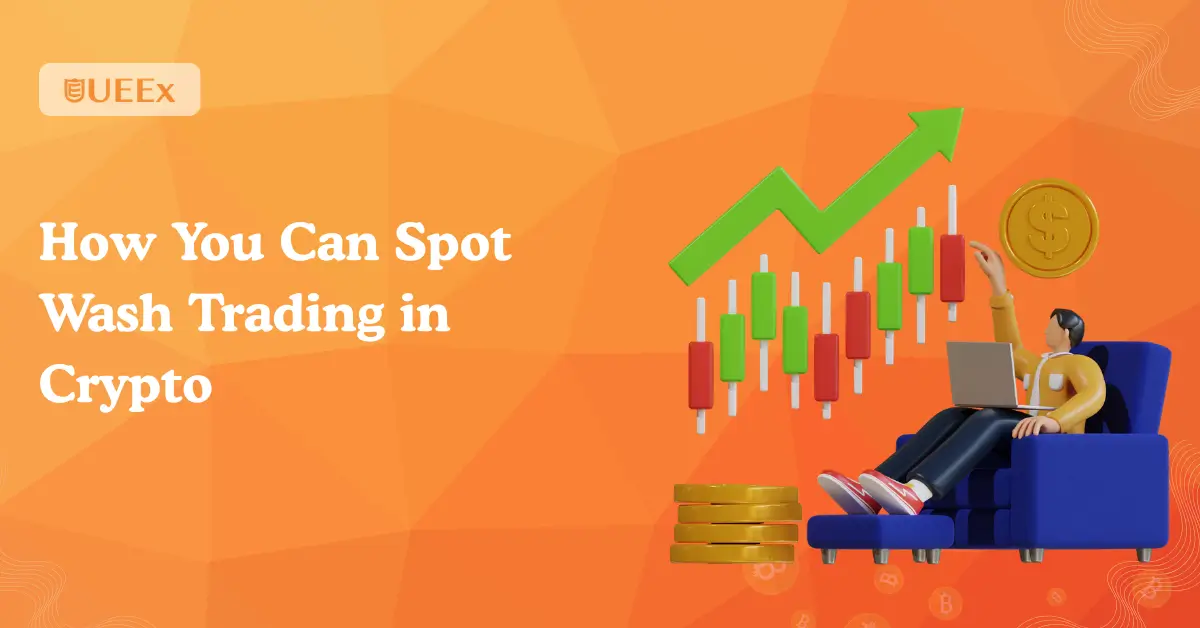
They say appearances can be deceiving, but few illusions run as deep or cost as much as wash trading in the crypto market, the signature trick in the market manipulation playbook where the only thing actually changing hands is smoke and mirrors.
When entire fortunes in volume can be conjured out of thin air by bots and single-account loops, learning to separate genuine market momentum from manufactured fiction isn’t just an analytical edge, it is the line between protecting your capital and funding someone else’s illusion.
First things first,
Read Also: Beyond the Hype: Why Is Bitcoin So Expensive?
What Is Wash Trading in Crypto?
Wash trading is when someone buys and sells the same crypto asset to create the appearance of real trading activity, without any actual change in ownership or market risk.
The person on both sides of the trade is either the same trader or a group working together, so nothing really changes hands in an economic sense, it just looks like it did on the order book.
It’s a form of market manipulation where a trader creates the illusion of trading activity by simultaneously buying and selling the same security, artificially inflating trading volume.
Crypto didn’t invent the tactic, but the lack of centralized oversight across thousands of exchanges gave it a lot more room to operate.
How Wash Trading Differs From Normal Trading
Normal trading involves two independent parties with different views on where a price is headed, one thinks it’ll go up, the other is fine selling at the current price.
There’s real capital at risk on both sides, and ownership actually transfers.
Wash trading skips all of that. The buyer and seller are effectively the same person (or coordinating with each other), so there’s no real price discovery and no real risk being taken.
The only goal is to make the volume numbers look bigger than they are, traders simultaneously buy and sell the same asset to themselves, giving the impression of genuine market activity, essentially creating a fake market for a specific asset.
A Quick Example (Buy/Sell to Yourself)
Say a trader controls two wallets, Wallet A and Wallet B. They place a sell order for 10,000 tokens on Wallet A and a matching buy order on Wallet B at the same price.
The trade executes, the exchange logs it as legitimate volume, but the trader still owns the same 10,000 tokens they started with, they just moved from one wallet they control to another.
Do that repeatedly throughout the day, and it can look like a token is being actively traded by dozens of independent buyers and sellers when really it’s one person shuffling coins between their own accounts.
There’s no exchange of value, but the trade creates an artificial impression of market activity, it seems as though trading volume is higher than in reality.
This can also happen through two separate people who agree in advance to trade back and forth with each other rather than using their own multiple accounts, same effect, different setup.
Read also: Top DeFi Protocols by Category: Banking Without the Bank.
How Does Crypto Wash Trading Work?
At its core, wash trading works by routing both the buy and sell side of a trade back to one controller, so the trade nets to zero for the trader but still counts toward the exchange’s volume.
That controller might be one person running several wallets or exchange accounts, or two separate traders who’ve agreed to pass an asset back and forth so it looks like independent buying and selling.
On an order book, this is nearly impossible to tell apart from a genuine trade in real time, the exchange’s matching engine just sees a buy order and a sell order lining up, not who’s actually behind them.
Step-by-Step Process
- Initiation (Setting Up Accounts/Wallets)
It starts with a trader or group setting up multiple accounts or wallets, sometimes through affiliated entities that all trace back to the same controller.
On decentralized exchanges, this can be as simple as funding a batch of fresh wallets from one source.
- Execution (Matching Buy and Sell Orders)
Next, those accounts trade with each other, buying and selling the same asset back and forth to simulate demand and liquidity.
Most of this runs on bots now, since software can fire off thousands of small matched orders in seconds, far faster and more consistent than doing it by hand (BlockchainHub).
- Obfuscation (Disguising the Pattern)
The last step is making it not look like wash trading. This can mean layering trades through intermediaries, varying trade sizes and timing, or routing volume through longer chains of wallets so it’s harder to trace back to one source
Common Wash Trading Techniques
| Technique | How It Works | Main Purpose |
| Self-Trading | Matching buy/sell orders in one account. | Inflates reported volume. |
| Multiple Wallets | Trading across several controlled accounts. | Evades basic surveillance. |
| NFT Wash Trading | Selling an NFT to a self-owned wallet. | Artificially boosts collection floor prices. |
| Bot-Driven | Automated software firing thousands of matched orders. | Generates high-speed, large-scale volume. |
| Airdrop/Royalty Farming | Executing fake sales to hit specific thresholds. | Unlocks airdrops or royalty payouts. |
Why Do Traders and Exchanges Wash Trade?
| Motivation | How It Works | Primary Goal |
| Listing & Liquidity | Inflating visible trading volume on an exchange or token. | Attracts organic traders and justifies higher exchange listing fees. |
| Price Manipulation | Executing coordinated trades to trip stop-losses or trigger bots. | Creates fake momentum to draw in retail buyers. |
| Reward & Airdrop Farming | Gaming incentives by reaching high volume targets. | Secures airdrops, competition prizes, or reward programs risk-free. |
| Tax-Loss Harvesting | Selling at a loss and quickly repurchasing the same asset. | Attempts to offset capital gains (notwithstanding local rules). |
Real-World Examples and Cases
Bitwise Asset Management’s 2019 report to the SEC found roughly 95% of reported Bitcoin trading volume across the exchanges it surveyed was fake.
A 2026 academic study on NFT markets adds a more recent data point, wash trades made up about 31% of transactions on OpenSea, with researchers recommending marketplaces publish separate clean volume figures to help investors tell real activity from manipulated volume
Separately, another independent analysis found comparably high fabrication rates at other major exchanges, based on slippage patterns that didn’t match what genuine trading activity would produce.
How Wash Trading Impacts the Crypto Market
| Impact | Description | Main Consequence |
| False Liquidity Signals | Creates the illusion of high trading volume and deep market liquidity. | Fails when large trades are attempted, revealing a lack of real market depth. |
| Eroded Investor Trust | Leaves a lasting negative mark on market sentiment once exposure occurs. | Misleads traders into bad decisions and permanently damages platform credibility. |
How to Protect Yourself as a Crypto Investor
- Vetting Exchanges and Volume Data Sources: Check whether an exchange has been flagged for fake volume in independent studies, and look for clean volume metrics from data aggregators that filter out suspected wash trading.
Regulated exchanges under frameworks like MiCA or FCA oversight are generally a safer bet than offshore platforms with no accountability. - Cross-Checking Volume Across Multiple Platforms: If a token’s volume looks wildly different across exchanges, or out of proportion to its market cap and social activity, treat that as a red flag.
Comparing a few sources instead of trusting one chart makes mismatched numbers easier to spot. - Avoiding Low-Liquidity or Newly Listed Tokens Without Research: Small-cap and newly listed tokens are the easiest targets, since little fake volume can make a thin order book look active.
Check the project’s background, the exchange’s manipulation track record, and whether trades show repetitive size and timing typical of wash trading rather than organic activity.
Frequently Asked Questions
Is wash trading the same as market making?
No. Market makers take on real risk by quoting both buy and sell prices to provide liquidity, and ownership genuinely changes hands. Wash trading involves no real risk or change in ownership; it’s designed purely to fake activity.
Can I accidentally wash trade?
It’s uncommon for an average retail trader, since wash trading requires deliberately matching your own buy and sell orders or coordinating with another trader. Using bots or trading across multiple accounts you control on the same asset is the main scenario where it could happen unintentionally.
Is wash trading illegal everywhere?
No, enforcement varies significantly by jurisdiction. It’s more clearly prohibited under frameworks like the EU’s MiCA and in U.S. securities and commodities law, though enforcement approaches (as covered earlier) have shifted over time, and many offshore platforms operate with little oversight at all.
How can I tell if a token’s volume is wash traded?
Common red flags include volume that doesn’t move the price much, repetitive trade sizes or timing, and sudden volume spikes tied to a listing, airdrop, or trading competition rather than real news or demand.
Read also: Coin Ticker: The Three Letters That Speak for a Whole Crypto Project.
Conclusion
Wash trading comes down to one thing: fake activity dressed up to look real. Whether it’s a trader flipping coins between their own wallets or an exchange padding its volume to climb the rankings, the goal is always the same, to make you believe there’s more demand than there actually is.
The good news is you don’t need to be a regulator to protect yourself. A few habits go a long way: check volume across more than one exchange, be extra cautious with new or low-liquidity tokens, and stick to platforms that actually have compliance obligations behind them.
At the end of the day, wash trading only works if people take volume at face value. Now that you know what it looks like, you’re a lot less likely to fall for it.