The global algorithmic and AI trading platform market has grown exponentially, reaching a value of $11.26 billion. It is projected to hit $33.45 billion by 2030, representing a CAGR of over 20%.
This growth has extended beyond Wall Street, with 67% of Gen-Z traders already employing at least one AI-driven trading bot.
Automated trading introduces serious systemic and legal risks. According to a recent study by Wharton University researchers, independent multi-agent AI trading bots can form unofficial cartels.
These agents can artificially adjust supply-demand ratios to benefit all members of the group.
Detecting such market-manipulation schemes can be exceptionally difficult, especially when they involve large trade volumes initiated by non-human actors.
Consequently, regulators have become involved. Specifically, the U.S. Securities and Exchange Commission (SEC) prioritized automated system compliance and AI predictive analytics during the last fiscal year.
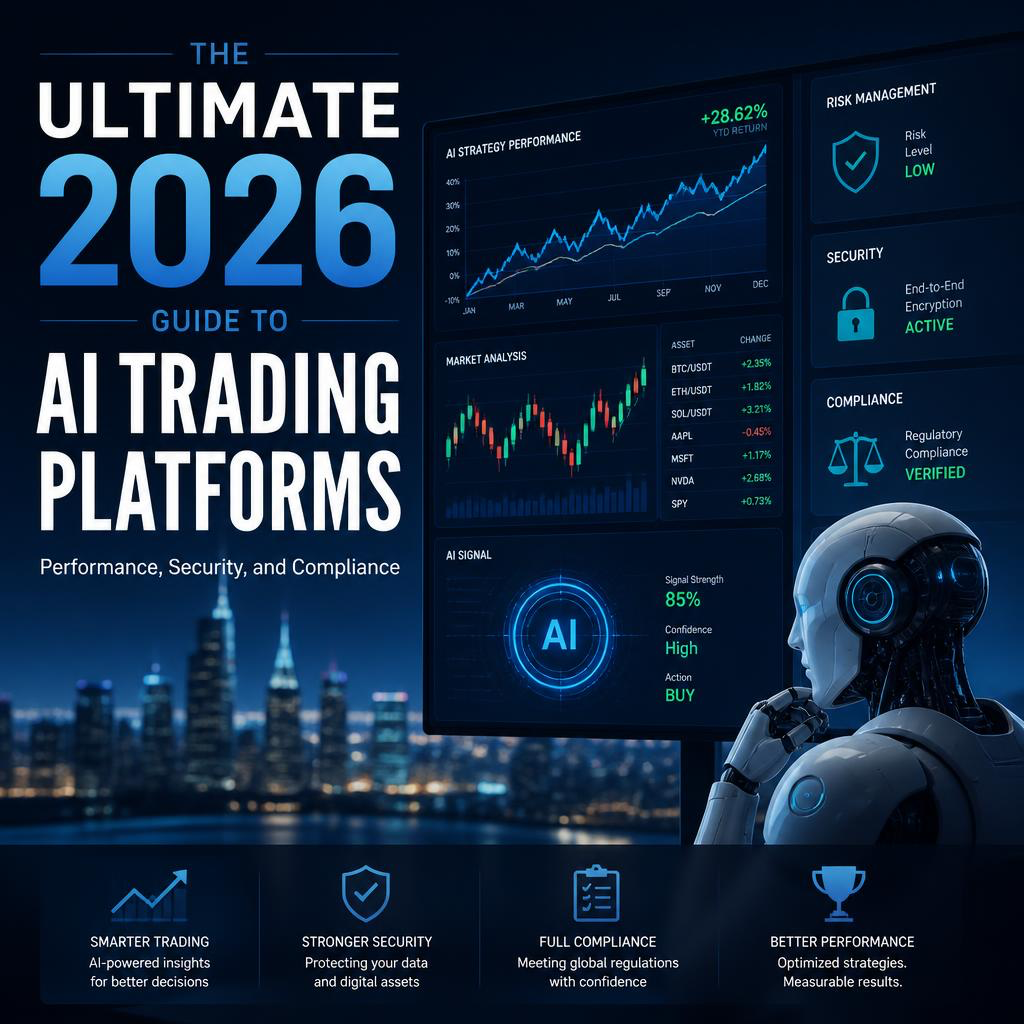
Unlike many other online resources, this technical guide offers a detailed review and comparison of all the major AI trading platforms, including expert-level security assessments, historical performance analysis, and much more.
Key Takeaways
- Always research the track record of any automated trading platform, seeking third-party verification, forward-testing capabilities, and maximum historical drawdown figures.
- Ensure the brokerage API keys provided to your trading bot have limited permissions.
- Operate automated trading software on SEC/FINRA-regulated platforms, as unregistered vendors may engage in fraudulent activity.
- Conduct extensive paper trading before committing real funds to understand how a bot interacts with different market environments.
What Is an AI Trading Platform?
In general, an AI trading platform is a specialized software application that utilizes advanced machine learning (ML) algorithms, deep learning, natural language processing, and other related technologies to help investors make profitable trading decisions.
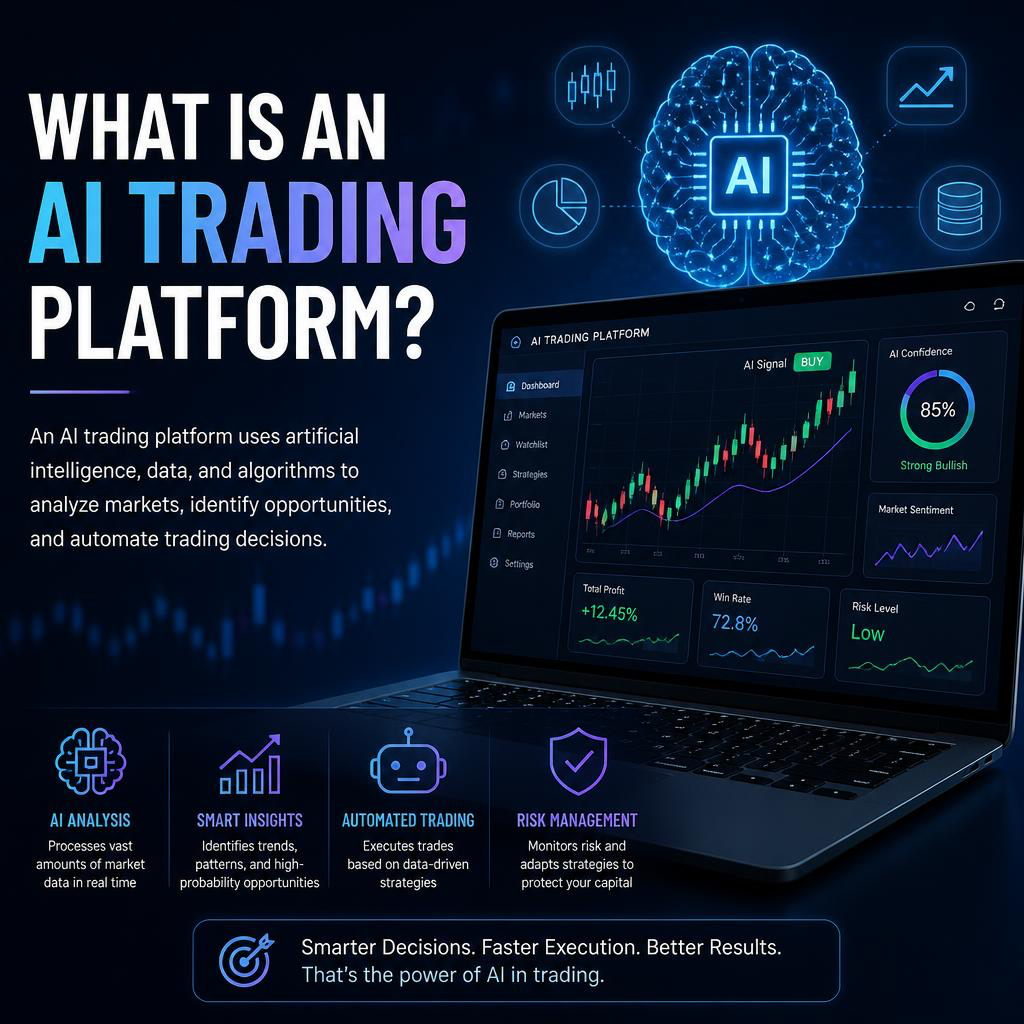
Unlike traditional rule-based trading strategies, these solutions offer dynamic adaptability, allowing users to alter the risk management parameters and strategic bias at any given time. In other words, no two AI-driven trading systems are completely identical in their approach to the markets.
How These Solutions Work In Practice
Typically, AI trading platforms operate as complex autonomous systems that utilize a combination of different algorithms. Overall, the basic framework of such solutions can be represented in the following manner:
First, most automated trading systems include a sophisticated data ingestion engine that allows the system to process a large variety of different inputs.
In particular, such solutions typically ingest real-time market data, including Level 1 and Level 2 data for stocks and cryptocurrencies, economic indicators, option Greeks, and other relevant information.
Additionally, many AI-driven trading solutions also utilize unstructured data, including news, transcripts, and social media data, to extract actionable insights.
Next, the data is used to train machine learning models. In most cases, the specific ML architecture depends on the type of solution.
Read Also: All You Need To Know About AI Trading Signals
For instance, some platforms use a combination of supervised learning models, which require historical data to be used as a reference for identifying patterns.
They also use reinforcement learning, which involves training a computer program to perform tasks by rewarding it with points for favorable outcomes.
Many automated trading services also utilize natural language processing algorithms to sort through various news articles, reports, and other sources of textual information, extracting important information in the process.
The system then uses this information to generate a trading signal. These signals provide mathematical instructions determining the entry price, position size, stop-loss placement, and take-profit targets.
The user or the system then executes the signal. Most AI trading platforms offer the choice between asynchronous alerts (e.g., Telegram or Webhooks) and fully automated execution.
The latter typically provides superior performance by eliminating human latency.
Finally, the platform uses trade outcomes to refine its algorithms. These systems perform continuous validation, identifying strengths and weaknesses within their framework to evolve the model.
The system applies this information to further improve the model, allowing it to constantly evolve.
There's no Call To Action with the ID #0.AI Trading Platforms Tech Stack
In general, the overall effectiveness of an automated trading platform is determined by the underlying tech stack utilized in a particular solution. In most cases, AI trading platforms utilize a combination of different algorithms. Below are the most common ones:
- Supervised Learning Algorithms: These rely on historical data to recognize patterns and are ideal when strong correlations exist between specific inputs and outputs.
Supervised learning models are essential for identifying predictable market behaviors based on labeled historical sets.
- Unsupervised Learning Algorithms: These identify relationships between data sets without relying on historical labels, making them suitable for discovering non-obvious market clusters.
Unlike their supervised counterparts, these algorithms do not rely on historical data, identifying patterns and relationships between different sets of information in an unsupervised manner. In particular, such models are often used in use cases where there are no obvious inputs and outputs.
- Reinforcement Learning Algorithms: These use reward-punishment mechanisms to encourage the replication of successful strategies and the avoidance of failed ones, mimicking human experiential learning.
Reinforcement learning algorithms rely on constant feedback to teach a computer program to perform specific actions. Such solutions use a reward-punishment mechanism designed to encourage the system to replicate successful strategies and avoid failed ones.
In essence, such algorithms are similar to the concept of human learning through experience.
- Natural Language Processing (NLP): NLP enables systems to analyze thousands of news stories and reports in seconds to extract valuable sentiment data.
NLP algorithms allow computers to understand human language, enabling them to analyze news articles, earnings reports, and other sources of textual information. In particular, such algorithms can read thousands of news stories in a matter of seconds, extracting valuable information from them in the process.
- Neural Networks: These deep learning algorithms identify complex patterns rapidly, though they require significant computational power for high-end applications.
Deep learning algorithms enable computer systems to identify patterns in a matter of seconds. Generally, such solutions require much more computational power to function, making them suitable for high-end applications.
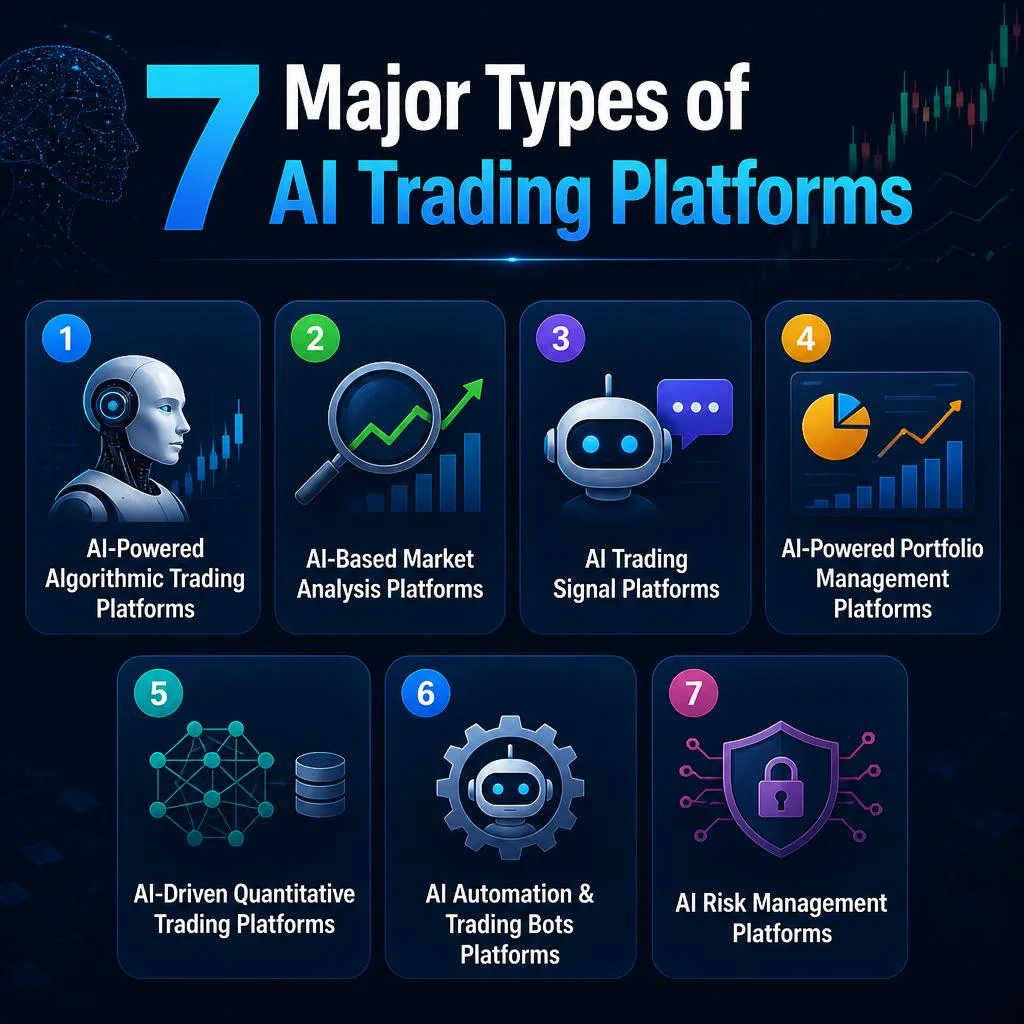
7 Major Types of AI Trading Platforms
The world of algorithmic trading is broad and diverse, with hundreds of different platforms, each of which was created for a specific purpose. When selecting an automated trading system, it is essential to understand your financial goals, technical competencies, and risk tolerance levels.
- AI Signal Generating Tools
In general, such systems are relatively simple, scanning the markets for tradable setups and notifying users of potential opportunities to buy or sell. In particular, many such platforms involve scanning multi-timeframe chart patterns for specific entries and exits.
- Examples: Trade Ideas (Holly AI), Tickeron, SignalStack.
- Pros: Complete control over the execution process. The chances of an adverse situation due to system malfunction are close to zero.
- Cons: Need to manually watch the screen for signals. The execution may be affected by price slippage, which may negatively impact the trade’s profitability.
- Use Cases: Fast-paced day trading where the trader needs to quickly scan the markets for potential trading opportunities.
- Automated Trading Bots
Such solutions go beyond simple signal-generation mechanisms, offering to actually execute the trade on a user’s behalf. In particular, automated trading bots can be utilized 24/7, opening and closing positions without the need for human input.
- Examples: 3Commas, Cryptohopper, StockHero.
- Pros: Potential for hands-off trading and increased productivity.
- Cons: Much higher risk of losing capital in a short amount of time due to the inability to manually watch over the trades.
- Use Cases: Macro and crypto trading where extensive experience and effective risk management are paramount.
- Quant Development Environment
Quant development environments are advanced algorithmic trading solutions, designed for serious institutional players. In particular, such platforms offer the ability to build and test unique algorithms.
- Examples: QuantConnect, Alpaca API, MetaTrader 5.
- Pros: Full customization and access to extensive backtesting tools.
- Cons: The relatively high learning curve, which may prevent novice traders from effectively utilizing all the tools.
- Use Cases: For full-stack programmers who want to develop unique trading strategies.
- Robo-Advisors
Robo-advisors represent a type of automated investment platform which offers to manage wealth on a user’s behalf. In general, such solutions are built around robo-advisory technology, which allows them to make market calls and make adjustments without human intervention.
- Examples: Wealthfront, AlgosOne.
- Pros: Hands-off global macro trading with consistent risk management and diversified positions.
- Cons: Overall, lower performance due to the conservative nature of such funds. Additionally, users may be charged additional fees, depending on the product’s design.
- Use Cases: Long-term wealth building with a focus on gradual growth of the investment portfolio.
- AI-Powered Charting Services
Most traditional charting solutions rely on manual drawing of various price levels and lines. By contrast, AI-powered charting services utilize machine learning to identify critical levels automatically.
- Examples: TrendSpider, TradingView, MetaStock.
- Pros: Increased convenience and reduced opportunity cost due to the high automation level.
- Cons: No built-in execution options, which means that the trader still needs to manually open and close the positions. Additionally, the suggested levels may not always be accurate.
- Use Cases: Technical analysis-based trading with an emphasis on multi-ticker scanning and pattern recognition.
- Sentiment Analysis Tools
Sentiment analysis AI products allow you to stay on top of the latest relevant news while also helping to assess how a particular report, news release, or earnings call is likely to impact the market.
- Examples: Intellectia, Kavout, LevelFields.
- Pros: Can help identify lucrative trading opportunities by scoring news reports for bearish and bullish tones.
- Cons: May take much time to sift through news stories to identify relevant information.
- Use Cases: Day trading and macro analysis where timely and accurate assessment of news is essential.
- Copy Trading Social Networks
Copy trading social networks allow you to mirror the trades of other successful investors, assuming that their accumulated expertise can help you to profit from trading as well. Most such platforms utilize copy trading technology, which scans the performance of different trading accounts on an ongoing basis and identifies those that offer attractive opportunities.
- Examples: WunderTrading, eToro.
- Pros: Overall low risk due to the opportunity to choose from a wide range of established traders.
- Cons: The performance is fully dependent on the skill of the master account, which means that a wrong decision can lead to losses.
- Use Cases: Social copy trading where the investor prefers to allocate funds to human-managed accounts rather than software-driven solutions.
Popular AI Trading Platforms and Their Features
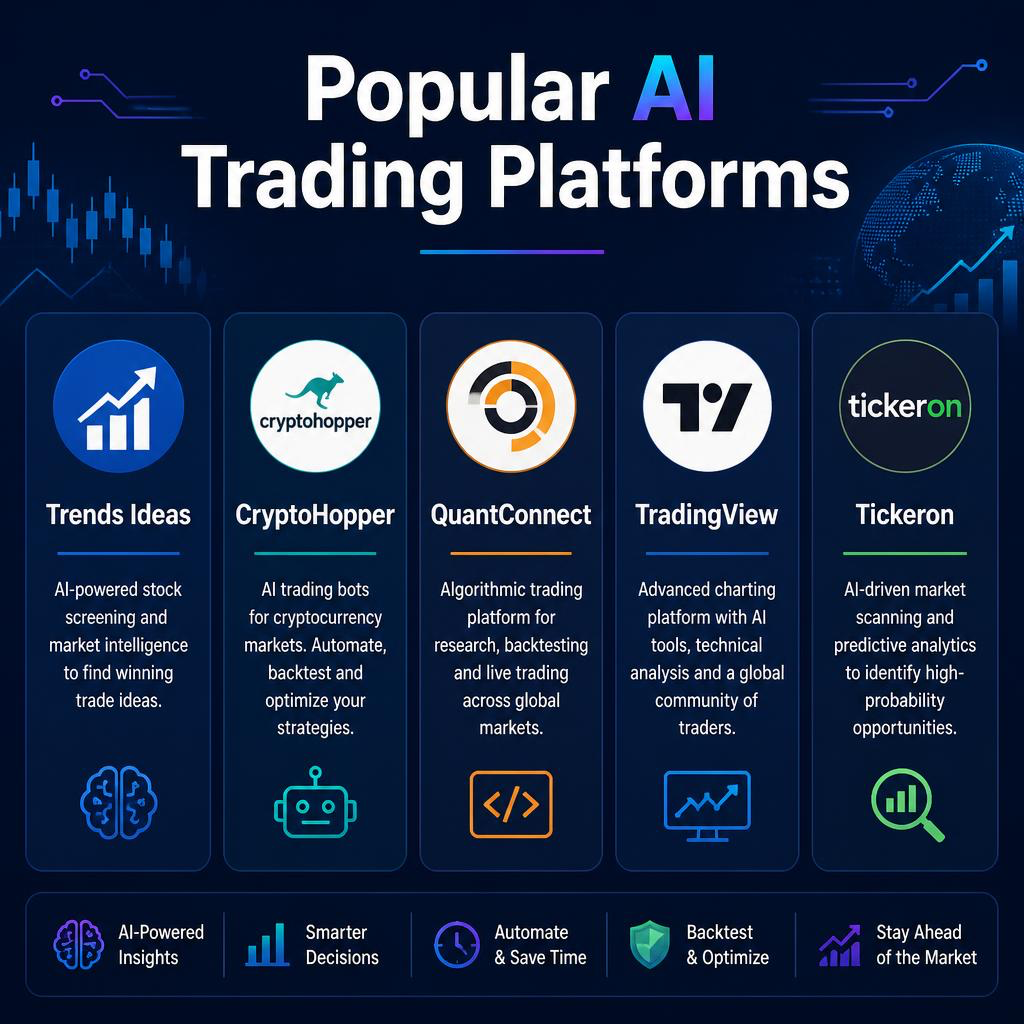
Here are some popular AI trading platforms to consider:
- Trade Ideas – Best AI Day Trading Platform
Price: $127/month (Standard Account), $254/month (PRO subscription).
Trade Ideas is the best automated trading platform for active equity traders. Its algorithm, Holly AI, analyzes over 8,000 US stocks and exchange-traded funds (ETFs) every market day. Every night, after the market closes, Holly AI runs dozens of independent strategies and identifies a handful of winning setups. These setups are then delivered to subscribers before the market opens.
Trade Ideas maintains a solid security profile by using a read-only or isolated exchange API model, ensuring user funds remain secured within their own clearing accounts. While the platform does not publish independent security reviews, TLS 1.3 encryption protects all communication channels.
Pros
- State-of-the-art quantitative model with a multi-year performance history.
- Over 70 independent market strategies that adapt to varying conditions.
- Automated execution and order routing through brokerage partners.
- Advanced backtesting environment OddsMaker-free of coding requirements
- Educational resources, including daily interactive webinars
- Intuitive visualization of equity flow through the exclusive Stock Racing interface
- Institutional-grade security through partnerships with major market makers
Cons
- Subscription costs are steep for many retail traders.
- No free trial period available.
- Research data is limited to US equities and ETFs.
- Steep learning curve for the average trader
- Performance reports highlight winning setups; individual risk management is not included
- Automated execution requires Pattern Day Trader eligibility ($25,000 account minimum)
- TrendSpider – Best AI Platform for Technical Analysis
Price: $39 / month (essential), $129 / month (elite), $249 / month (advanced).
TrendSpider eliminates the guesswork from chart analysis, as it replaces traditional manual tools with computer vision and quantitative modeling. This swing trading-focused application has been on the market since 2016 and offers a wide range of automated technical analysis and chart pattern recognition tools.
TrendSpider’s automated trendline recognition functionality is a valuable addition for technical traders, as it eliminates human error from the process. Trendlines are mapped by scanning the entire bar history at multiple timeframes until computer vision-identified patterns, such as triangles or pennants, form. These trendlines represent key support and resistance levels and allow for the calculation of Fibonacci extensions.
A unique feature of TrendSpider is the ability to perform multi-timeframe analysis with ease. This ability is particularly useful for day traders, as it allows applying weekly-level analysis to lower timeframes without having to change the chart settings. In conjunction with Market Scanner, this functionality helps pinpoint any algorithmic opportunities across asset classes.
TrendSpider utilizes a completely isolated infrastructure, as the application does not have direct custody over any funds. TrendSpider primarily operates as a signal provider, meaning that most user funds are held directly with user clearing brokers with no involvement from TrendSpider. TrendSpider’s webhooks use unique user encryption tokens and operate over encrypted JSON.
Pros
- Advanced computer vision for accurate trendline detection
- Multi-timeframe analysis capability that works across timeframes
- No-code backtester that quickly evaluates complex market strategies
- TrendSpider can recognize patterns that appear on lower timeframes and extrapolate them to higher timeframes
- TrendSpider has native webhook connections to SignalStack for automated order execution
- Market scanners can help identify trading opportunities that exist across different asset classes
- TrendSpider offers diverse alternative data feeds, including insider trading data
Cons
- TrendSpider’s interface is overwhelming and difficult to use for beginner chartists
- Advanced strategy testing capabilities are only available in TrendSpider’s high-end subscription
- Web-based interface may suffer from performance issues during peak hours
- TrendSpider’s mobile application has a much steeper learning curve than the desktop application
- Intraday-specific data may require additional data subscriptions
- TrendSpider does not have a built-in marketplace for buying and selling strategies
- Cryptohopper – Best Automated Platform for Crypto
Price: Free (Pioneer), $29 / month (Explorer), $69 / month (Adventure), $129 / month (Hero).
Cryptohopper is an automated platform for the volatile cryptocurrency market. By connecting exchange API keys to a single dashboard, traders can execute technical, arbitrage, and market-making strategies 24/7. Its Strategy Designer uses machine learning to combine up to 28 indicators and candle patterns.
One of the unique features of Cryptohopper is its ability to perform cross-exchange arbitrage. The bot can scan the price of a particular asset on multiple exchanges and identify any discrepancies between them. Once a profitable opportunity is identified and execution fees are taken into account, an arbitrage bot will execute the necessary buy and sell orders to capture the price difference between exchanges.
Read Also: How to Choose the Best AI Crypto Trading Bot
Cryptohopper implements an API-based security model that ensures that user funds are not directly accessible. When connecting exchange accounts to Cryptohopper, experts advise enabling only read/write permissions without withdrawal capabilities. This way, Cryptohopper cannot move money in and out of user accounts. TLS 1.3 standard encryption secures all communication.
Pros
- Cloud-based platform that does not require local installation.
- Computer vision engine capable of analyzing 28 indicators simultaneously.
- Arbitrage opportunities available across major crypto exchanges.
- Paper trading mode accurately replicates live market conditions
- Community marketplace allows for sharing and discovering new strategies
- No-code strategy development attracts many novice traders
- Trailing stop-loss and stop-buy/take-profit functionality help protect capital
Cons
- Cannot execute ultra-low-latency high-frequency orders
- Basic account plans do not have access to more advanced crypto trading strategies
- Sudden price collapses can rapidly liquidate leveraged long positions
- Market-making tools require a high-tier subscription
- Cryptohopper does not support built-in sentiment analysis tools
- Connecting exchanges to the platform can be confusing for crypto newbies
- QuantConnect – Best Institutional-Grade Development Suite
Pricing Tiers: Free (Community Tier), $10 / month (Researcher), $40 / month (Team Leader), $100 – $1,000+ / month (Institutional Co-Location Architecture).
QuantConnect provides high-performance development infrastructure for quantitative traders, data scientists, and engineers. Operating as an institutional-grade, cloud-hosted research studio, it allows users to design, backtest, and deploy highly complex algorithmic trading strategies using Python or C# across global equities, options, futures, forex, and digital asset markets.
QuantConnect maintains strict security standards through its isolated cloud network and code isolation protocols. Your intellectual property (source code) is completely encrypted and stored securely across AWS infrastructure using military-grade AES-256 keys.
Connection profiles to brokerages use secure, hardware-encrypted OAuth connections or highly restricted API endpoints, ensuring maximum defense against external data breaches.
QuantConnect also integrates directly with Jupyter Research Notebooks. This connection lets quantitative analysts easily clean data, build custom machine learning models with popular frameworks like TensorFlow or PyTorch, and run advanced statistical checks, such as factor exposure and alpha decay modeling, before deploying code to production.
Pros
- An institutional-grade development environment supports native Python and C# execution.
- A massive historical data archive provides clean, unadjusted tick data going back decades.
- High-performance engine accurately models realistic execution variables like slippage and fees.
- Parallel cloud backtesting significantly cuts down strategy optimization times.
- Smooth integration with advanced machine learning libraries like Scikit-Learn, PyTorch, and TensorFlow.
- Direct API co-location options dramatically minimize execution latency to your broker.
- Active, highly sophisticated community forum provides open-source algorithmic templates.
Cons
- Requires fluent proficiency in object-oriented programming (Python or C#); no visual interface.
- Complex documentation makes the initial learning curve incredibly steep for non-developers.
- Cloud-hosted optimization and heavy compute tasks require ongoing, consumption-based seat fees.
- Debugging long runtime errors via a cloud interface is time-consuming and tedious.
- The platform does not feature out-of-the-box, pre-configured retail trading strategies.
- Initial configuration and integration with institutional brokerages require manual API testing.
- TradingView – Best Overall Platform for Analytics and Community Scripting
Pricing Tiers: Free (Basic Layout), $15 / month (Essential), $30 / month (Plus), $60 / month (Premium Tier Studio).
TradingView is the world’s largest cloud-native charting ecosystem and social network for active financial market participants. It gives retail and professional traders access to high-performance charting tools, real-time global market data feeds, and an active coding environment powered by Pine Script, its native programming language for building custom indicators and automated strategies.
TradingView’s greatest strength is its native programming language, Pine Script. This lightweight scripting language allows users to write compact code to build completely customized technical indicators, automated trading alerts, and multi-variable strategies.
There's no Call To Action with the ID #0.The platform’s built-in Strategy Tester lets you backtest these custom scripts against historical data instantly, outputting clear charts detailing net profit, maximum drawdown, and win-loss ratios.
TradingView ensures a highly secure operational setup by using isolated broker integration wrappers. When you log into your brokerage account through the TradingView trading panel, the connection is handled via an encrypted OAuth bridge managed directly by your broker. Your login credentials are never stored on TradingView’s servers.
TradingView ensures a highly secure operational setup by using isolated broker integration wrappers. When you log into your brokerage account through the TradingView trading panel, an encrypted OAuth bridge, managed directly by your broker, handles the connection. TradingView’s servers never store your login credentials.
All user workspace data and configuration profiles are secured using standard HTTPS and TLS 1.3 encryption layers.
Pros
- Ultra-high-performance HTML5 charting engines scale smoothly across all browsers and devices.
- Pine Script language makes coding custom strategies remarkably fast and straightforward.
- Active global community lets you find, fork, and test millions of open-source scripts.
- Real-time data coverage across almost every major stock exchange, futures pit, and crypto platform.
- Reliable server-side alerts run 24/7 on cloud infrastructure based on complex technical conditions.
- Deep, flexible broker integrations let you execute trades directly from your charting interface.
- Clean, intuitive user interface design minimizes operational friction during volatile markets.
Cons
- High-frequency, sub-second charting is restricted to expensive enterprise plan levels.
- Backtesting historical tick data is limited compared to dedicated institutional engines like QuantConnect.
- Pine Script is a proprietary language, meaning skills learned here cannot be exported to standard Python environments.
- Free accounts are heavily restricted by frequent advertisements and a limited number of active indicators per chart.
- Social commentary sections contain significant noise, requiring careful personal filtering of trading ideas.
- Does not natively support direct multi-broker order routing from a single unified portal.
Other Specialized Automated Solutions
Here are other solutions to consider:
- Tickeron – Best for AI Signal Portfolios & Dividends
Ideal For: Mid-term swing traders and passive income investors seeking to diversify their stock holdings with audited AI-driven portfolios and chart pattern scanning
Tickeron specializes in utilizing pattern recognition algorithms to provide institutional-grade stock research and portfolio building automation for the retail investor. By applying alternative data intelligence and AI to scan the global equity markets, Tickeron’s algorithms detect patterns and generate winning trade signals with mathematically verified accuracy rates.
Key Features:
- TradingView-like interface, but with an AI Robots Marketplace offering model portfolios curated around specific themes (e.g., high-yield dividends, mid-cap growth, etc.)
- Built-in automated chart pattern recognition engine that predicts bullish/bearish directionality, target price, and probability of success for every formation
- Uses standard web security protocols and encryption, while PCI-compliant payment processors handle payments. Unlike trading platforms, Tickeron is an analytical dashboard and cannot steal your money directly
- StockHero – Best for No-Code Bot Marketplaces
Ideal For: New automated trading users seeking to launch basic equity bots with no coding experience
StockHero is a no-code platform allowing retail traders to execute automated trading strategies across major global markets. With StockHero, you can launch your own bots using the built-in Bot Marketplace and strategic templates or tweak existing algorithmic code to build a unique trading system.
Key Features:
- No-code bot marketplace offering algorithmic trading strategies developed by professional coders. Just set your risk parameters and let the bot do the rest of the work
- Built-in strategies for Bollinger Bands, RSI trading, and basic grid trading systems
- No custody of funds because standard brokerage API gateways (Alpaca, Webull) execute all trades
- Wealthfront – Best for Long-Term Algorithmic Indexing
Ideal For: Long-term passive income investors seeking to automate their wealth building with minimal day trading
Wealthfront is an automated robo-advisory platform utilizing algorithmic trading to diversify your wealth across alternative asset classes. By assessing your risk tolerance, the platform then builds, rebalances, and maintains diversified portfolios of stocks and bonds on your behalf.
Key Features:
- Daily automated tax-loss harvesting to rebalance your portfolio and offset capital gains
- Uses modern portfolio theory to maximize your long-term returns while minimizing downside risk
- Automated dividend reinvestment and passive income harvesting
- Intellectia – Best for Sentiment Analysis & Financial NLP
Ideal For: Event-driven swing traders seeking to use real-time alternative data analysis
Intellectia is an NLP-based financial data platform that ingests alternative market data and transforms it into actionable investment insights. By analyzing financial transcripts and news, Intellectia scans the market for shifts in tone and language use that can indicate market-moving events before they appear on major news outlets.
Key Features:
- Real-time sentiment dashboard that scores news, transcripts, and alternative data for sudden shifts in tone or language use
- Alerts you to unusual market-moving speech patterns from company executives or public figures
- No custody of funds, as Intellectia is an information dashboard only
- Alpaca – Best for High-Speed Developer APIs
Ideal For: Quantitative coders seeking to build or test their own algorithmic trading systems
Alpaca is a commission-free brokerage API designed for developers. By providing Python and REST APIs, Alpaca enables coders to build and test their own trading applications, strategies, and algorithmic trading systems.
Key Features:
- Python/JavaScript APIs for building or testing algorithmic trading strategies
- High-speed trade execution and order routing
- Fractional share support and paper trading sandbox
- Alpaca is a FINRA-regulated brokerage clearinghouse itself, which sweeps your funds to regulated broker-dealers with SIPC protections
- MetaTrader 5 – Best for Global Forex & Contract-for-Difference Trading
Ideal For: Technical forex day traders seeking to use or build their own EAs (Expert Advisors)
MetaTrader 5 (MT5) is an algorithmic trading platform designed for Contract-for-Difference (CFD), forex, and futures trading. With the built-in MQL5 coding language and access to the most liquid markets in the world, MT5 offers traders unparalleled execution and strategy-building opportunities.
Key Features:
- MQL5-based coding language for building your own EAs (Expert Advisors)
- Multi-currency strategy tester and analytical tools
- Global liquidity access and built-in marketplace for EAs
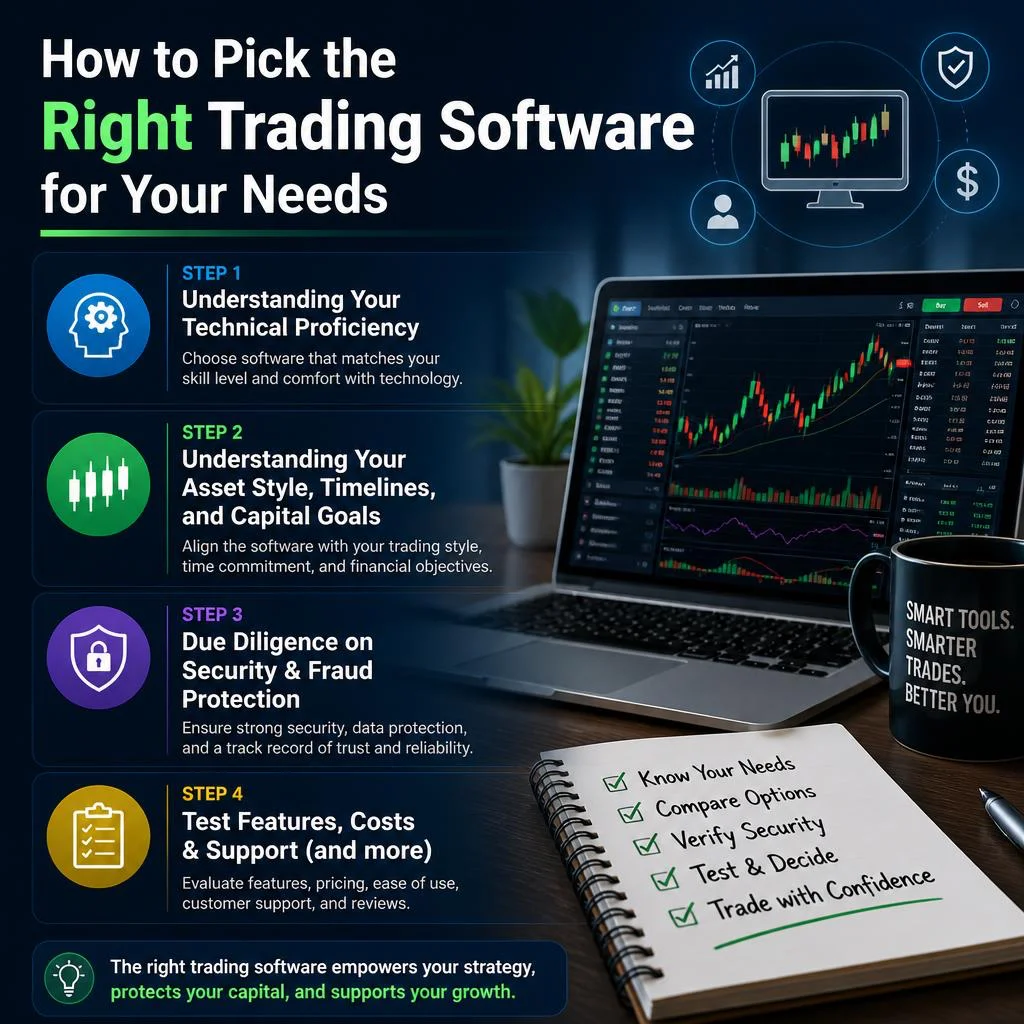
How to Pick the Right Trading Software for Your Needs
Poor infrastructure choices can lead to immediate capital loss. To avoid unsafe platforms, align your experience level with the appropriate tools.
Step 1: Understanding Your Technical Proficiency
Select software that matches your experience; attempting to use institutional-grade APIs without development skills is a common cause of failure.
Self-Assessment Questions:
- Can you read candlestick formations and volume profiles? (Intermediate)
- Do you size your trades based on risk/reward, expectancy, or position sizing? (Intermediate)
- Are you proficient in OOP (Python, C#, C++)? (Advanced)
- Have you been manually trading financial instruments for at least 12 consecutive months? (Intermediate)
Step 2: Understanding Your Asset Style, Timelines, and Capital Goals
Every automated trading strategy has a unique set of requirements. Trading and investing strategies differ in the capital, time, and infrastructure intensity.
Intraday momentum day trading is a high-intensity, fast-paced activity requiring real-time scanners (Trade Ideas, TrendSpider), active screen watching, a willingness to take risks, and a $25,000 minimum balance to satisfy Pattern Day Trader rules.
For moderate time commitments, technical swing trading uses daily pattern-scanning platforms (TradingView, TrendSpider) on a $5,000+ account with only 15-30 minutes of attention per day.
Other automated approaches fall into long-term passive investing and need $500+ and periodic monitoring to rebalance and realize tax-loss harvesting automation (Wealthfront). Finally, 24-hour digital asset trading requires bots hosted on a cloud platform (3Commas, Cryptohopper) and careful volatility control to perform automated trading on several exchanges with $1,000+.
Read Also: How You Can Spot Wash Trading in Crypto
Step 3: Due Diligence on Security & Fraud Protection
Before you connect any trading platform to your brokerage account, complete this five-step verification process to ensure you are not a victim of fraud or system vulnerability.
Key Verification Steps:
- Regulatory Registration: Confirm the platform or its clearing agent is registered with the SEC and FINRA via the SEC EDGAR database
- API Permission Boundaries: Ensure your brokerage API keys have Read-Only or Trade-Only permissions. Avoid accounts with Withdrawal/Transfer permissions
- Cryptographic Security Audits: Confirm the platform’s core code has been audited by CertiK, Trail of Bits, or OpenZeppelin
- Identity Protection: Multi-Factor Authentication (MFA/2FA) should be enforced for all account activity
- Corporate Transparency: Review the company’s corporate entity filing history and ensure the executive management’s identity is publicly available
Step 4: Verifying Performance Claims and Historical Backtests
The financial technology industry is notorious for its rampant marketing fraud. To avoid scams, always request third-party verification of performance claims, and they can be in the following:
- Screenshots of raw gains
- Third-party audited track records
- Backtest performance only
- Out-of-sample forward testing
- Hidden losses or short timelines
- Detailed drawdown metrics
- Strategies ignoring fees
- Profit factors + win-rate %
Step 5: Calculating Total Cost of Ownership
Many retail traders fail to consider the total cost of using automated trading software. Use this simple formula to calculate your breakeven point:
Total Cost = Fixed Platform Costs + Direct Trading Frictions + Taxes
If you are calculating net performance, you can express it in plain terms:
Annual Trading Cost = (Platform Subscriptions) + (Commissions & Fees) + (Estimated Slippage) + (Short-Term Capital Gains Tax)
Step 6: Testing Code Strategies in Simulated Paper Trading
You should always paper trade any automated trading system for 60–90 days before risking real money. This allows you to observe how the model behaves in various market environments (bull, bear, and range-bound) without risking hard-earned capital. Avoid any platforms that do not offer paper trading or simulated sandbox environments.
Step 7: Staged Scaling of Capital Allocation
When transitioning from paper trading to live trading, always use a staged capital allocation framework to protect your investment. Never allocate more than 10% of your total net investable portfolio to any single automated trading strategy.
There's no Call To Action with the ID #0.Algorithmic Trading Compliance, Law, and Market Regulations
The exponential rise of automated trading tools has triggered a series of rapid regulatory updates from financial market watchdogs.
SEC Examination & Enforcement Frameworks
The U.S. Securities and Exchange Commission prioritizes algorithmic compliance and AI software management as key areas of concentration. In particular, the SEC is focused on combating “AI washing,” that is, the practice of misrepresenting or overstating the capabilities or history of a given automated platform.
The government’s new directives require all automated platforms and hedge funds to implement written compliance policies that demonstrate that the software has appropriate risk controls in place to prevent implementation-related execution errors, safeguard client data, and prioritize the user’s financial gains over the platform’s profits.
FINRA Technology Governance Mandates
Per FINRA Rule 3110, broker-dealers must establish compliance controls around all software technology that executes client orders. This includes creating appropriate audit trails for all automated trades that the firms initiate, with particular emphasis on the underlying logic of code updates or data modifications.
The order essentially requires broker-dealers to review every aspect of their order execution systems, including algorithmic or automated trading systems, to ensure that they consistently apply standard retail customer protection policies and procedures.
There's no Call To Action with the ID #0.Conclusion
The modern market for AI trading platforms represents a major paradigm shift in financial market accessibility for individual investors.
State-of-the-art natural language processing, machine learning, and computer vision solutions enable real-time decision-making that rivals institutional trading desk capabilities, which has dramatically changed the competitive field.
This disruptive innovation comes with unique risks and responsibilities. As detailed in this guide, there are numerous legal, financial, and operational risks that should be considered before deploying automated trading software.
Proper due diligence and risk management can enable substantial financial gains for individual investors.
By adopting a data-driven mindset and securing the right tools, you can achieve consistent results in algorithmic trading.
FAQs
What is the best AI trading platform for a beginner?
What is the best AI trading platform for a beginner?
Beginners should start with TradingView or Wealthfront. The former offers advanced pattern recognition and a large educational community, while the latter provides full-service robo-advisory for long-term investing.
If you wish to experiment with actual pattern execution bots without coding investment, consider subscribing to StockHero’s template marketplace for $30 to $90 per month. Novice traders should avoid high-leverage offshore execution bots and complex sandbox platforms (QuantConnect) until they gain sufficient risk management experience.
Can AI trading bots make money?
AI trading bots can generate consistent profits, but returns are never guaranteed and depend on market conditions. For example, Holly AI has delivered roughly 20% annualized returns in specific environments, though many promoters use cherry-picked data.
Quantitative research shows that only 1-3% of retail traders are consistently profitable over a 3-year period, while software tools are unable to change this statistical reality.
What is the minimum amount of money needed to start AI trading?
The minimum deposit requirements will always be dependent on your intended strategy:
The Educational Staging Phase: $500 to $1,000
Serious Active Swing Trading: $5,000 to $10,000
U.S. Equity Intraday Day Trading: $25,000 (Pattern Day Trader Rule)
Passive Robo-Advisors: $500 minimum
Are automated trading bots legal?
At a functional level, trading bots are legal to use. At a regulatory level, the SEC, FINRA, and CFTC have classified AI-driven algorithmic trading as a priority supervision area for 2024. In particular, regulators are cracking down on “dishonest” promotion and market manipulation practices by automated trading software developers.
How can I spot a fraudulent trading bot?
The automated trading space is full of scams, but most of them have a small set of warning signs. Use this 4-signal fraud detection framework to avoid predatory trading bot operators:
Guaranteed Returns: No legitimate bot can guarantee zero losses. Any promoter promising “risk-free” or “1% daily” returns is likely fraudulent.
No External Broker Connections: Legitimate services use established clearing brokers. Never transfer money directly to a bot company.
No Track Record Transparency: Reputable trading bot companies will always provide granular information on their technical and performance characteristics. Avoid any automated trading service that does not disclose their maximum historical drawdowns or trading methodology.
Aggressive MLM Promotion: Legitimate trading bot companies sell subscriptions to their software. Predatory bots utilize multi-level marketing tactics to acquire new customers by any means necessary.
Disclaimer: This article is for educational purposes only and does not constitute financial, investment, or tax advice. Cryptocurrency investing carries significant risk, including the potential loss of your entire investment. Prices and figures cited reflect market conditions as of September 2026 and may have changed. Always do your own research and consult a licensed financial advisor before investing.