Artificial intelligence and crypto have been circling each other for years. In 2026, they finally started sharing a stage. Decentralized networks now train AI models, rent out GPUs, and run AI agents that trade, book, and negotiate on their own.
The tokens that power these networks are the best AI crypto coins of 2026, and this guide breaks down exactly which ones matter, how they work, and how to hold them without getting burned.
We’ll walk through the top 12 picks by market cap and real-world use, then cover buying, storage, taxes, risk, and the mistakes that trip up almost every new investor. No hype, no filler. Just what you need to make an informed call.
Key Takeaways
The AI crypto sector’s combined market cap currently sits around $14 billion as of September 2026, a small slice of the $2.76 trillion crypto market.
Bittensor (TAO), the Artificial Superintelligence Alliance (FET), and NEAR Protocol currently lead the pack by market cap and real usage.
AI tokens are far more volatile than Bitcoin or Ethereum. Expect 20% to 50% price swings within weeks, not months.
Security matters more here than almost anywhere else in crypto. Over $3.4 billion was stolen from crypto platforms in 2025 alone.
Join UEEx
Experience the World’s Leading Digital Wealth Management Platform
AI crypto coins are digital tokens that pay for, reward, or govern some piece of an artificial intelligence system that runs on a blockchain instead of a single company’s servers.
Instead of one company owning all the computers and all the data, thousands of independent people around the world contribute computing power, data, or trained models and get paid in the token for doing it.
Think of it like this. When you use ChatGPT, every part of that experience, the chips, the training data, and the servers, sits inside one company. When you use a decentralized AI network like Bittensor, thousands of separate computer owners compete to produce the best AI output, and the network pays the best ones in TAO tokens. Nobody owns the whole system.
That difference is the entire pitch behind AI crypto. Supporters believe it keeps AI power spread out instead of concentrated in a handful of tech giants. Critics point out that OpenAI alone closed a $122 billion funding round at an $852 billion valuation in early 2026 and ask whether small decentralized networks can really compete with that kind of money.
How AI Crypto Works
Most AI crypto projects combine three elements: a blockchain to keep score, a token to pay contributors, and a task that needs AI, like training a model, rendering a video, or indexing data.
Here’s a simple example. Say a startup needs GPU power to train an image recognition model but doesn’t want to pay Amazon’s cloud prices. On a network like Akash Network, the startup posts the job.
Anyone with a spare GPU sitting idle in their garage or data center can bid to run it. The startup pays in AKT tokens, and the price often comes in far below what AWS or Google Cloud would charge.
Decentralized AI networks flip the usual cloud computing model on its head. Instead of renting servers from one giant provider, you’re renting spare capacity from thousands of smaller owners who compete on price.
The blockchain’s job in all of this is bookkeeping. It records who did the work, checks that the output was actually good, and pays out the token reward automatically through a smart contract. No human accountant needed, and no single company deciding who gets paid.
Not every AI coin does the same job. Broadly, they fall into a few buckets:
Decentralized machine learning networks: Networks like Bittensor let AI models compete against each other, with the best ones earning token rewards.
GPU computing marketplaces: Projects like Render and Akash connect people with spare graphics cards to companies that need compute power for AI training or 3D rendering.
AI agent platforms: Virtuals Protocol and similar projects let anyone create, launch, and even trade autonomous AI agents that handle tasks like trading or customer support.
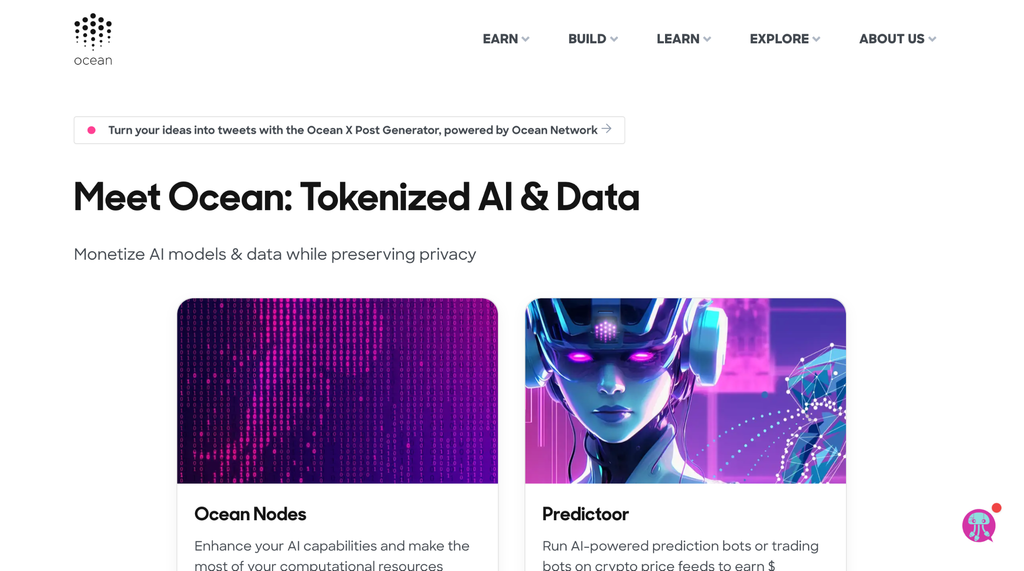
Data marketplaces: Ocean Protocol lets people sell access to datasets that AI models need for training, without giving up ownership of the raw data.
AI-native blockchain infrastructure: Internet Computer, NEAR, and The Graph build the underlying rails that let AI applications run directly on-chain or query blockchain data efficiently.
Best AI Crypto Coins 2026: Top 12 Picks Ranked
Comparison Table for the Best AI Crypto Coins 2026
Rank
AI Coin
Market Cap
Blockchain Use Case
1
Bittensor (TAO)
$1.84B
Decentralized AI networks and AI model marketplaces
2
NEAR Protocol (NEAR)
$2.1B
AI agents, private inference, and decentralized applications
3
Internet Computer (ICP)
$1.16B
On-chain AI inference and decentralized cloud computing
4
Render (RENDER)
$687M
Decentralized GPU computing for AI and rendering
5
Artificial Superintelligence Alliance (FET)
$317M
Autonomous AI agents and decentralized AI services
6
Virtuals Protocol (VIRTUAL)
$373M
AI agents, agent economies, and tokenized ownership
7
Akash Network (AKT)
$146M
Decentralized cloud and GPU computing
8
The Graph (GRT)
$144M
Blockchain data indexing for Web3 and AI applications
9
Ocean Protocol (OCEAN)
$24M
Data markets, AI training, and privacy-preserving data access
10
io.net (IO)
$47M
Decentralized GPU infrastructure for AI workloads
11
Oasis Network (ROSE)
$44M
Confidential computing and privacy-preserving AI
12
Qubic (QUBIC)
$62M
High-performance blockchain computation and AI workloads
The projects below are ranked by a mix of market size, real-world use, technology, ecosystem activity, and relevance to the AI sector.
1. Bittensor (TAO)
Source: bittensor.com
Bittensor is one of the leading crypto projects focused directly on decentralized AI. Its network is divided into specialized subnets where participants provide AI-related services and compete for TAO rewards.
The project also has a capped supply of 21 million TAO. Its first halving took place in December 2025, reducing new issuance by 50%.
Why it stands out:
Decentralized marketplace for AI services
Specialized subnets support different AI workloads
21 million maximum supply
Strongest pure-play decentralized AI thesis on this list
Best for: Investors seeking direct exposure to decentralized AI infrastructure.
2. NEAR Protocol (NEAR)
Source: near.org
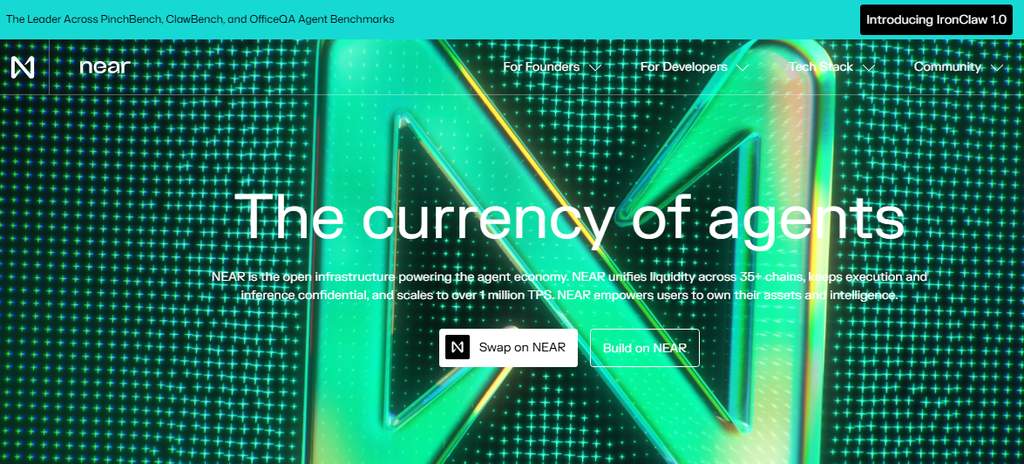
NEAR Protocol has evolved from a general-purpose Layer-1 into one of the more ambitious blockchain projects focused on AI and autonomous agents.
In 2026, NEAR AI is developing private inference using trusted hardware, while the wider NEAR ecosystem is working on infrastructure for agents that can transact, coordinate resources, and act on behalf of users.
Recent CoinGecko data put NEAR’s market cap above $2 billion, making it one of the largest tokens in this group.
Why it stands out:
AI agents and autonomous applications
Private and verifiable AI inference
Established Layer-1 ecosystem
Stronger diversification than a pure AI token
Best for: Investors who want broader blockchain exposure with a growing AI focus.
3. Internet Computer (ICP)
Source: internetcomputer.org
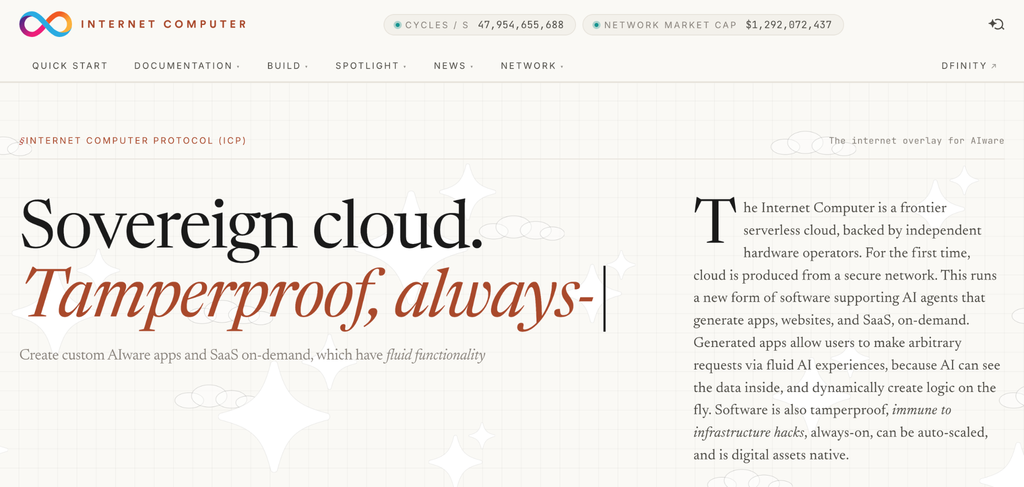
Internet Computer takes a different approach by allowing developers to run software and AI workloads directly on its decentralized network.
Its on-chain AI work aims to reduce reliance on centralized servers by running AI inference inside smart contracts. ICP also supports applications that interact directly with other blockchains through Chain Fusion. Recent August data placed ICP’s market cap around $1.16 billion.
Why it stands out:
On-chain AI inference
Decentralized cloud infrastructure
Smart contracts can run full applications
Direct interoperability with major blockchains
Best for: Developers and investors interested in fully on-chain AI infrastructure.
4. Render (RENDER)
Source: rendernetwork.com
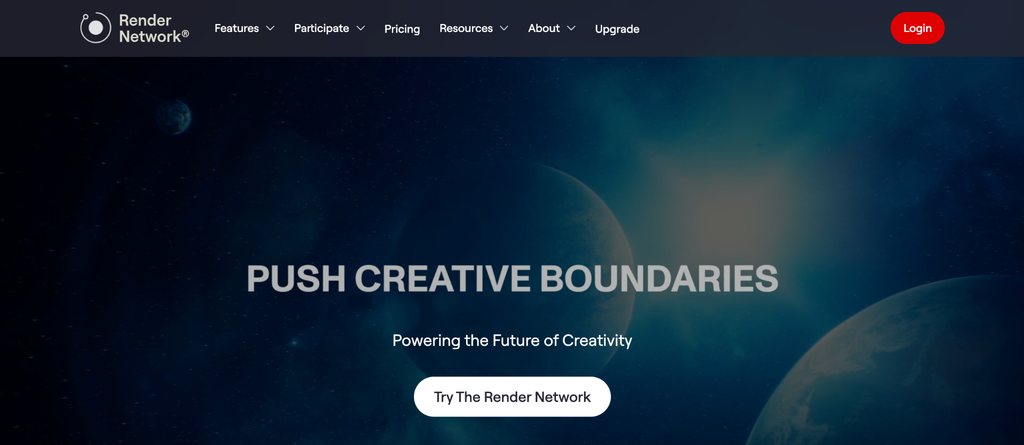
Render Network connects GPU providers with users who need computing power. While it started with 3D rendering, the network now supports machine learning, AI inference, fine-tuning, and generative AI workloads.
Recent August data showed RENDER with a market cap of roughly $687 million.
Why it stands out:
Decentralized GPU marketplace
Supports AI training and inference
Lets GPU operators monetize spare capacity
Expanding beyond traditional 3D rendering
Best for: Investors looking for exposure to the growing demand for decentralized GPU compute.
5. Artificial Superintelligence Alliance (FET)
Source: Pinterest
The Artificial Superintelligence Alliance brings together the technology and communities built around Fetch.ai and SingularityNET following their token merger.
The alliance focuses on decentralized AI, autonomous agents, machine-to-machine interaction, and AI infrastructure. However, the structure has changed since the original merger. Ocean Protocol officially withdrew from the alliance in October 2025 and now operates independently.
Recent CoinGecko data showed FET’s market cap around $317 million in early August.
Why it stands out:
Focus on autonomous AI agents
Decentralized AI infrastructure
Combines Fetch.ai and SingularityNET ecosystems
One of the better-known AI-focused crypto projects
Best for: Investors who want exposure to decentralized AI agents and services.
6. Virtuals Protocol (VIRTUAL)
Virtuals Protocol focuses on creating an economy around AI agents. Its platform allows agents to have identities, wallets, jobs, markets, and tokenized ownership.
The project has also expanded into Robinhood Chain, where AI agents can operate as economic actors in tokenized markets. VIRTUAL’s market cap was around $373 million in early August 2026.
Why it stands out:
AI agent creation and ownership
Agent-based commerce
Tokenized AI economies
Growing presence on Robinhood Chain
Best for: Higher-risk investors betting on the growth of autonomous AI agents.
7. Akash Network (AKT)
Source: akash.network
Akash Network is a decentralized cloud marketplace that connects users with providers offering computing resources.
Its GPU marketplace is particularly relevant to AI developers looking for alternatives to centralized cloud providers. Akash is also working on confidential CPU and GPU computing in its 2026 roadmap.
Recent CoinGecko data put AKT’s market cap around $146 million.
Why it stands out:
Decentralized cloud computing
GPU infrastructure for AI workloads
Transparent compute pricing
Growing focus on confidential computing
Best for: Investors who believe decentralized cloud infrastructure can compete with traditional providers.
8. The Graph (GRT)
The Graph provides indexing infrastructure that makes blockchain data easier for applications to access.
Its AI strategy is becoming more important in 2026. The Graph now supports AI-native tools, including MCP servers and agent skills that allow AI systems to query and interact with on-chain data using natural language.
Why it stands out:
Core blockchain data infrastructure
AI agents can interact with indexed on-chain data
Supports Subgraphs and Substreams
Useful across DeFi, Web3, and AI applications
Best for: Investors who prefer blockchain infrastructure over speculative AI-agent tokens.
9. Ocean Protocol (OCEAN)
Source: oceanprotocol.com
Ocean Protocol focuses on data ownership, data markets, and privacy-preserving access to datasets.
Its Compute-to-Data technology lets users run approved algorithms against sensitive datasets without exposing the underlying data. This can be useful for AI training, research, healthcare, and other data-heavy applications.
Importantly, Ocean is now independent from the Artificial Superintelligence Alliance after withdrawing in October 2025. Its current OCEAN token documentation says the token represents Ocean’s decentralized AI and data vision but no longer has the broad utility it once had.
Recent CoinGecko data showed a market cap of roughly $24 million, making OCEAN one of the smallest and riskiest picks here.
Why it stands out:
Privacy-preserving data access
Compute-to-Data technology
AI and data-market focus
Very small market cap and therefore higher risk
Best for: Investors specifically interested in the intersection of AI, data ownership, and privacy.
10. io.net (IO)
Source: io.net
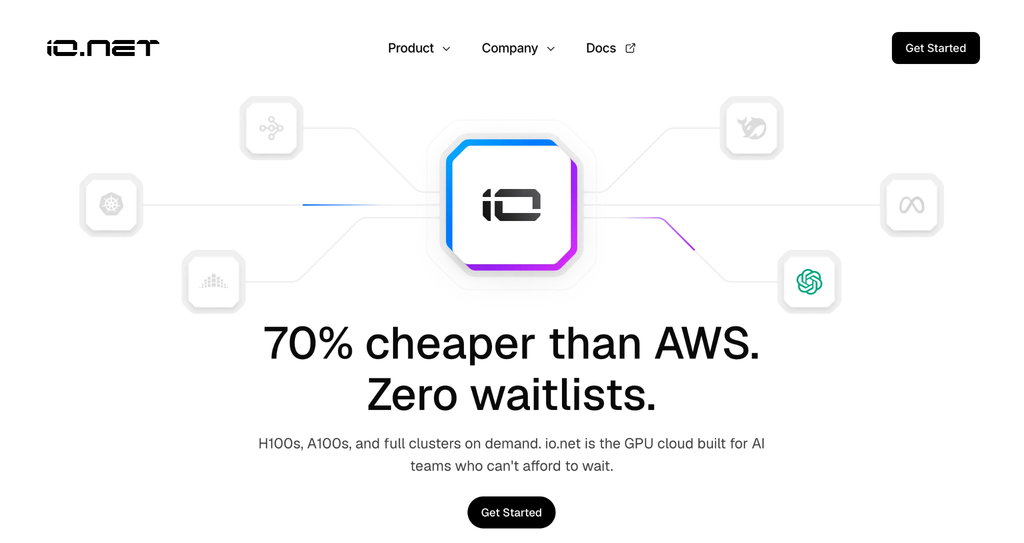
io.net focuses on decentralized GPU infrastructure for AI and machine learning.
The network aggregates computing resources and provides infrastructure for AI workloads. Its 2026 roadmap includes GPU cluster tools, benchmarks, and AI infrastructure aimed at making decentralized compute more practical for developers.
CoinGecko data showed IO with a market cap of roughly $47 million in early August 2026.
Why it stands out:
AI-focused GPU infrastructure
Targets training and inference workloads
Smaller market cap than major competitors
Direct exposure to decentralized AI compute
Best for: Higher-risk investors targeting decentralized GPU infrastructure.
11. Oasis Network (ROSE)
Source: oasis.net
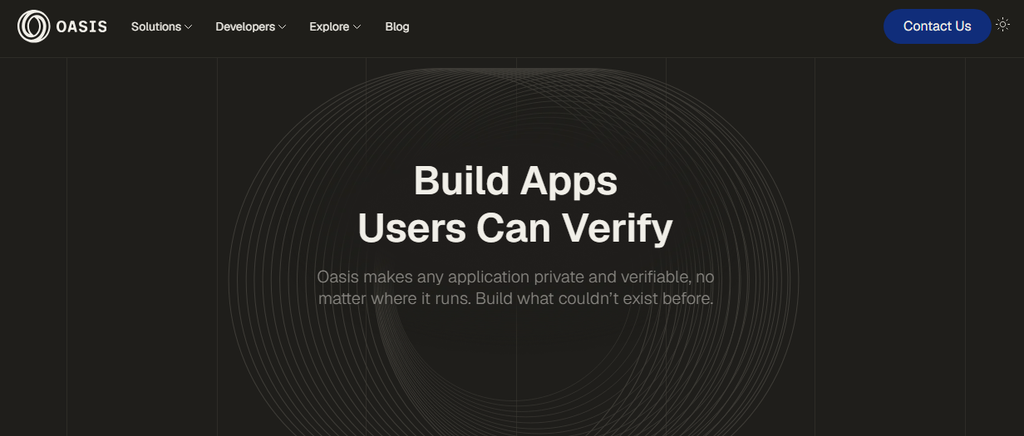
Oasis Network focuses on confidential computing and privacy-preserving applications.
That makes it relevant to AI because businesses increasingly need to process sensitive information without exposing the underlying data. Its technology can support use cases where privacy matters as much as computing power.
ROSE had a market cap of roughly $44 million in early August 2026.
Why it stands out:
Privacy-focused blockchain infrastructure
Confidential computing
Relevant to sensitive AI workloads
Smaller market cap and higher risk
Best for: Investors interested in privacy-preserving AI and confidential computing.
12. Qubic (QUBIC)
Source: qubic.org
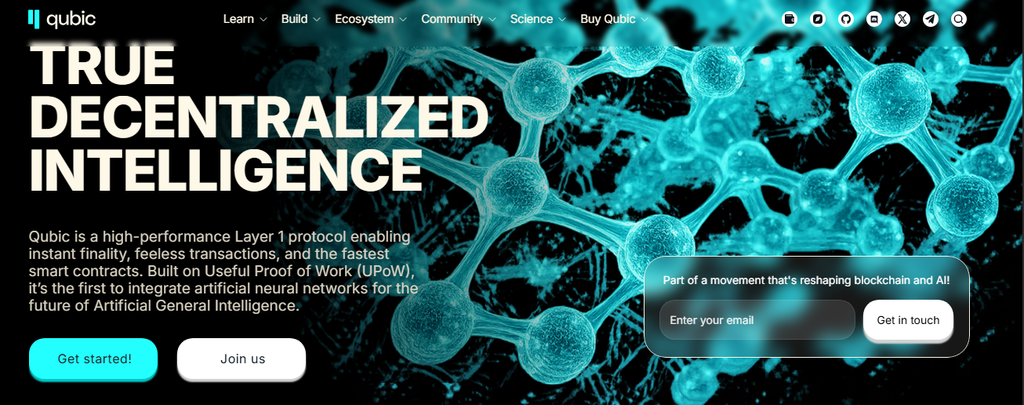
Qubic is a smaller blockchain project focused on high-performance computation and AI-related workloads.
It remains a speculative pick rather than an established AI infrastructure leader. CoinGecko data showed QUBIC with a market cap of roughly $62 million in early August 2026.
Why it stands out:
Focus on high-performance computation
AI and machine-learning ambitions
Small market capitalization
Higher liquidity and execution risk than the larger projects above
Best for: Aggressive investors willing to accept significantly higher risk.
What to look for before buying
Market cap alone does not make an AI crypto project a good investment. Before buying, check:
Real usage: Are developers and businesses actually using the network?
Token utility: Does the token play a meaningful role in the product?
Revenue or network activity: Is demand translating into measurable economic activity?
Token supply: Check emissions, unlocks, and circulating supply.
Competition: Compare the project with centralized AI and decentralized alternatives.
Liquidity: Smaller AI tokens can be difficult to buy or sell during market stress.
Development: Look for active products, developers, partnerships, and regular upgrades.
The strongest AI crypto projects in 2026 are not simply adding “AI” to their marketing. They are building infrastructure for AI agents, GPU compute, private inference, decentralized data, and on-chain applications.
Benefits of Investing in AI Crypto Coins
Here are some of the benefits of investing in AI crypto coins:
1. Early access to a growing niche: AI and crypto are both massive trends on their own; combined, they’re still small enough that early positioning matters.
2. Real, working products: Unlike many past crypto narratives, several of these networks (Bittensor, Render, Akash) process real workloads and generate real revenue today, not just promises.
3. Diversified exposure: Twelve different coins cover machine learning, compute, data, and agents, so you’re not betting on one narrow use case.
4. Institutional interest is building: Grayscale filed a Bittensor Trust in late 2025, and firms like xTAO and DNA Fund have made multi-million-dollar TAO purchases, a sign traditional finance is paying attention.
Risks of Investing in AI Crypto Coins
Before investing in AI crypto coins, you should know these risks
1. Market volatility: AI tokens can swing more than 100% in either direction within a single week. Bittensor alone dropped over 16% in one recent seven-day stretch right after a 27% monthly rally. If you can’t stomach that kind of swing, size your position accordingly, and consider dollar-cost averaging instead of investing a lump sum.
2. Security incidents: Crypto platforms lost over $3.4 billion to hacks in 2025, with North Korea-linked hackers alone responsible for roughly $2 billion of that total, bringing their cumulative haul since 2017 to about $6.75 billion. AI-linked projects are frequent targets because they’re newer and often less battle-tested than established coins.
3. Liquidity risk: Smaller tokens on this list, like Qubic, io.net, and Oasis Network, trade at much lower daily volumes than Bittensor or NEAR. Selling a large position quickly in a low-volume token can move the price against you significantly.
4. Project failure risk. Most crypto projects, AI-related or not, don’t survive long-term. Watch for warning signs like slowing GitHub activity, missed roadmap deadlines, or key team members quietly leaving.
5. Regulatory risk. Rules are still catching up. The European Union’s MiCA framework and the shifting US regulatory stance can both move prices quickly when new guidance drops.
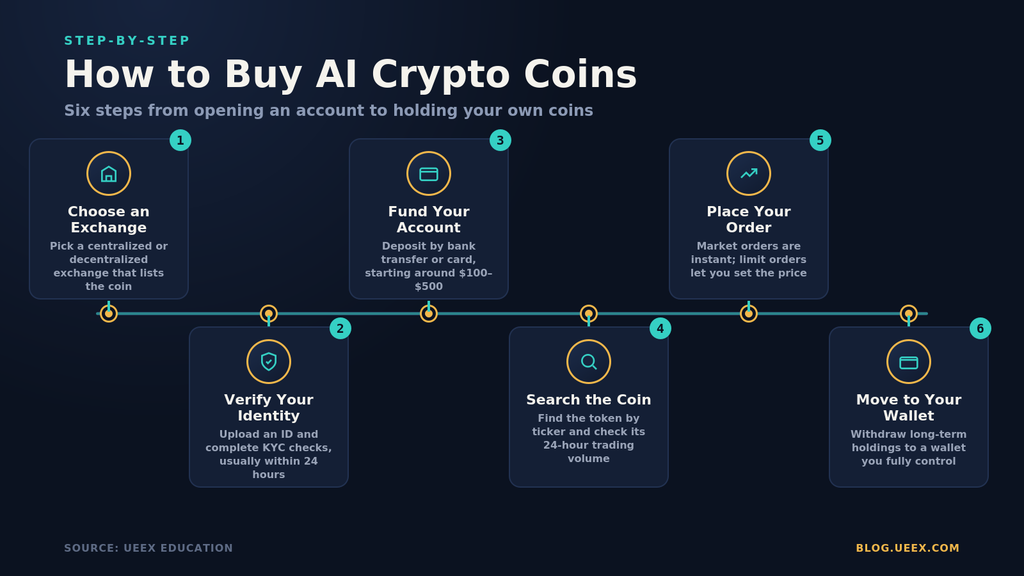
How to Buy AI Crypto Coins
Buying AI crypto coins is similar to buying other cryptocurrencies, but you need to pay extra attention to liquidity, token contracts, network compatibility, and the difference between established projects and speculative tokens.
Step 1: Choose a Crypto Exchange
You can buy AI tokens through a centralized exchange (CEX) or a decentralized exchange (DEX).
Centralized exchanges
Binance
Coinbase
Advantages: Easy fiat deposits, high liquidity, simple interfaces, and easier order execution.
Disadvantages: KYC requirements, custody risk, and regional restrictions.
Decentralized exchanges
Uniswap
PancakeSwap
Advantages: Self-custody, no traditional exchange account, and access to tokens that may not be listed on major CEXs.
Disadvantages: More technical, higher risk of scams and bad contracts, and potentially higher slippage or network costs.
If you use a centralized exchange, you will usually need to verify your identity before trading.
You may be asked for:
Government-issued ID, such as a passport or national ID
Proof of address, where required
A selfie or face verification
Requirements vary by exchange and country. Coinbase, for example, requires identity verification for account creation and may request proof of address from users in certain jurisdictions.
Step 3: Deposit Funds
Most exchanges let you fund your account with fiat or cryptocurrency.
Fiat options may include:
Bank transfer
Debit or credit card
Payment services supported in your country
Bank transfers are often cheaper than card purchases, while cards can provide faster access to funds. Fees and available payment methods vary by exchange and location, so check the current fee schedule before depositing.
You can also transfer USDT, USDC, BTC, or another supported cryptocurrency from an external wallet.
Important: Always match the deposit network with the network selected on the receiving exchange. Sending assets through the wrong network can result in lost funds or a difficult recovery process.
For beginners, start with an amount you can afford to lose rather than treating $100-$500 as a fixed recommendation.
Step 4: Find the AI Crypto Coin
Search for the coin using its name or ticker, such as TAO, FET, or NEAR.
Before buying, check:
The correct token and contract address
Available trading pairs, such as USDT, USDC, BTC, or USD
24-hour trading volume and liquidity
The network on which the token operates
The project’s official website and documentation
For DEX purchases, verify the contract address through a reliable source rather than selecting a token simply because it has the right name or ticker.
Step 5: Place Your Order
Most exchanges offer several ways to buy.
Market order: Buys immediately at the best available price. It is simple, but the final price can differ slightly from the displayed price.
Limit order: Lets you set the maximum price you are willing to pay. The order executes only if the market reaches that price.
Dollar-cost averaging (DCA): Splits your investment into smaller purchases over time instead of buying everything at once. This can reduce the impact of short-term price swings, but it does not guarantee a profit.
Step 6: Review the Transaction
Before confirming your purchase:
Check the token and amount
Confirm the trading price
Review trading and network fees
Check the network if using a DEX
Confirm the final amount you will receive
After the purchase, check your exchange or wallet balance and keep the transaction record.
Step 7: Move Your Coins to a Personal Wallet
For larger or long-term holdings, consider moving your AI crypto to a wallet you control.
Self-custody gives you control of the private keys, but it also makes you responsible for protecting them. Never share your seed phrase or private keys.
For smaller amounts, keeping funds on a reputable exchange may be more convenient. The right choice depends on your security needs, investment size, and how frequently you trade.
If you’re buying through UEEX, you get access to most of the major AI tokens on this list alongside standard fiat on-ramps and order types, so the steps above apply directly.
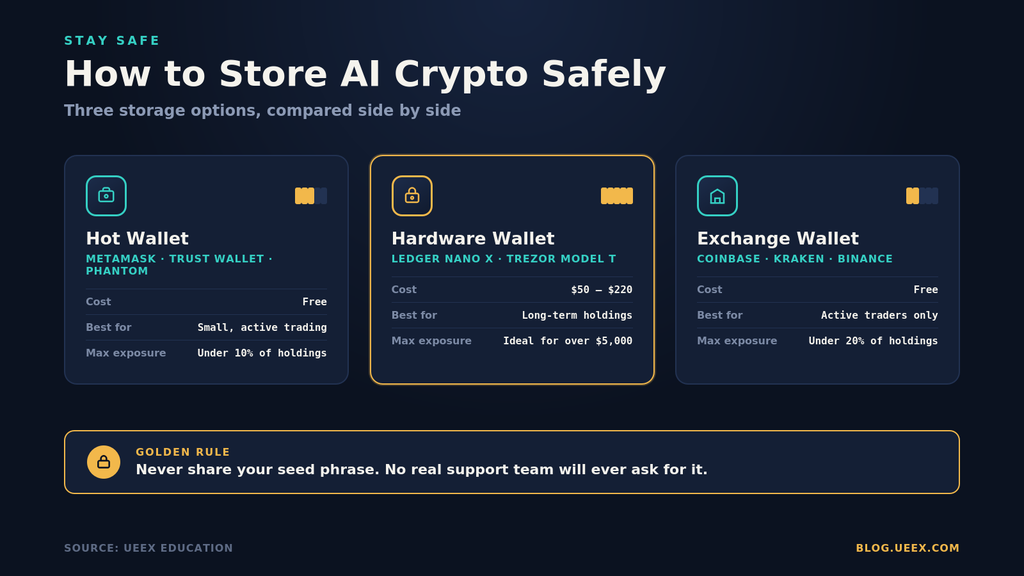
How to Store AI Crypto Safely
Where you keep your coins matters as much as which coins you buy. Here’s a quick breakdown of your options.
Hot wallets (MetaMask, Trust Wallet, Phantom) are free, convenient, and connected to the internet, which makes them fine for small amounts you trade actively but risky for anything you can’t afford to lose.
Hardware wallets (Ledger Nano X, Trezor Model T) store your keys offline and cost $50 to $220. For anything above a few thousand dollars, this is worth the money. A hardware wallet requires physical confirmation for every transaction, so malware on your computer alone can’t drain your funds.
Exchange wallets are the most convenient but the riskiest for long-term storage. The saying “not your keys, not your crypto” exists for a reason: if the exchange gets hacked or goes bankrupt, your funds may not come back. A good rule of thumb is to keep no more than 20% of your total crypto holdings on any exchange.
The single most common security mistake isn’t a sophisticated hack. It’s someone typing their seed phrase into a fake support chat or a phishing site that looks nearly identical to the real exchange.
A few habits go a long way: enable two-factor authentication through an authenticator app rather than SMS, write your seed phrase on paper or metal rather than storing it digitally, and never enter your seed phrase anywhere except when restoring a wallet you set up yourself.
For a full walkthrough of hardware wallet setup, backup strategies, and recovery planning, check our How to Secure Your Crypto Wallet guide.
Tax Treatment of AI Crypto in 2026
AI crypto tokens generally follow the same tax rules as other digital assets. Your tax liability depends on where you live and how you use the tokens.
Key Tax Rules
United States: The IRS generally treats digital assets as property. Selling, swapping, or otherwise disposing of tokens can trigger capital gains tax. Staking, mining, and similar rewards can create taxable income. The IRS requires applicable transactions to be reported using forms such as Form 8949.
European Union: MiCA provides a common regulatory framework, but crypto taxation remains largely country-specific. Germany, France, Portugal, and other member states apply different rules, so investors should check local requirements.
United Kingdom: Crypto disposals can trigger Capital Gains Tax. The annual exempt amount remains £3,000 for 2026–27.
Australia: Individuals who hold eligible crypto assets for at least 12 months may qualify for a 50% CGT discount.
Singapore and Switzerland: Individual crypto gains may receive favorable treatment in some circumstances, but business activity and wealth-tax rules can change the outcome.
Keep Accurate Records
Track:
Purchase and sale dates
Token amounts and fiat value
Wallets and exchanges used
Transaction fees
Staking, mining, airdrop, and DeFi income
Tax software such as Koinly, CoinTracker, and TokenTax can simplify record-keeping and reporting.
Note: Tax-loss harvesting, long-term holding where applicable, and eligible charitable donations may reduce your tax bill. However, rules differ significantly between countries.
Disclaimer: Tax laws change frequently. This information is educational, not tax, legal, or financial advice. Consult a qualified crypto tax professional before making decisions.
For a full breakdown by country and strategies to legally reduce your tax bill, see our cryptocurrency tax guide.
Building an AI Crypto Portfolio: Strategy by Risk Level
How you split your money across these 12 coins should match your risk tolerance, not just your excitement level.
1. Conservative approach: Lean heavily on the most established names, Bittensor, NEAR, and The Graph, and keep AI crypto to a small slice, maybe 5% to 10%, of your total investment portfolio. This group has working products and the deepest liquidity on this list.
2. Balanced approach: Spread across five or six coins covering different use cases: Bittensor for machine learning, FET for agents, Render for compute, ICP for on-chain AI, and a smaller position in Virtuals for agent economy exposure. This mixes established infrastructure with higher-growth bets.
3. Aggressive approach: Add meaningful positions in smaller, higher-risk names like Qubic, io.net, or newer AI agent tokens, understanding that any single one of these could lose 70% or more of its value just as easily as it could multiply.
Whatever mix you choose, revisit it every few months. If one coin grows to dominate your portfolio, trimming back to your original target percentages protects you from a single project’s bad news wiping out months of gains elsewhere.
Regulatory Compliance for AI Crypto Projects
Regulatory compliance now has a big impact on crypto projects
Europe: MiCA
Under the EU’s Markets in Crypto-Assets Regulation (MiCA), most AI tokens that are not stablecoins or financial instruments fall under the rules for “other crypto-assets.” MiCA is now fully applicable, with stablecoin rules active since June 30, 2024, and most remaining provisions since December 30, 2024. Transitional arrangements for existing CASPs can extend to June 30, 2026, depending on the member state.
Key requirements include:
Publish a clear crypto-asset white paper covering the project, token, technology, risks, and rights.
Notify the white paper to the relevant national regulator before publication.
Obtain CASP authorization when providing regulated crypto services such as custody, trading, or transfers.
Apply additional requirements if the AI token qualifies as an asset-referenced token (ART) or e-money token (EMT).
Follow AML and Travel Rule requirements where applicable.
MiCA can improve transparency and investor protection, but compliance costs may push smaller projects out of the EU or encourage geographic restrictions. Authorized CASPs can also use MiCA’s EU-wide passporting framework.
United States
The US still does not have a dedicated AI-crypto framework. Instead, regulators assess tokens under existing securities, commodities, and financial laws. The SEC’s 2026 guidance provides a clearer framework for distinguishing crypto assets such as digital commodities from securities.
Projects should:
Avoid marketing tokens primarily as investments or profit opportunities.
Clearly explain token utility and network functions.
Assess whether the project could satisfy elements of the Howey investment-contract test.
Maintain appropriate KYC/AML controls where required.
Obtain legal advice before launching or selling tokens in the US.
Asia-Pacific
Regulation remains country-specific. Singapore generally regulates relevant digital payment token services through MAS licensing, while Japan requires registration for crypto-asset exchange services.
Hong Kong permits retail trading through licensed virtual asset platforms subject to SFC requirements. Australia is increasingly treating some digital assets and related services as financial products, bringing them under ASIC licensing rules.
KYC/AML Requirements
AI crypto projects operating through regulated providers should expect:
Government-issued ID and proof of address
Identity and selfie verification
Source-of-funds checks for higher-risk transactions
PEP and sanctions screening
Ongoing transaction monitoring
Travel Rule data sharing where applicable
Investors may face rejection for inconsistent identity information, unexplained funds, sanctions exposure, or attempts to bypass transaction-monitoring thresholds.
Common Mistakes to Avoid
Here are common mistakes to avoid when investing in your AI crypto coin
Buying at the peak because of hype: AIXBT’s crash from $0.95 to under $0.20 is the textbook example. If a token has already gone vertical on social media buzz, waiting for a pullback usually beats chasing it.
Skipping the research: Before buying, check whether the project has a working product, active development, and a real team, not just a slick website and big promises.
Putting too much into one coin: A good rule of thumb: no single AI token should make up more than 20% to 25% of your crypto holdings, no matter how confident you feel about them.
Ignoring wallet security: Keeping large amounts on an exchange, clicking links in unsolicited messages, or sharing your seed phrase with “support” are the fastest ways to lose everything. No legitimate support team will ever ask for your seed phrase.
Panic selling on a dip: Crypto corrections of 30% to 50% happen regularly and don’t necessarily mean a project is failing. Zoom out to a one-year chart before deciding whether to sell.
Sending tokens on the wrong network: Sending an Ethereum-based token to a Solana or BNB Chain address usually means losing it permanently. Always double-check the network matches before confirming a transfer, and send a small test amount first for large transactions.
Conclusion
AI crypto is becoming a more interesting part of the blockchain market, but not every AI-branded token is worth buying.
In 2026, investors should look beyond hype and focus on projects with real users, working technology, strong development teams, sustainable tokenomics, and a clear reason for the token to exist.
Risk remains high. AI narratives can drive sharp price swings, while competition, regulation, smart contract vulnerabilities, and changing AI technology can quickly affect a project’s outlook.
Before investing, compare each project’s market cap, adoption, revenue or network activity, token supply, liquidity, and long-term roadmap. The best AI crypto is not necessarily the one with the biggest hype but the one with a strong use case that can still create value when the hype fades.
Join UEEx
Experience the World’s Leading Digital Wealth Management Platform
AI crypto coins are tokens that pay for, reward, or govern AI-related work done on a blockchain, like training machine learning models, renting out GPU power, or running autonomous AI agents, instead of relying on one central company.
Are AI crypto coins a good investment in 2026?
They can be, for investors comfortable with high volatility and willing to research individual projects. The sector has real products and growing institutional interest, but prices swing hard and many smaller projects will likely fail. Treat AI crypto as a small, high-risk slice of a diversified portfolio, not a core holding.
How much can I make from AI crypto?
There’s no reliable number here. Established coins like Bittensor or NEAR have historically moved with the broader crypto market plus AI-specific news, while smaller agent tokens have seen both massive short-term gains and 70%+ crashes. Nobody can promise a return, and anyone who does is a red flag.
Disclaimer: This article is intended solely for informational purposes and should not be considered trading or investment advice. Nothing herein should be construed as financial, legal, or tax advice. Trading or investing in cryptocurrencies carries a considerable risk of financial loss. Always conduct due diligence before making any trading or investment decisions.
Trade with proof of Reserves
UEEx publish monthly audits and third party verification on every listed market.