There is a specific kind of dread that hits when you open your wallet app and the balance is wrong. Not wrong like a display glitch — wrong like zero. Every crypto holder who has not felt it yet is one careless click away from understanding it.
The worst part is rarely the hack itself. It is the moment before, when everything looked normal. The browser tab looked right. The contract approval looked routine, the support message looked official. Hackers targeting crypto do not break the blockchain, they break your attention, for just long enough.
Learning how to protect crypto from hackers after that moment is too late. This is for before the habits, the checks, and the decisions that keep your wallet looking exactly the way you left it.
First things first
Join UEEx
Experience the World’s Leading Digital Wealth Management Platform
Crypto hacking is the unauthorized attempt to gain access to someone’s cryptocurrency, wallet, exchange account, private keys, or other crypto-related assets.
Hackers may use methods such as phishing, malware, fake wallet apps, stolen passwords, SIM swaps, malicious smart contracts, or social engineering to trick users or exploit security weaknesses.
Cryptocurrency attracts hackers for several reasons:
Large amounts of funds can move quickly: Crypto can be transferred across borders without traditional banking processes, making stolen assets difficult to recover once moved through multiple addresses.
Transactions are generally irreversible: Once a transaction is confirmed, there is usually no bank or central authority that can simply reverse it.
Individuals are direct targets: Hackers do not only attack major exchanges. They can target individual users through phishing, malware, fake wallets, and social engineering.
The crypto ecosystem has many attack surfaces: DeFi protocols, NFT marketplaces, bridges, Web3 applications, wallets, and smart contracts can all introduce different security risks.
The Biggest Crypto Security Risks in 2026
Phishing and Social Engineering
Attackers impersonate exchanges, wallet providers, companies, or people you trust to convince you to reveal passwords, seed phrases, verification codes, or approve fraudulent transactions.
Fake Wallets and Malicious Apps
Fake wallet applications and browser extensions can look almost identical to legitimate ones. Installing one from an unofficial source can expose private information or give attackers access to your funds.
Malware and Keyloggers
Malware can monitor activity on your device, steal credentials, capture what you type, or manipulate information copied to your clipboard.
SIM-Swap Attacks
A SIM-swap attack occurs when a criminal tricks a mobile provider into transferring your phone number to a SIM card they control. If your crypto accounts rely heavily on SMS authentication, this can help attackers take over your accounts.
Stolen Seed Phrases
A seed phrase can provide access to a wallet and its funds. Sharing it, storing it insecurely, or entering it into a malicious website can put the entire wallet at risk.
Malicious Smart Contracts
Connecting a wallet to a fraudulent or compromised smart contract can result in harmful transactions or token approvals. Users should understand what they are signing rather than approving transactions blindly.
Address-Poisoning Attacks
In address poisoning, attackers create wallet addresses that resemble addresses a user has previously interacted with. They may send tiny transactions to make the fraudulent address appear in the user’s transaction history, hoping it will later be copied by mistake.
Join UEEx
Experience the World’s Leading Digital Wealth Management Platform
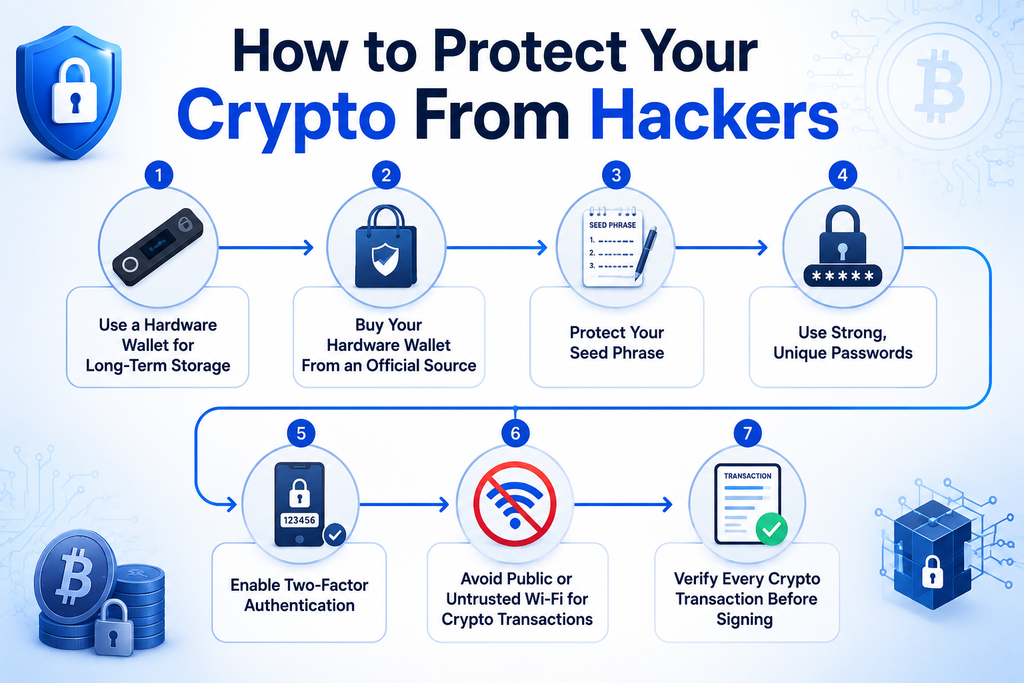
A hardware wallet is a physical device designed to keep your cryptocurrency private keys offline. Unlike a software wallet that runs on a phone or computer, a hardware wallet keeps the keys isolated from many online threats. This makes it a strong option for people holding crypto for the long term.
Hardware wallets are generally more secure because the private keys are kept away from the internet and are not normally exposed to your computer or phone.
Even when you connect the device to make a transaction, the private key is designed to remain inside the device rather than being revealed to the connected computer.
2. Buy Your Hardware Wallet From an Official Source
Where you purchase a hardware wallet matters. A legitimate device can provide strong protection, but a tampered or counterfeit device could put your assets at risk. Always treat the source of the device as part of your security strategy.
Buying directly from the manufacturer’s official website is generally the safest option because you reduce the risk of receiving a counterfeit or modified device.
Before purchasing, confirm that you are visiting the manufacturer’s legitimate website and not a look-alike domain.
3. Protect Your Seed Phrase
Your seed phrase is one of the most important pieces of information associated with a self-custody crypto wallet. Anyone who obtains it may be able to restore the wallet and access its assets.
Protecting it should therefore be treated as seriously as protecting the funds themselves. Never take a screenshot of your seed phrase.
A screenshot can remain on your phone, appear in backups, or potentially become accessible to malicious software. The same applies to typing the phrase into ordinary notes or documents.
Never save your seed phrase in cloud storage such as online documents, cloud notes, or file-storage services. If your cloud account is compromised, the seed phrase could be exposed along with it.
4. Use Strong, Unique Passwords
Strong passwords can help protect crypto exchanges, email accounts, trading platforms, and other services connected to your digital assets. A compromised password can give an attacker an entry point into your accounts.
Use a different password for every crypto-related account. If you reuse the same password across multiple services and one service is breached, attackers may try those credentials on your other accounts.
A reputable password manager can generate and securely store long, unique passwords so you do not have to memorize every one. This is generally safer than using simple passwords or keeping a list of passwords in an ordinary document.
Two-factor authentication, or 2FA, adds another security layer beyond your password. Even if an attacker obtains your password, they may still need the second authentication factor to access the account.
Where available, an authenticator app is generally preferable to relying solely on SMS. Authenticator apps generate temporary codes on your device without depending on your mobile phone number.
6. Avoid Public or Untrusted Wi-Fi for Crypto Transactions
Public Wi-Fi networks can introduce additional security risks, particularly when you are accessing sensitive financial accounts or approving transactions.
An attacker on an unsafe network may attempt to intercept or manipulate traffic or direct users toward malicious websites.
Whenever possible, use a trusted home network or your mobile connection when managing crypto. Make sure your home Wi-Fi uses a strong password and current security settings.
7. Verify Every Crypto Transaction Before Signing
Before approving a crypto transaction, take time to verify exactly what you are signing. A transaction can be technically valid on the blockchain while still being fraudulent or harmful to you.
Always check the recipient’s wallet address carefully. When possible, verify the address through a trusted source rather than relying solely on your transaction history, since address-poisoning attacks can place similar-looking addresses in your wallet activity.
Act quickly. If your seed phrase or private key was exposed, create a new secure wallet and move any remaining assets. If an exchange account was compromised, secure the account, change your password, revoke unauthorized sessions, and contact the exchange through its official channels.
Is a hardware wallet completely hack-proof?
No. Hardware wallets can significantly reduce certain online risks, but they do not protect users from phishing, malicious transactions, fake apps, or stolen seed phrases. Good security practices are still essential.
Can someone steal my crypto with just my wallet address?
Generally, no. A public wallet address can be shared to receive funds, but it should not give someone access to your assets. However, scammers can use addresses in phishing and address-poisoning attacks.
Join UEEx
Experience the World’s Leading Digital Wealth Management Platform
Protecting your crypto from hackers is less about finding one perfect security tool and more about building several layers of protection.
A hardware wallet can help secure long-term holdings, while strong passwords, two-factor authentication, secure devices, and careful transaction checks can protect the accounts and wallets you use every day.
But security does not stop after your initial setup. Threats change, new scams appear, and old wallet permissions or outdated software can create vulnerabilities over time. Regularly reviewing your security settings, updating your wallet and apps, testing your backups, and staying alert to suspicious activity can help you stay ahead of these risks.
Most importantly, remember that your seed phrase and private keys should never be shared, and no legitimate support agent should ask for them.
Disclaimer: This article is intended solely for informational purposes and should not be considered trading or investment advice. Nothing herein should be construed as financial, legal, or tax advice. Trading or investing in cryptocurrencies carries a considerable risk of financial loss. Always conduct due diligence before making any trading or investment decisions.
Trade with proof of Reserves
UEEx publish monthly audits and third party verification on every listed market.