UTXO management is the practice of deliberately selecting, consolidating, and organizing your Unspent Transaction Outputs to reduce Bitcoin transaction fees, protect your financial privacy, and keep your wallet operating efficiently. Every Bitcoin you hold exists not as a single balance but as a collection of discrete, indivisible chunks – each with its own value and on-chain history. As of Q1 2026, with Bitcoin trading in the $80,000–$100,000 range, even a single mismanaged UTXO worth 0.005 BTC represents $400–$500 in value. Learning to handle these units strategically is now a practical requirement for any serious Bitcoin self-custodian.
What Is a UTXO and Why Does It Matter for Your Wallet?
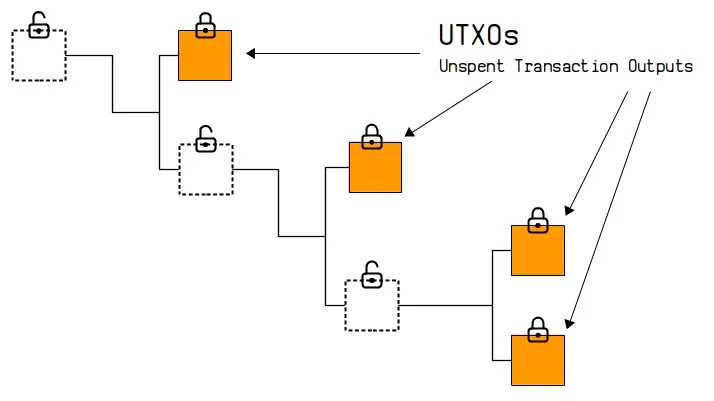
UTXO stands for Unspent Transaction Output. When someone sends you Bitcoin, the network does not update a central balance field. Instead, it creates a new output – a discrete chunk of Bitcoin locked to your address – that stays “unspent” until you use it as the input for a future transaction.
Think of UTXOs like physical banknotes. If you receive 0.3 BTC, 0.15 BTC, and 0.05 BTC across three separate payments, you hold three distinct UTXOs totaling 0.5 BTC. To send 0.4 BTC, your wallet must select and combine UTXOs to cover that amount, then return any leftover Bitcoin to you as a new “change” UTXO. Your displayed wallet balance is simply the sum of all UTXOs assigned to your addresses – it is not stored anywhere as a single number.
Bitcoin’s UTXO model differs fundamentally from the account-balance model used by Ethereum or traditional banks. That difference matters because how UTXOs accumulate over time has direct, measurable consequences for the fees you pay and the privacy you retain.
How Do Transaction Fees Connect to Your UTXO Count?
Bitcoin transaction fees are calculated by the transaction’s size in bytes – not the value being transferred. Every input you include (each UTXO you spend) adds roughly 148 bytes to the transaction for legacy addresses, or about 68 virtual bytes for native SegWit (P2WPKH) inputs. Every output adds approximately 34 bytes.
A transaction spending 20 small UTXOs to make one payment can cost nearly 20 times more in fees than a transaction spending a single larger UTXO for the same payment amount. During periods of high network congestion, when fee rates climb to 50–150+ satoshis per virtual byte, a wallet packed with tiny UTXOs makes even modest transactions prohibitively expensive.
| Scenario | Inputs Used | Approx. Transaction Size (SegWit) | Fee at 50 sat/vbyte | Fee at 150 sat/vbyte |
| Single large UTXO | 1 | ~141 vbytes | ~7,050 sats (~$5.60) | ~21,150 sats (~$17) |
| 5 medium UTXOs | 5 | ~413 vbytes | ~20,650 sats (~$16) | ~61,950 sats (~$50) |
| 20 small UTXOs | 20 | ~1,481 vbytes | ~74,050 sats (~$59) | ~222,150 sats (~$178) |
The table above illustrates why dust UTXOs – tiny outputs worth only a few thousand satoshis – can become economically unspendable during high-fee environments. Once the fee required to spend a UTXO exceeds its own value, spending it is a net financial loss.
Also Read: Decentralization and Trust: The Role of Blockchain in Supply Chain Management
What Are the Core UTXO Management Techniques?
How Does UTXO Consolidation Work, and When Should You Do It?
Consolidation means sending multiple small UTXOs to yourself in a single transaction, merging them into one or a few larger UTXOs. You pay a consolidation fee now to avoid much larger fees when you need to make real payments later.
The right time to consolidate is when the Bitcoin mempool is quiet and fee rates drop to 1–10 satoshis per virtual byte. Tools like Mempool.space display current and projected fee conditions in real time, letting you identify low-cost windows – typically weekend mornings (UTC) or US overnight hours. Consolidating at 3 sat/vbyte rather than 80 sat/vbyte can reduce the cost of that operation by more than 95%.
One important trade-off: consolidating all your UTXOs in a single transaction links them together on the blockchain, signaling to chain analysis tools that all those outputs share one owner. If privacy matters, consolidate by source category – group exchange withdrawal UTXOs separately from peer-to-peer payment UTXOs.
What Is Coin Control and How Do You Use It?
Coin control is a wallet feature that lets you manually choose which specific UTXOs to include in a transaction, overriding the wallet’s automatic selection algorithm. Wallets like Sparrow Wallet, Trezor Suite, and BlueWallet expose a coin control interface showing every UTXO with its value, age, and address.
With coin control you can:
- Exclude tiny UTXOs from a transaction to keep its byte count and fee low
- Keep UTXOs from different sources separate to limit cross-source linkage
- Spend older UTXOs first when you want to reduce the total UTXO count over time
- Avoid combining KYC exchange withdrawals with UTXOs acquired through peer-to-peer channels
Coin control is not necessary for casual users, but it becomes increasingly valuable as holdings grow and privacy requirements become more specific.
How Does Strategic Withdrawal Timing Prevent UTXO Fragmentation?
One underappreciated source of UTXO fragmentation is frequent small exchange withdrawals. Each withdrawal – regardless of size – creates exactly one UTXO. Ten withdrawals of 0.005 BTC create ten UTXOs; one withdrawal of 0.05 BTC creates one. The total Bitcoin received is identical, but the fee burden of spending those UTXOs later differs by a factor of ten.
As of Q1 2026, with Bitcoin priced in the $80,000–$100,000 range, experts recommend batching exchange withdrawals to a minimum of 0.005–0.01 BTC per transaction. This keeps each UTXO economically viable to spend even if on-chain fee rates spike to 100+ sat/vbyte.
Also Read: Public Key Encryption in Crypto: The Basics
What Role Does the Lightning Network Play in UTXO Management?
The Lightning Network is Bitcoin’s layer-2 payment system. Opening a channel requires one on-chain transaction; from that point, unlimited payments flow off-chain between participants. The channel closes with a second on-chain settlement transaction.
For UTXO management, Lightning is most useful for handling frequent small payments. Instead of accumulating dozens of tiny UTXOs from repeated on-chain micropayments, you route those payments entirely off-chain. Your main-chain UTXO set stays clean and manageable. The trade-off is that channel open and close transactions do create UTXOs – so Lightning reduces fragmentation from payment activity but does not eliminate on-chain UTXO management entirely.
What Is CoinJoin and How Does It Interact With Your UTXOs?
CoinJoin is a privacy technique where multiple users combine their transactions into one batch, making it difficult for blockchain analysts to match inputs to outputs. From a UTXO perspective, CoinJoin typically creates equal-denomination outputs from combined inputs – improving privacy while often generating more UTXOs of standardized sizes rather than fewer, larger ones.
Wasabi Wallet’s WabiSabi implementation and JoinMarket are the most widely used CoinJoin options as of 2026. Legal status varies by country. In 2024, US regulators took action against certain mixing services. Research the regulatory position in your jurisdiction before using any CoinJoin or mixing service.
Also Read: Layer 1 vs Layer 2 Scalability Solutions 2026: The Complete Guide
How Do Address Types Affect UTXO Efficiency?
| Address Type | Format | Input Size (approx.) | Fee Savings vs. Legacy |
| Legacy (P2PKH) | Starts with “1” | ~148 bytes | Baseline |
| Native SegWit (P2WPKH) | Starts with “bc1q” | ~68 vbytes | ~54% cheaper per input |
| Taproot (P2TR) | Starts with “bc1p” | ~57.5 vbytes | ~61% cheaper per input |
Taproot (activated November 2021) delivers the smallest input footprint available on Bitcoin today. For multisig wallets, Taproot’s Schnorr signature aggregation means a 3-of-5 multisig transaction can appear on-chain as a single-key spend, substantially reducing both byte size and information leakage about your wallet structure.
Practical UTXO Management Checklist
- Label every UTXO when you receive it.Sparrow Wallet supports per-UTXO notes. Tagging the source (“Coinbase withdrawal,” “P2P purchase,” “mining reward”) makes future coin control decisions faster and keeps privacy categories clearly separated.
- Set a minimum withdrawal size for exchange withdrawals.As of Q1 2026, aim for at least 0.005 BTC per withdrawal. More frequent smaller withdrawals generate fragmentation that costs more to resolve than the convenience is worth.
- Consolidate during weekend off-peak hours.Bitcoin mempool congestion typically drops on weekends and during US overnight hours. Fee rates of 2–8 sat/vbyte are common during these windows – far cheaper than the 50–200+ sat/vbyte seen during bull-market peaks.
- Use SegWit or Taproot addresses.If your wallet still generates legacy “1…” addresses, switch to native SegWit (bc1q) or Taproot (bc1p). The per-input byte savings translate directly into lower fees, especially when spending multiple UTXOs.
- Do not consolidate across privacy boundaries. Mixing KYC exchange UTXOs with non-KYC peer-to-peer UTXOs in a single consolidation transaction links them permanently on-chain. Keep different source categories in separate consolidation groups.
- Review your UTXO set before any large on-chain payment.A quick consolidation beforehand – if fee conditions allow – can simplify the transaction structure and reduce its total cost. One large UTXO covering a payment is always cheaper to spend than several smaller ones summing to the same amount.
- Freeze dust UTXOs rather than abandoning them.Sparrow and some other wallets let you “freeze” individual UTXOs to exclude them from automatic coin selection. Freezing dust outputs prevents your wallet from accidentally bundling them into future transactions and linking them to your active UTXOs.
FAQ
Q1: What is a UTXO in simple terms?
A UTXO is an individual chunk of Bitcoin you received from a past transaction that you have not yet spent. Your wallet balance is the sum of all your UTXOs. When you send a payment, your wallet selects one or more UTXOs to cover the amount, spends them fully, and returns any leftover Bitcoin to you as a new change UTXO – similar to handing over a banknote and receiving smaller bills as change.
Q2: Does consolidating UTXOs cost money?
Yes – consolidation is itself a Bitcoin transaction and requires a network fee. The goal is to consolidate when fee rates are low, ideally 1–5 sat/vbyte during quiet mempool periods, so the upfront cost is minimal. This avoids paying rates of 50–200+ sat/vbyte on a high-input transaction later when you actually need to send funds. Monitoring Mempool.space helps you identify the right window.
Q3: How many UTXOs is too many?
There is no universal rule, but wallets with large numbers of UTXOs under 10,000 satoshis each are generally poorly positioned for high-fee environments. As of Q1 2026, a practical minimum UTXO size is around 500,000–1,000,000 satoshis (0.005–0.01 BTC) to ensure each output remains economically spendable even when fees spike. For most users, keeping the wallet’s total UTXO count under 20–30 strikes a workable balance between fee efficiency and normal transaction activity.
Q4: Which wallets offer the best UTXO management tools?
Sparrow Wallet is the most capable option for desktop users – it provides full coin control, per-UTXO labeling, UTXO freeze functionality, and built-in CoinJoin support. Trezor Suite and BlueWallet both offer coin control features. For mobile users, Muun Wallet automatically routes small amounts through Lightning to minimize on-chain UTXO accumulation. Hardware wallet owners get the most visibility by pairing their device with Sparrow rather than the manufacturer’s default software.
Q5: Does Lightning Network eliminate the need for UTXO management?
Lightning substantially reduces UTXO accumulation from frequent small payments, since those flow entirely off-chain. However, it does not remove the need for on-chain UTXO management. Opening and closing channels create on-chain transactions and therefore UTXOs. Larger, less frequent payments still settle on-chain. The practical approach is to use Lightning for daily spending activity and maintain a separate, consolidated on-chain UTXO set for savings and large settlements.
Q6: Is UTXO management relevant for coins other than Bitcoin?
The UTXO model is also used by Litecoin, Bitcoin Cash, Dogecoin, Zcash, and Cardano (which uses an extended UTXO variant). The same management principles apply to all of them – consolidate during low-fee periods, use coin control where available, and avoid accumulating dust outputs. Ethereum and most EVM-compatible chains use an account-balance model, so UTXO management is not applicable to them.