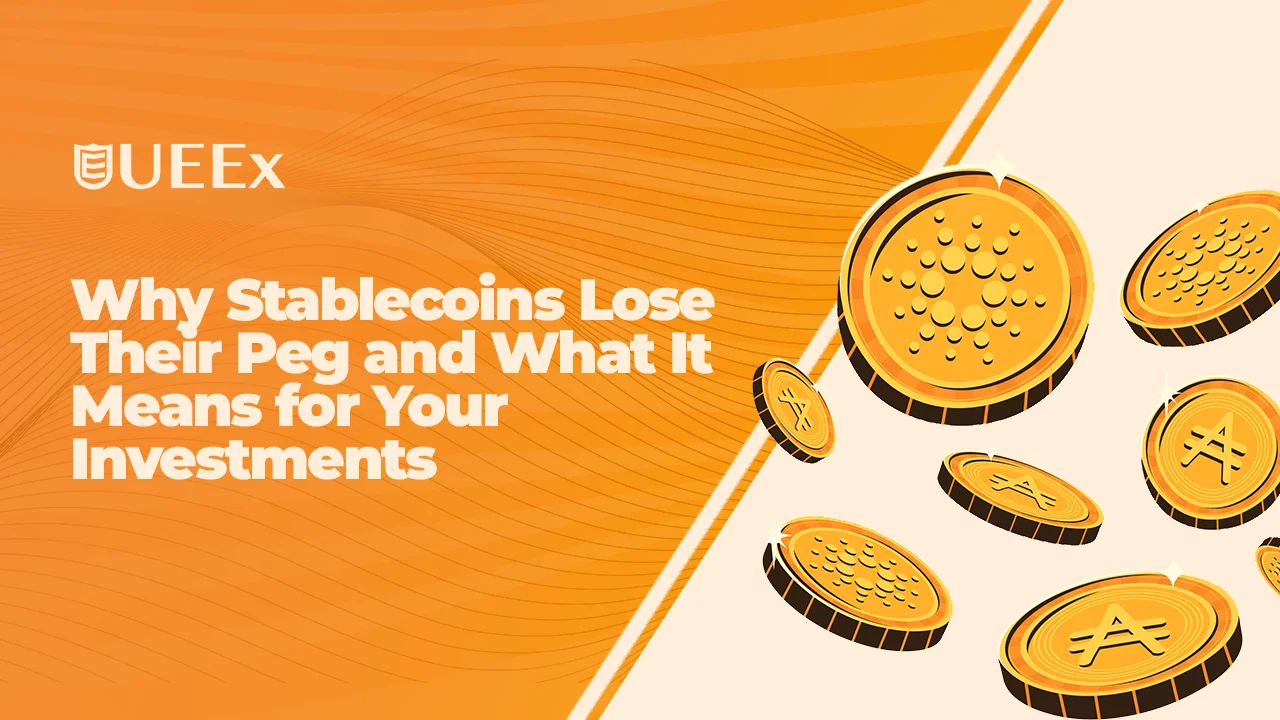
You bought USDC because it was supposed to be the safe part of your portfolio.
Then Silicon Valley Bank collapsed on a Friday afternoon, and by Saturday morning, your stable dollar was worth 88 cents.
That’s what a stablecoins depeg actually feels like not a chart anomaly, but a gut punch.
Here’s why it happens and what you can do before it does.
What it Means for a Stablecoin to Depeg
In the context of stablecoins, depeg refers to the loss of the stablecoin’s peg to a specific asset, usually a fiat currency like the US dollar.
This means the stablecoin’s value is no longer tied to the value of the underlying asset, and its price can fluctuate freely.
When a stablecoin depegs, its value can increase, decrease, or experience significant price swings.
When a stablecoin depegs, it can have significant consequences for investors, traders, and the broader cryptocurrency market.
Depegging can occur due to various reasons.
Minor vs. Major Depeg — They Are Not the Same Thing
The word depeg sounds alarming, but not every deviation from $1.00 signals a collapse.
The difference matters before you make any decision about your position.
A minor depeg typically under 1%, lasting minutes to hours is normal market behavior.
It happens when buy and sell volume is briefly uneven across exchanges, when liquidity in a trading pool becomes temporarily imbalanced, or simply because no market runs perfectly frictionless.
These fluctuations resolve through arbitrage: traders spot the gap, buy the underpriced stablecoin, redeem it for $1 from the issuer, and pocket the difference. That pressure brings the price back.
A major depeg sustained movement of 5%, 10%, or more over hours or days signals structural stress.
Reserve concerns, algorithm failures, or a loss of market confidence are the usual drivers. These events don’t self-correct through arbitrage alone.
They require active intervention from the issuer, regulator assurances, or simply time for panic to subside.
Knowing which type you’re looking at changes how you should respond.
How Stablecoins Actually Defend Their Peg
Most stablecoins don’t maintain their $1 value through willpower, they maintain it through arbitrage incentives built into their design.
When a fiat-backed stablecoin like USDC drops to $0.98, a window opens: traders can buy USDC cheaply on the open market and redeem it directly with Circle for $1.00 in cash.
That’s a guaranteed $0.02 profit per coin.
As traders pile in, demand pushes the price back toward $1.
The same mechanism works in reverse when the price rises above $1: sell the stablecoin, collect the premium, and the selling pressure brings it back down.
This is why USDC’s 2023 depeg recovered so quickly once the FDIC backstop was confirmed, the arbitrage window reopened, traders moved in, and the price snapped back within days.
Algorithmic stablecoins attempted to replicate this mechanically, without the underlying cash reserve.
When confidence in the mechanism broke as it did for UST there was nothing to arbitrage back to.
Join UEEx
Experience the World’s Leading Digital Wealth Management Platform
Stablecoins depeg for multiple reasons, these include:
1. Loss of Confidence
Loss of confidence is a major reason why stablecoins can depeg.
If users lose faith in a stablecoin’s ability to maintain its peg, they may start selling their holdings, which can cause the value to drop.
This can create a self-reinforcing cycle where more users lose confidence and sell their holdings, further driving down the value.
Loss of confidence can be triggered by various factors, such as:
Lack of Transparency about the stablecoin’s reserves or collateral.
For example, if a stablecoin issuer is opaque about its reserve management practices, users may start to doubt the stablecoin’s ability to maintain its peg, leading to a loss of confidence and potential depegging.
2. The Volatility of the Market
Significant market fluctuations can cause stablecoins to lose their peg, especially if the underlying collateral is volatile. This is called market volatility.
If a stablecoin is replaced by a cryptocurrency that experiences a significant price drop, the stablecoin’s value may also drop, causing it to depeg.
The examples of what triggers market volatility are:
Economic downturns or global market shocks
Changes in market sentiment or investor behavior
Regulatory changes or announcements
3. Reserve Management Issues
Stablecoins also depeg because of this. Poor management of reserves can lead to depegging.
A stablecoin issuer may fail to maintain adequate reserves or uses reserve funds for other purposes, the stablecoin’s value may drop, causing it to depeg.
Examples of what causes these issues are:
Inadequate collateralization or reserve requirements
Poor investment decisions or risk management practices
Lack of transparency or auditing of reserve management practices
4. Regulatory Changes
Regulatory changes are another reason why stablecoins can depeg. Changes in regulations or laws can impact a stablecoin’s ability to maintain its peg.
When a government imposes strict regulations on stablecoins or bans their use altogether, the value of a stablecoin may drop, causing it to depeg.
Also if a government announces plans to regulate stablecoins more strictly, users may lose confidence in the stablecoin’s ability to maintain its peg, leading to depegging.
Situations where changes in regulation may occur are:
Government announcements or policy changes
Regulatory enforcement actions or fines
Changes in laws or regulations governing stablecoins
5. Smart Contract Risks
Smart contract risks are a technical reason why stablecoins can depeg. Bugs or vulnerabilities in smart contracts can cause stablecoins to depeg.
A smart contract bug may allow users to withdraw more stablecoins than they should be able to, the stablecoin’s value may drop, causing it to depeg.
If a stablecoin’s smart contract is found to have a critical vulnerability, users may lose confidence in the stablecoin’s ability to maintain its peg, leading to depegging.
Smart contract risks can be triggered by various factors, such as:
Coding errors or bugs
Security vulnerabilities or exploits
Lack of testing or auditing of smart contracts
Not All Depegs Are Real — Oracle and Exchange Errors
Not every depeg you see on a chart reflects an actual problem with the stablecoin.
In October 2025, Ethena’s USDe briefly showed a price of $0.65 on Binance while trading near $1.00 on every other major platform.
The discrepancy traced back to Binance’s internal pricing oracle, which was pulling data from a thin order book instead of deeper liquidity sources.
Ethena confirmed its reserves were fully intact and redemptions unaffected.
The price recovered within an hour. Exchange-specific oracle errors can generate depeg alerts that trigger automated sell-offs and stop-losses before the cause is even identified.
Before acting on a depeg you see on one platform, check whether the same price movement is showing across multiple exchanges and on-chain data sources.
A depeg that only exists on one platform often isn’t a depeg at all.
Verify current status of Ethena/USDe before publishing.
Join UEEx
Experience the World’s Leading Digital Wealth Management Platform
Depegs don’t always arrive without warning. These are the signals worth watching before committing significant capital to any stablecoin.
Persistent price drift below $1.00. A stablecoin trading at $0.997 isn’t a crisis.
One that sits at $0.98 for days without recovering, especially during calm market conditions, deserves scrutiny.
Liquidity pool imbalances. On-chain data will show when one stablecoin is becoming disproportionately large inside a pooled liquidity pair.
The USDT imbalance in Curve’s 3pool in June 2023 where Tether’s share rose above 70% was visible on-chain before the news cycle caught up.
Reserve opacity or delayed audits. If an issuer misses a scheduled attestation, reduces disclosure frequency, or starts using ambiguous language about what backs the coin, that’s a structural warning.
Restricted or delayed redemptions. Any sign that direct redemptions are being throttled or that withdrawal queues are growing is a serious signal.
Liquidity problems at the issuer level often surface here first.
Issuer news tied to traditional banking. As USDC proved in March 2023, a stablecoin’s risk profile is only as clean as the banks holding its reserves.
Watch for banking sector stress that overlaps with a stablecoin’s known custodians.
Historical Depeg Event Timeline
TerraUSD (UST) — May 2022. The defining depeg event in crypto history. UST, an algorithmic stablecoin, lost its $1 peg after coordinated pressure on the shallow liquidity pools backing it.
The collapse triggered a death spiral: UST fell, its companion token LUNA was minted in vast quantities to defend the peg, hyperinflation hit LUNA, confidence collapsed, and both tokens went to near-zero. Over $60 billion in combined market value was wiped out within days.
USDC — March 2023. Circle revealed $3.3 billion of USDC’s reserves were stuck inside the failing Silicon Valley Bank. USDC dropped to $0.88 within hours.
DAI, which held USDC as a significant share of its own collateral, depegged alongside it.
Both recovered when the FDIC announced deposit guarantees but the event proved that even fully-backed, regulated stablecoins carry counterparty risk tied to traditional banking.
TrueUSD (TUSD) — January 2024. TUSD dropped to $0.926 amid concerns about its reserve transparency.
Binance removed trading pairs in March, delisted the token, and the SEC later announced a settlement for fraudulent and unregistered sales. Unlike USDC, TUSD did not recover cleanly.
sUSD — April 2025. Synthetix’s crypto-collateralized stablecoin dropped to $0.68 following the SIP-420 protocol update, which reduced the collateralization ratio from 500% to 200% and replaced individual debt incentives with a shared pool.
The mechanism that kept the peg tight was removed by the protocol itself. — Verify current recovery status before publishing.
Can a Stablecoin Recover After Depegging?
It depends entirely on the type of stablecoin and the cause of the depeg.
Fiat-backed stablecoins with legitimate reserves like USDC after the SVB crisis have a clear path back: once reserves are confirmed intact and arbitrage windows reopen, market pressure naturally restores the peg.
The recovery can happen within hours or days. Algorithmic stablecoins with no hard collateral have no built-in recovery mechanism.
When the trust that powers their peg breaks, there’s nothing left to anchor it. UST never recovered.
The difference isn’t just technical, it’s structural. A stablecoin backed by real assets has a floor.
One backed only by confidence doesn’t.
How to Mitigate Depegging Risks of Stablecoins
To mitigate depegging risks of stablecoins, the following should be applied:
1. Robust Reserve Management:
Think of reserve management like keeping a safety net. You want to make sure you have enough assets set aside to cover any unexpected issues.
By keeping a clear record of reserve assets, conducting regular audits, and providing transparent reporting, stablecoin issuers can build trust with users and maintain stability.
2. Diversification of Collateral:
Diversifying collateral across different asset classes or markets can help reduce the risk of collateral value fluctuations impacting the stablecoin’s peg.
This is similar to spreading your investments to minimize risk.
3. Stress Testing:
Stress testing involves simulating extreme market scenarios to evaluate the stablecoin’s ability to maintain its peg under adverse conditions.
By doing this, stablecoin issuers can identify potential vulnerabilities and take steps to mitigate them.
4. Liquidity Provision:
Having sufficient liquidity is essential for stablecoin issuers.
They need to ensure they have access to sufficient liquidity providers or market makers to facilitate redemptions and maintain market stability.
5. Transparency and Communication:
Providing clear and timely communication about stablecoin operations, reserves, and risks is crucial for building trust with users and maintaining market confidence.
6. Regulatory Compliance:
Regulatory compliance is critical for maintaining the legitimacy and stability of a stablecoin.
Stablecoin issuers need to stay on top of relevant regulations and laws to avoid reputational damage and regulatory action.
7. Smart Contract Security:
Smart contract security is vital for maintaining the integrity of the stablecoin’s underlying code and preventing potential exploits.
By implementing robust security measures, stablecoin issuers can protect users’ assets and maintain trust.
8. Risk Management Framework:
A risk management framework involves identifying potential risks, assessing their likelihood and impact, and implementing measures to mitigate or manage those risks.
This helps stablecoin issuers proactively address potential issues and maintain stability.
9. Collateralization Ratio:
Maintaining a sufficient collateralization ratio is critical for ensuring the stablecoin’s stability and building trust with users.
The collateralization ratio refers to the ratio of collateral value to stablecoin value.
10. Ongoing Monitoring:
Continuously monitoring market conditions, user behavior, and potential risks can help stablecoin issuers identify potential issues and make adjustments as needed.
This helps maintain the stablecoin’s stability and build trust with users.
By following these measures, stablecoin issuers can reduce the risk of depegging and maintain the stability of their stablecoins, which is essential for building trust and confidence with users.
What Should You Actually Do When a Stablecoin Depegs?
Most advice on stablecoin depegs is written for issuers. Here’s what it means for you as a holder.
Don’t panic-sell into thin liquidity. During a depeg, spreads widen and order books thin out. Selling at the worst moment locks in a loss that the market may correct within hours.
Before exiting, check whether the depeg has a defined cause (a banking issue, an oracle glitch, a protocol change) and whether the issuer has acknowledged it.
Know your redemption route. If you hold USDC or USDT, you can redeem directly with the issuer but minimum redemption thresholds apply (Tether’s minimum is $100,000).
For most retail holders, that route is unavailable. Your exit is through an exchange, which means you’re subject to the market price during the event.
Diversify across stablecoins and issuers. Holding all your stable exposure in one coin concentrates the risk.
A mix of fiat-backed (USDC, USDT) and established crypto-backed stablecoins reduces the chance that a single event wipes out your entire stable position.
Set a pre-planned exit threshold. Decide before a depeg what price deviation would prompt you to act not during one.
If your stablecoin drops below $0.95 for more than 24 hours with no issuer response, that’s a different situation than a 2-cent dip that lasts an hour.
Check reserves and audits before holding significant amounts. Transparent, regularly audited reserves are the clearest signal of issuer credibility.
If a stablecoin’s reserve composition is unclear or unaudited, the risk profile is materially higher.
Frequently Asked Questions
Why do stablecoins lose their peg?
Stablecoins can lose their peg due to various reasons, including loss of confidence, market volatility, reserve management issues, regulatory changes, smart contract risks, and bank run risks.
What are the risks associated with stablecoin depegging?
Depegging can present several risks, including market volatility, reputation risk, liquidity risk, counterparty risk, and regulatory risk.
How do stablecoin issuers maintain peg stability?
Stablecoin issuers use various mechanisms, such as asset-backed stablecoins, algorithmic stablecoins, and smart contracts, to maintain peg stability.
Conclusion
In the end, stablecoins play a major role in the world of cryptocurrency, providing a relatively stable way to store value and make transactions.
This stability is especially important for people who want to use cryptocurrency for everyday purchases or as a safe haven during market volatility.
However, their success hinges on finding a balance between following rules, managing risks, and being transparent.
If stablecoin issuers can get this balance right, they can build trust with their users and ensure their coins remain stable over time.
Join UEEx
Experience the World’s Leading Digital Wealth Management Platform
Disclaimer: This article is intended solely for informational purposes and should not be considered trading or investment advice. Nothing herein should be construed as financial, legal, or tax advice. Trading or investing in cryptocurrencies carries a considerable risk of financial loss. Always conduct due diligence before making any trading or investment decisions.
Trade with proof of Reserves
UEEx publish monthly audits and third party verification on every listed market.