Choosing the right crypto trading strategy is one of the most consequential decisions a new trader makes – get it wrong and even profitable trades can lead to losses. With hundreds of approaches circulating online, beginners often jump between methods without understanding which strategy fits their schedule, capital, and risk tolerance. As of Q1 2026, crypto markets remain highly volatile, with Bitcoin dominance holding above 50% and altcoin cycles creating both opportunity and danger for underprepared traders. This guide breaks down the most proven beginner strategies, compares them honestly, and gives you a framework for picking the one that actually fits your life.
What Are the Main Crypto Trading Strategies for Beginners?
Most beginner-friendly strategies fall into one of three categories: passive accumulation, trend-following, and range trading. Each category carries a different time commitment, risk profile, and technical skill requirement. Before selecting one, it helps to understand what separates them at a structural level.
Passive accumulation means buying assets systematically without trying to time price movements. Dollar-cost averaging (DCA) is the most common example. Trend-following means identifying the direction a market is already moving and entering trades in that direction – swing trading and momentum trading fall here. Range trading means identifying price levels where an asset consistently bounces and fading the extremes. Each approach makes different demands on your time and emotional discipline.
Read Also: How to Use the Cryptocurrency Rate of Change (ROC) Indicator
Which Strategy Is Best for a Beginner With Limited Time?
For traders who cannot monitor charts daily, dollar-cost averaging is the most defensible starting point. DCA means investing a fixed amount – say $50 or $100 – into one or two assets on a set schedule, regardless of the current price. By buying at regular intervals, you automatically purchase more units when prices are low and fewer when prices are high, smoothing your average cost over time.
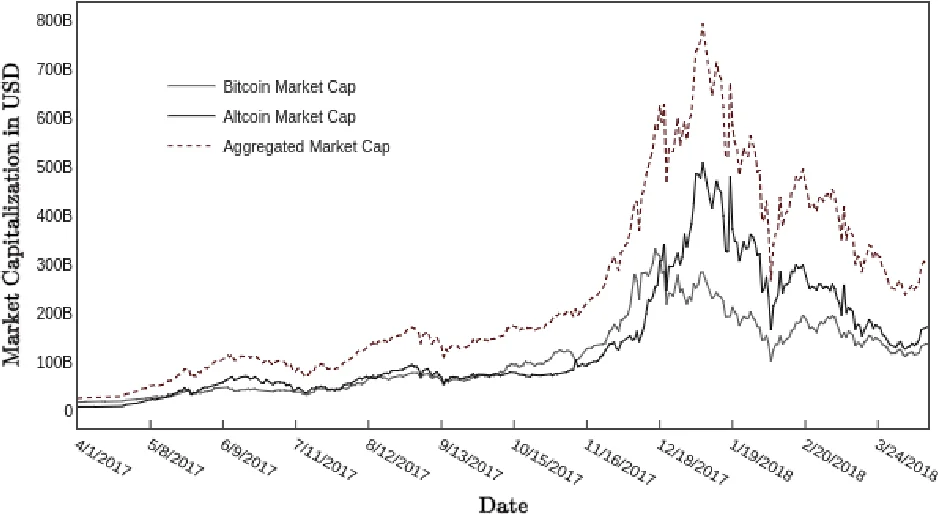
A study of Bitcoin DCA performance from January 2017 to December 2024 found that weekly DCA purchases into BTC generated a return of approximately 18× on invested capital, compared to a single lump-sum purchase at the January 2018 peak that still sat at a 40% loss at the same endpoint. DCA does not guarantee profits, but it removes the single biggest beginner mistake: timing a single large entry near a market top.
Practical DCA rules for beginners:
- Pick one or two assets with deep liquidity – Bitcoin and Ethereum cover the most established cases.
- Set a recurring buy schedule and stick to it for at least six months before evaluating results.
- Use a platform with recurring buy automation (most major exchanges support this as of 2026) to remove decision fatigue from the process.
- Never increase your fixed amount during a price spike because of excitement, or cut it during a dip because of fear – that defeats the purpose of the method.
How Does Swing Trading Work for Crypto Beginners?
Swing trading means holding positions for two days to several weeks, aiming to capture directional price moves between identifiable support and resistance levels. It is more active than DCA but does not require watching a screen all day – most swing traders check charts once or twice per day.
The core skill in swing trading is identifying the trend on a higher timeframe (weekly or daily chart) and then finding entries on a lower timeframe (4-hour or daily) when price pulls back toward a key level. A bullish swing trade setup typically looks like this:
- The weekly chart shows an uptrend (series of higher highs and higher lows).
- Price pulls back to a previously established support zone or a moving average (commonly the 21-day or 50-day EMA).
- A bullish candlestick pattern forms at that level – a hammer, engulfing candle, or morning star.
- You enter long with a stop-loss just below the support zone.
- You target the previous high as the first exit point, then trail your stop to protect gains.
Risk management is not optional in swing trading. The standard rule is to risk no more than 1–2% of your total account on any single trade. If your account is $1,000 and you risk 1% per trade, your maximum loss per position is $10 – that forces you to size positions correctly rather than betting large on conviction.
What Is HODLing and When Does It Make Sense?
HODLing – a term derived from a 2013 Bitcoin forum typo of “holding” – means buying a cryptocurrency and holding it for months or years, ignoring short-term price fluctuations. It is not a passive strategy in the sense of requiring no thought; it requires the discipline to do nothing during drawdowns that can reach 50–80% in bear markets.
HODLing makes the most sense when:
- You believe in the long-term value proposition of a specific asset and have researched its fundamentals.
- You are investing money you will not need for at least two to three years.
- You do not have the time or inclination to monitor charts regularly.
- You hold assets in self-custody or a reputable cold wallet, reducing exchange counterparty risk.
HODLing in altcoins carries significantly more risk than HODLing Bitcoin or Ethereum. Many altcoins that reached all-time highs in 2021 had not recovered to those levels as of Q1 2026. Long-term holding only works if the asset survives and retains relevance – which is not guaranteed for smaller projects.
Read Also:Support and Resistance Levels in Cryptocurrency Trading
How Does Trend Following Differ From Swing Trading?
Trend following is a broader discipline of which swing trading is one application. Pure trend followers enter when a clear directional move is already underway – confirmed by indicators like a moving average crossover or a breakout above a prior high – and exit when evidence of trend reversal appears. They accept missing the beginning of a move in exchange for confirmation before risking capital.
Common trend-following signals used in crypto:
- Moving average crossovers: The 50-day EMA crossing above the 200-day EMA (a “golden cross”) has historically signaled the start of extended bull runs. The reverse (a “death cross”) has preceded sustained bear markets. These signals lag but reduce false entries.
- RSI momentum: An RSI reading rising from below 50 to above 50 on the weekly chart often precedes multi-week or multi-month uptrends.
- Volume breakouts: A price move above a consolidation range on significantly higher-than-average volume is more likely to sustain than a low-volume breakout.
Read Also: Psychological Levels in Cryptocurrency Trading
What Is Scalping and Should Beginners Try It?
Scalping means opening and closing dozens of trades per day, holding each position for seconds to minutes, and targeting very small profits on each one. It is the highest-stress approach to crypto trading and the one with the highest failure rate among beginners.
The challenges that make scalping unsuitable for most new traders:
- Transaction costs compound quickly.Each trade carries a fee. On most exchanges, maker fees run 0.02–0.10% and taker fees 0.05–0.10%. Executing 30 trades per day at 0.10% per trade means paying 3% of notional volume daily in fees – a threshold that requires exceptional win rates just to break even.
- Requires near-zero latency.Professional scalpers use co-located servers with direct market access. Retail traders using standard web interfaces face disadvantages in execution speed that make scalping at scale difficult.
- High psychological toll.Constant trade decisions under time pressure leads to emotional trading errors that erase edge quickly.
The verdict: scalping is not a recommended starting point. Beginners who are drawn to active trading should start with swing trading and only consider shorter-timeframe strategies after demonstrating consistent profitability at the daily chart level.
How Do You Compare Crypto Trading Strategies Side by Side?
| Strategy | Time Commitment | Holding Period | Skill Level | Risk Level | Best For |
| DCA (Dollar-Cost Averaging) | Minimal (set and review monthly) | Months to years | Beginner | Low–Medium | Full-time workers, long-term believers |
| HODLing | Minimal (review quarterly) | Years | Beginner | Medium (drawdown risk) | High-conviction investors with patience |
| Swing Trading | 1–2 hours/day | Days to weeks | Intermediate | Medium–High | Part-time traders with chart skills |
| Trend Following | 30–60 min/day | Weeks to months | Intermediate | Medium | Patient, rules-based traders |
| Scalping | Full-time (6–10 hours/day) | Seconds to minutes | Advanced | Very High | Experienced active traders only |
| Arbitrage | Automated (setup time high) | Seconds | Advanced | Low–Medium (execution risk) | Technical traders with coding skills |
What Risk Management Rules Should Every Beginner Follow?
Strategy selection matters less than risk management execution. Many beginners lose money not because their strategy is wrong but because they take outsized positions, skip stop-losses, or add to losing trades hoping for a reversal.
The 1–2% rule. Never risk more than 1–2% of your total trading capital on a single position. This means if your account holds $2,000, the most you should stand to lose on any one trade is $20–$40. This rule keeps individual mistakes from becoming portfolio-ending events.
Set stop-losses before entering. Before placing any trade, decide in advance at what price the trade is wrong and set a stop-loss there. Moving a stop-loss wider because “price will bounce” is one of the most common ways small losses become large ones.
Use position sizing, not dollar amounts. Calculate position size based on the distance between your entry and stop-loss, not on how much you “want to make.” If your stop is 5% below entry and you risk 1% of your account, your position should be 20% of your account (1% ÷ 5% = 20% allocation).
Keep at least 30–50% in cash or stable assets. Crypto markets move fast and create new opportunities regularly. Traders who are fully invested cannot take advantage of corrections and sharp dips. Maintaining a cash reserve is both a risk management tool and an opportunity buffer.
Track every trade. A simple spreadsheet with entry price, exit price, strategy used, and outcome is more valuable than any indicator. After 30–50 trades, patterns in your wins and losses tell you more about your edge than any backtesting software.
Read Also: Beginners Guide to Using Elliott Wave Theory for Cryptocurrency Analysis
What Crypto-Specific Risks Should Beginners Account For?
Crypto trading carries risks that do not exist in traditional markets and that generic trading guides consistently understate.
Exchange risk. Centralized exchanges have failed without warning – FTX’s collapse in November 2022 resulted in an estimated $8 billion in customer losses. As of 2026, even large exchanges operate without the depositor protection available in regulated banking. Never keep more on an exchange than you need for active trading; withdraw the remainder to a hardware wallet.
Liquidity risk in altcoins. Small-cap tokens often appear to have high returns in chart history but are frequently illiquid – wide bid-ask spreads and thin order books mean you cannot exit a large position without moving the price significantly against yourself.
Regulatory risk. Crypto regulations are evolving in most jurisdictions. Tax treatment, trading restrictions, and exchange licensing requirements changed in multiple countries between 2023 and 2026. Beginners should understand their local regulatory environment before trading with significant capital.
24/7 market hours. Unlike equities that close at 4 PM, crypto trades around the clock. This creates two dangers: positions can gap sharply overnight on news events, and the constant availability of markets makes it easier to overtrade or make impulsive decisions at 2 AM.
Read Also: How to Leverage Cryptocurrency Portfolio Management Platforms for Profit
Practical Tips for Building Your First Crypto Trading Strategy in 2026
Choose one strategy and paper-trade it for 30 days. Before risking real money, run your chosen strategy in simulation mode on your exchange or through a tracking tool. Record every hypothetical entry and exit. If you cannot follow the rules consistently in practice mode, real money will make it harder, not easier.
Write your strategy rules down explicitly. “Buy when the trend looks bullish” is not a strategy. “Buy when the daily candle closes above the 50 EMA with RSI above 50, risk 1.5% of account, stop-loss at the prior swing low, first target at 1:2 risk-reward” is a strategy. Specificity is what separates a repeatable approach from guesswork.
Start with the largest assets. Bitcoin, Ethereum, and a small number of large-cap altcoins have the most reliable chart patterns, the deepest liquidity, and the cleanest historical data for backtesting. Once you have demonstrated consistency on large caps, evaluating smaller tokens becomes a deliberate expansion rather than a random gamble.
Review your trades weekly, not daily. Checking your P&L multiple times a day leads to emotional interference with your strategy. A weekly review of closed trades – what worked, what didn’t, what you would do differently – is more productive and less psychologically draining than constant monitoring.
Define your “quit point” before starting. Decide in advance at what account drawdown level you will stop trading and reassess. A common rule is to stop and review if your account drops 20% from its peak. This pre-commitment prevents the spiral of revenge trading – adding risk to make back losses quickly – that ends many trading accounts.
Frequently Asked Questions About Crypto Trading Strategies
What is the safest crypto trading strategy for a complete beginner?
Dollar-cost averaging into Bitcoin and Ethereum is the most appropriate starting point for most complete beginners. It requires no chart reading, no timing decisions, and has performed well over multiple market cycles. Begin with an amount you can afford to leave untouched for at least two years. Once you have capital in the market and have lived through a full drawdown, you will have the experience to evaluate whether a more active strategy suits you.
How much money do I need to start crypto trading?
Most major exchanges allow purchases as small as $10–$25. However, trading with very small amounts makes it hard to learn position sizing and risk management at meaningful scale. A starting capital of $500–$1,000 is enough to practice real-money trading with the 1–2% risk rule, keep fees proportional to position size, and have enough to diversify across two or three assets without over-concentrating.
How long does it take to become consistently profitable?
Most honest accounts from active traders suggest 12–24 months of consistent practice before reaching a point of repeatable profitability. The first year is primarily about learning what not to do – avoiding over-using, chasing pumps, and holding losing positions too long. Traders who journal every trade and review their mistakes systematically tend to shorten this learning curve, while those who do not track their trades often repeat the same errors for years.
Should beginners use leverage?
No. Leverage amplifies both gains and losses. On a 10× leveraged position, a 10% price move against you wipes out 100% of your margin. Crypto’s volatility – Bitcoin has moved 20–30% in a single week multiple times in its history – makes leveraged trading at any meaningful size extremely high risk for traders without established risk management systems. Build a track record with spot trading first, across at least 50–100 trades, before considering any leverage at all.
Is technical analysis or fundamental analysis more useful for beginners?
Both have roles, but they serve different timeframes. Fundamental analysis – evaluating a project’s technology, team, tokenomics, and adoption metrics – is most relevant for longer-term holding decisions. Technical analysis – reading charts, indicators, and price patterns – is most useful for timing entries and exits in swing trading. Beginners are often better served by learning one thoroughly before adding the other, and DCA removes the need for either in the early stages.
What is the biggest mistake beginners make with crypto trading strategies?
Switching strategies too frequently. Most beginners try a strategy for two or three weeks, experience a losing streak (which happens even in working strategies), and abandon it for the next approach they read about. No strategy wins every trade, and even good strategies have losing streaks of five or more consecutive trades. Switching strategies in response to a normal drawdown prevents you from ever accumulating the trade history needed to know whether a strategy actually has an edge.