Every ID upload, every selfie, every address verification feels like friction standing between a new user and their first trade. For the user, it’s a two-minute inconvenience.
For the exchange, it’s the difference between a compliant business and a money laundering vector with a trading interface. Why KYC is important for crypto exchanges isn’t a compliance question, it’s a survival question.
Get it wrong and you don’t just face fines. You face shutdown, seized accounts, and a reputation that never recovers. First things first.
Join UEEx
Experience the World’s Leading Digital Wealth Management Platform
Know Your Customer (KYC) is the process a crypto exchange uses to verify the identity of its customers and understand the risks associated with their accounts.
It forms part of customer due diligence (CDD), which sits within the broader anti-money laundering and counter-terrorist financing (AML/CFT) framework.
When opening an account, a customer may be asked to provide several pieces of personal information. This usually includes their full name, date of birth, residential address and a government-issued identity document.
Depending on the exchange, jurisdiction and customer’s risk profile, additional checks may include facial verification, sanctions screening, information about the source of funds or details about the purpose of certain transactions.
“Having regulations in place to verify the identity of recipients and ensure that checks are done to prevent money laundering and other fraud is essential to building that trust. World Economic Forum
However, KYC is about more than simply collecting identification documents. A well-designed KYC programme helps an exchange establish who its customers are and assess the level of risk they may present.
It also helps in keeping relevant information up to date throughout the customer relationship. For crypto exchanges, this is particularly important because digital assets can be transferred quickly across borders and through multiple wallets and platforms.
An exchange therefore needs reliable information about its customers to identify unusual activity, apply appropriate controls and meet its regulatory obligations.
Join UEEx
Experience the World’s Leading Digital Wealth Management Platform
1. Preventing Money Laundering and Other Financial Crime
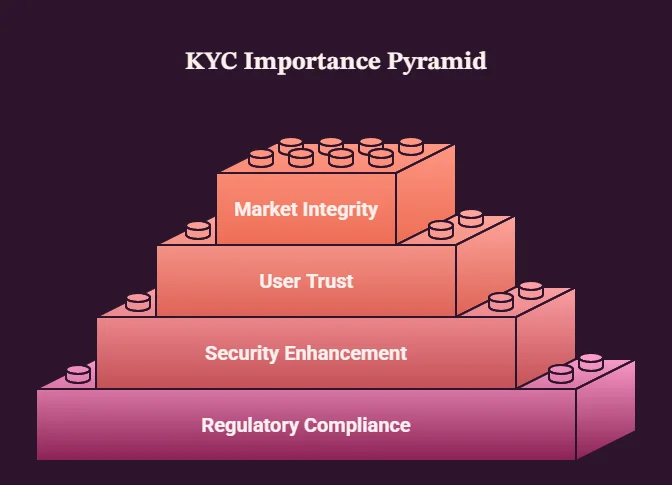
One of the primary purposes of KYC is to reduce the risk that a crypto exchange is used for money laundering, terrorist financing, fraud or other financial crime.
Knowing who is using the platform allows an exchange to assess whether a customer’s activity is consistent with the information available about them.
For example, an account that suddenly begins moving unusually large amounts of cryptocurrency across multiple wallets may require additional review.
KYC does not automatically identify criminal activity, nor does it prevent financial crime on its own. Instead, it provides the customer information and risk context an exchange needs to identify unusual behaviour and determine whether further investigation or reporting may be appropriate.
2. Helping Exchanges Meet Regulatory Requirements
KYC is also a key part of the compliance obligations that apply to many crypto businesses.
The exact requirements vary by jurisdiction, but regulators increasingly expect crypto businesses within their regulatory frameworks to have appropriate AML/CFT controls.
These can include customer identification and verification, risk assessments, ongoing monitoring, record-keeping and suspicious activity reporting. For exchanges operating across multiple markets, this can be particularly challenging.
A business may need to comply with different regulatory requirements depending on where its customers are located, what services it provides and how it is regulated in each jurisdiction.
A risk-based KYC programme therefore helps an exchange build controls around the requirements that apply to its particular business rather than treating compliance as a one-size-fits-all process.
2. Protecting Users and the Exchange
KYC can also help protect both customers and the exchange from fraud and account abuse. Strong identity verification can make it more difficult for individuals to create accounts using stolen or fabricated identities.
When combined with transaction monitoring and other financial crime controls, KYC can help exchanges identify potentially suspicious activity at an earlier stage.
For example, if several accounts contain inconsistent identity information or display patterns of activity that suggest they may be connected, the exchange can investigate further and apply additional controls where necessary.
For customers, these measures can help create a safer trading environment. For exchanges, they can reduce exposure to fraud, financial crime and the operational and reputational consequences that can follow.
3. Building Trust in a Global Crypto Market
KYC can also contribute to trust between crypto exchanges and the people and organisations they interact with.
Customers, banks, payment providers, investors and regulators may want assurance that an exchange understands who is using its platform and has appropriate systems for managing financial crime risks.
This becomes increasingly important as crypto businesses operate across borders and become more closely integrated with the wider financial system.
An exchange that can demonstrate effective customer identification, risk assessment and ongoing monitoring is better positioned to show that it takes compliance and customer protection seriously.
Join UEEx
Experience the World’s Leading Digital Wealth Management Platform
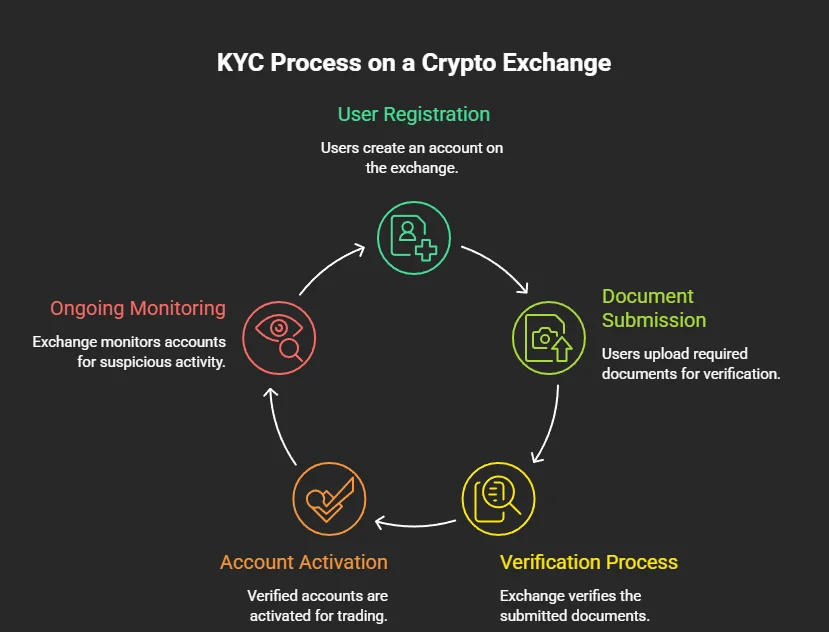
The process usually begins when a customer creates an account with the crypto exchange.
The exchange may collect basic information such as the customer’s full name, date of birth, residential address, nationality and contact details.
Corporate customers may need to provide additional information about the business, its directors and beneficial owners.
The information required can differ depending on the exchange and the markets in which it operates. A platform serving customers in Nigeria, for example, may have different regulatory obligations from one operating in the European Union or the United States.
2. The Exchange Verifies the Customer’s Identity
Providing personal information is only the first step. The exchange must then establish whether the information provided is genuine and belongs to the person attempting to open the account.
This may involve verifying a government-issued document such as a passport, national identity card or driver’s licence.
Some exchanges may also use facial verification or biometric checks to confirm that the customer matches the identity document provided.
Many exchanges now use automated verification technology to check documents and identity information quickly. However, the purpose remains the same: to establish reasonable confidence in the customer’s identity using reliable and independent information.
3. The Exchange Screens the Customer
After verifying the customer’s identity, the exchange may conduct additional screening to identify potential financial crime risks.
This can include checking the customer against relevant sanctions lists and politically exposed person (PEP) databases, as well as assessing other risk indicators.
Depending on the exchange’s risk-based approach, screening may also consider the customer’s location, business activities and connections to higher-risk jurisdictions or activities.
These checks are important because a customer’s physical location may differ from the jurisdictions, wallets or counterparties involved in their crypto activity.
4. The Exchange Assesses the Customer’s Risk Profile
Not every customer presents the same level of risk, so exchanges generally need to assess customers according to relevant risk factors.
These may include the customer’s country of residence, occupation or business activity, expected transaction volume, source of funds or wealth where appropriate, products and services being used, and geographical exposure.
Where a customer presents a higher level of risk, the exchange may apply enhanced due diligence (EDD). This could involve requesting additional documentation, asking for more information about the source of funds or seeking clarification about the purpose of certain transactions.
The aim is not to treat every customer as suspicious. A risk-based approach allows exchanges to apply stronger controls where the circumstances justify them.
5. The Customer Is Approved, Restricted or Rejected
Once the necessary checks have been completed, the exchange can make a decision about the customer’s account.
If the customer’s identity has been satisfactorily verified and the assessed risk falls within the exchange’s acceptable parameters, the account may be approved.
Depending on the platform, the customer may then be able to deposit funds, buy and sell crypto-assets, make withdrawals or access other services.
If information is incomplete or additional risks are identified, the exchange may request further documentation or conduct enhanced due diligence.
In some circumstances, the exchange may decide not to establish or continue the customer relationship, subject to applicable legal and regulatory requirements.
This highlights an important point: KYC is not simply about collecting customer information. The information gathered should support an actual risk and compliance decision.
Join UEEx
Experience the World’s Leading Digital Wealth Management Platform
KYC does not necessarily end when an account has been approved. Customer due diligence is an ongoing process. An exchange may need to update customer information, reassess risk and monitor activity throughout the relationship.
A significant change in a customer’s circumstances or transaction behaviour may trigger additional review. For example, a customer may initially use an exchange for occasional purchases but later begin moving unusually large amounts of cryptocurrency through multiple wallets and jurisdictions.
That change in activity could lead the exchange to conduct additional checks, even though the customer’s identity was verified months earlier.
7. The Exchange Keeps Records and Reports Suspicious Activity Where Required
The final part of the process involves maintaining appropriate records and taking action when potentially suspicious activity is identified.
Crypto exchanges may be required to retain customer identification and due diligence information for a specified period and report suspicious transactions or activity to the relevant authority where required by applicable law.
The exact requirements differ between jurisdictions. Exchanges therefore need procedures that reflect the laws and regulatory frameworks applicable to their business.
What Happens If a Crypto Exchange Does Not Implement KYC?
KYC can create additional steps for customers, but failing to implement appropriate controls can create much greater risks for an exchange.
The consequences depend on the jurisdiction, the exchange’s activities and the regulatory framework that applies to it. However, the potential problems generally fall into four areas.
1. Regulatory and Legal Consequences
For crypto businesses that fall within AML/CFT regulatory frameworks, inadequate KYC can result in significant compliance problems.
Depending on the jurisdiction, regulators may impose enforcement measures, financial penalties, restrictions or other sanctions where a business fails to meet applicable customer due diligence and AML requirements.
For example, cryptoasset businesses within the scope of the UK’s Money Laundering Regulations are subject to AML and counter-terrorist financing requirements.
The Financial Conduct Authority can take regulatory or enforcement action where firms fail to meet their obligations.
The important point is that the consequences are not identical everywhere. An exchange needs to understand the specific requirements that apply to its business and customer base.
“The EU’s Anti-Money Laundering Regulation will bar crypto-asset service providers from keeping anonymous crypto-asset accounts.” No-KYC Crypto Exchanges Explained.
2. Greater Exposure to Financial Crime
Without effective KYC, an exchange has less information about who is using its platform and what level of risk those customers may present.
This can make it harder to identify suspicious customers, detect unusual activity and understand whether transactions are consistent with a customer’s expected profile.
KYC does not eliminate financial crime. However, without reliable customer information and risk assessments, other controls such as transaction monitoring and suspicious activity reporting can become less effective.
Anti-money laundering and know-your-customer rules protect Americans from fraud, combat money laundering, and prevent the financing of terrorist activity, Matthew Podolsky, Attorney for the United States.
3. Loss of Customer and Institutional Trust
Poor KYC can also damage an exchange’s reputation. Customers may be less willing to trust a platform that appears unable to protect accounts or manage financial crime risks.
Banks, payment providers, institutional investors and other business partners may also be more cautious about working with an exchange that cannot demonstrate effective compliance controls.
This can become particularly important for exchanges seeking to expand internationally. Operating across multiple markets would usually require an exchange to demonstrate that it can manage the regulatory and financial crime risks associated with its activities.
Join UEEx
Experience the World’s Leading Digital Wealth Management Platform
In serious cases, regulatory problems can affect an exchange’s ability to operate or expand. An exchange that fails to meet applicable registration, licensing or AML requirements may face restrictions on its activities.
Again, this usually depends on the jurisdiction and regulatory framework involved. This is particularly relevant as regulators in major crypto markets continue to develop frameworks for virtual asset and crypto-asset businesses.
Compliance requirements can influence whether an exchange is able to enter a market, maintain its authorisation or continue offering particular services.
For this reason, KYC should not be viewed simply as an onboarding requirement. For a regulated crypto business, it can be an important part of maintaining the ability to operate, build partnerships and serve customers over the long term.
How Crypto Exchanges Can Improve Their KYC Processes
1. Use a Risk-Based Approach
Not every customer presents the same level of financial crime risk. Exchanges should consider relevant factors such as the customer’s location, expected transaction activity, products and services used, source of funds or wealth where appropriate, and other customer or geographic risk indicators.
A risk-based approach allows the exchange to apply stronger controls when the circumstances justify them rather than subjecting every customer to the same level of scrutiny.
For higher-risk customers, this may mean enhanced due diligence, additional documentation or more frequent reviews. Lower-risk customers may be able to complete a simpler onboarding process, provided this is consistent with the applicable regulatory requirements.
2. Make Verification Fast Without Making It Weak
A lengthy verification process can frustrate legitimate customers, but speed should not come at the expense of effective compliance.
Crypto exchanges can use technology such as automated document verification, biometric checks, sanctions screening and other digital identity tools to reduce manual processing and make onboarding more efficient.
However, technology should support, not replace, the exchange’s compliance framework. The business should understand how its verification tools work, assess their reliability and ensure that they are appropriate for the risks and regulatory requirements involved.
The best KYC experience is therefore not necessarily the one with the fewest checks. It is the one that completes appropriate checks efficiently while maintaining the necessary level of assurance.
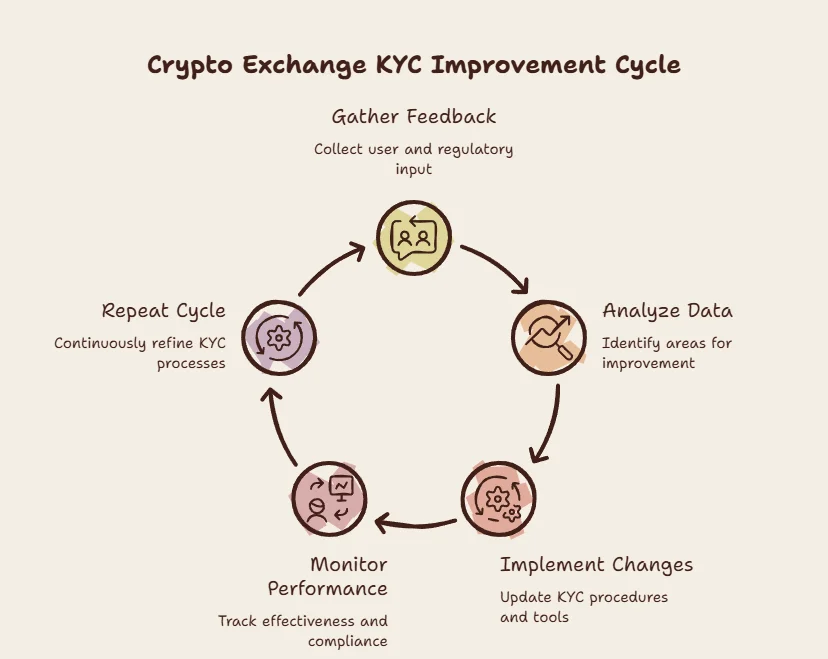
3. Keep KYC Ongoing
KYC should not be treated as a one-time event that ends when an account is approved.
Customer information can become outdated, circumstances can change, and transaction behaviour can evolve.
Exchanges should therefore have processes to update customer information and reassess risk when appropriate. For example, a customer who initially carries out small, routine transactions may later begin moving significantly larger amounts across several jurisdictions.
A change like this may warrant additional review or enhanced due diligence. Ongoing KYC helps ensure that the information held by the exchange continues to reflect the customer’s circumstances and risk profile.
4. Avoid Unnecessary Customer Friction
There is a balance between effective compliance and a smooth customer experience. Requiring excessive documentation from every customer can create unnecessary friction.
It may also cause legitimate users to abandon the onboarding process. At the same time, collecting too little information can leave the exchange unable to properly understand higher-risk customers.
A proportionate approach allows the exchange to collect the information it genuinely needs while applying additional checks when the customer’s risk profile warrants them.
This can make the onboarding process more efficient without weakening the underlying compliance controls.
5. Connect KYC to the Wider Compliance Framework
Finally, KYC works best when it is connected to the exchange’s broader financial crime controls.
Identity verification provides information about who the customer is, while risk assessment helps determine the level of scrutiny required.
Transaction monitoring can then help identify activity that may be inconsistent with the customer’s expected behaviour.
These controls can work alongside sanctions screening, enhanced due diligence, suspicious activity reporting, record-keeping and clear internal escalation procedures.
Frequently Asked Questions
Can A Crypto Exchange Reject A Customer After KYC Checks?
Yes, a crypto exchange may refuse to establish or continue a customer relationship where applicable requirements cannot be satisfied, or the customer’s risk falls outside the exchange’s permitted criteria.
What Happens After KYC Verification?
After KYC verification, the exchange may approve the customer’s account, apply restrictions or request additional information depending on the customer’s risk profile and applicable requirements.
KYC is no longer simply an extra step between signing up for a crypto exchange and making your first transaction.
It is a fundamental part of how responsible crypto businesses manage risk and meet their regulatory obligations.
An effective KYC framework helps exchanges identify suspicious behaviour and reduce their exposure to money laundering, fraud and other financial crimes.
The challenge is getting the balance right. A KYC process that is too weak can leave an exchange exposed, while one that is unnecessarily complicated can frustrate legitimate customers.
The strongest approach is therefore one that is risk-based, proportionate and supported by effective technology and ongoing monitoring.
Essentially, why KYC is important for crypto exchanges comes down to one simple principle: an exchange needs to know who its customers are before it can properly understand and manage the risks associated with their activity.
Disclaimer: This article is intended solely for informational purposes and should not be considered trading or investment advice. Nothing herein should be construed as financial, legal, or tax advice. Trading or investing in cryptocurrencies carries a considerable risk of financial loss. Always conduct due diligence before making any trading or investment decisions.
Trade with proof of Reserves
UEEx publish monthly audits and third party verification on every listed market.